International Housekeeping Week: Boutique Hotel Guide
International Housekeeping Week is the annual observance that honors the housekeeping professionals who keep hotel rooms, short-term rentals, hospitals, and public spaces clean, safe, and guest-ready every single day. For boutique and independent properties, however, this week carries extra weight: a ten-room inn or a single short-term rental often asks one or two housekeepers to do work that a 300-room chain spreads across a dozen people. This guide goes further than a typical roundup of gift ideas. It covers the real history behind International Housekeeping Week, the exact dates for 2026, the staffing data that explains why the role is under more pressure than ever, eight ideas that actually work, and the technology now closing the gap between appreciation and everyday support.
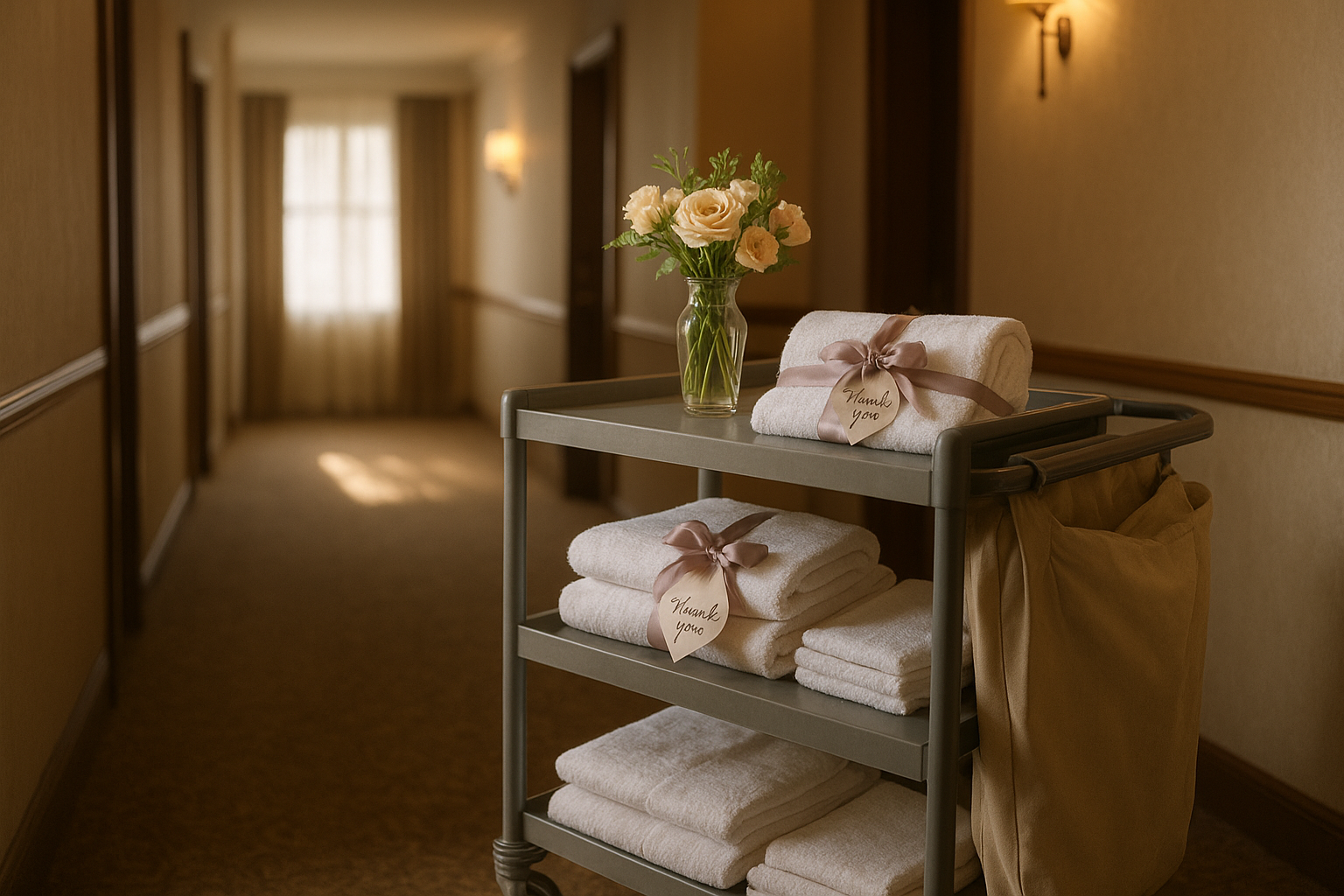
A small gesture of recognition during International Housekeeping Week can mean a lot to a lean housekeeping team.
What Is International Housekeeping Week, and Where Did It Come From?
International Housekeeping Week recognizes the people responsible for cleaning, restocking, and maintaining guest rooms and public areas across hotels, hospitals, schools, and other facilities. In short, it functions as a formal thank-you to a department that touches nearly every part of a guest's stay but rarely gets a public spotlight. Historically, the observance traces back to advocacy from executive housekeeper associations, including groups affiliated with what is now the International Executive Housekeepers Association, which pushed for the field to be recognized as skilled, professional work rather than invisible background labor.
For broader context on the profession itself, Wikipedia's overview of housekeeping traces how the role evolved from domestic service into a structured hospitality discipline. Today, independent hotels, resorts, hospitals, and even short-term rental operators use the week to acknowledge staff who are often the backbone of the guest experience.
International Housekeeping Week vs. National Housekeeping Week: What's the Difference?
Many hoteliers use "international" and "national" housekeeping week interchangeably, but the two are not quite identical. National Housekeeping Week typically refers to the U.S.-focused observance promoted by domestic hospitality associations during the same September window. International Housekeeping Week, in contrast, is the broader, global framing recognized across hotels, hospitals, and cleaning operations outside the United States as well. In practice, most properties celebrate both under one banner, and the ideas in this guide work equally well for either name.
For a deeper breakdown of the U.S.-specific observance, see this guide to National Housekeeping Week 2026 dates and ideas, as well as this companion piece on exactly when Housekeeping Week falls in 2026 and its yearly theme.
When Is International Housekeeping Week in 2026?
Most hospitality associations recognize International Housekeeping Week during the second full week of September, though exact dates can shift slightly depending on the country or association setting the calendar. In 2026, that places the observance in mid-September. However, some boutique hotels choose to run their own version of the week at a slower point in their season, when staff can actually pause to enjoy it instead of squeezing recognition into a fully booked weekend. Either approach works, as long as the gesture is genuine and consistent year over year.
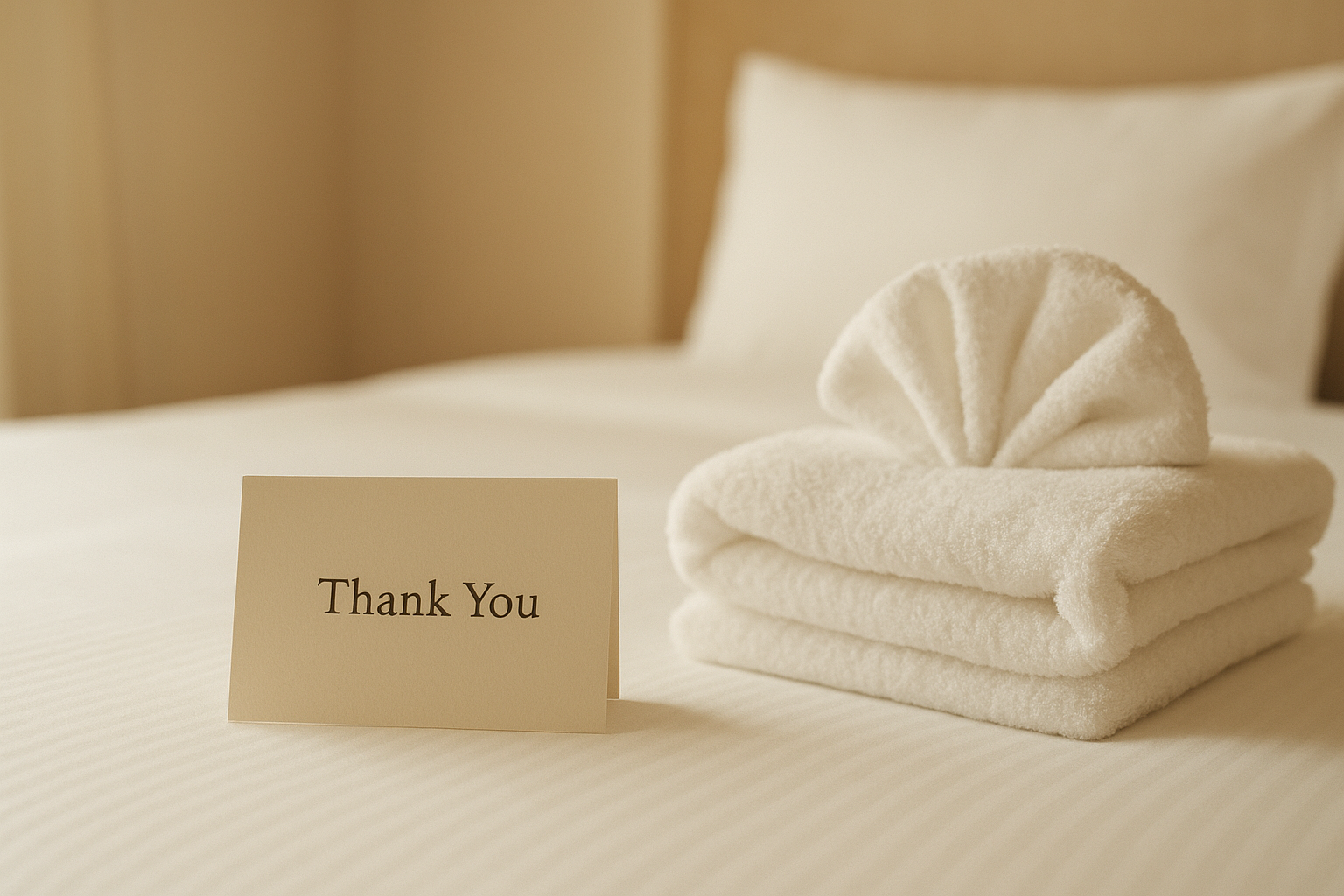
Personal notes often land better than generic gifts during housekeeping recognition events.
The Numbers Behind Housekeeping Week: Why Recognition Can't Wait
Independent hotels are being asked to deliver more personal service with fewer people, and housekeeping sits right at the center of that pressure. According to a survey from the American Hotel & Lodging Association and Hireology, 65% of hotels reported staffing shortages, with housekeeping named the most critical gap by 38% of respondents, ahead of the front desk at 26%. As a result, the housekeepers who remain are often covering more rooms per shift than they were a few years ago, with less room for error and almost no backup during peak season.
65% of hotels report staffing shortages, and housekeeping is named the #1 critical gap by 38% of respondents, well ahead of front desk staffing at 26%.
In addition, the U.S. Bureau of Labor Statistics tracks housekeeping and room-attendant roles among the more physically demanding jobs in the accommodation sector, citing repetitive bending, lifting, and chemical exposure as routine hazards. For context on wages, duties, and projected demand nationally, the Bureau of Labor Statistics' occupational profile for maids and housekeeping cleaners is a useful benchmark for any property evaluating its own staffing levels. Consequently, the gap between demand and available staff shows up at the exact moments guests notice most: a late checkout that was never communicated, a room skipped because a "do not disturb" sign stayed up all day, or a maintenance issue nobody flagged in time.
The Hidden Pressure Behind Every Housekeeping Shift
Beyond staffing numbers, housekeeping deals with a steady stream of small frictions that rarely show up in a job description. For instance, staff knock on occupied rooms guests do not want opened, come back later, and lose time they could have spent cleaning rooms that were actually ready. Similarly, requests for extra towels, a late clean, or a maintenance fix often arrive through phone calls, texts, radios, or sticky notes left at the front desk, scattered across so many channels that something inevitably gets missed.
Language adds another layer of difficulty. Specifically, a guest who cannot explain a broken air conditioner or a shellfish allergy in English either gives up or gets it wrong, and the housekeeper on the other end has no reliable way to clarify. Research from CSA Research found that 76% of consumers prefer to engage in their own language, which matters enormously given that international travel has returned to record levels, with an estimated 1.5 billion international arrivals in 2025 according to the UN World Tourism Organization. For a boutique hotel with guests in six or eight languages, that gap is not an edge case. It is a daily occurrence.
How to Celebrate International Housekeeping Week: 8 Ideas That Actually Work
Recognition does not need a large budget to feel meaningful. The following steps give boutique hotels and short-term rental operators a practical structure for the week:
1Plan a dedicated recognition day. Choose one day during the week for a shared meal, a short team meeting, or public thanks in front of other departments so the gesture feels intentional rather than an afterthought.
2Personalize appreciation for each staff member. Individual notes that reference something specific someone did land better than a generic card addressed to the whole team.
3Share housekeeping stories with guests. A short note in the room or a social post introduces the people behind a spotless stay and builds goodwill on both sides.
4Audit workloads and ask staff what would help. Sit down with housekeeping leads and ask which daily frictions, like repeated knocking on occupied doors, waste the most time and energy.
5Adopt tools that reduce unnecessary interruptions. Give guests a way to request service on their own schedule so housekeeping visits are needed, not guessed at, which cuts down on wasted trips.
6Offer flexible scheduling or an extra paid break. A shorter shift or an additional fifteen-minute break during the week signals that leadership values rest, not just output.
7Credit housekeeping publicly in guest-facing channels. Mention the team by name when responding to glowing reviews or posting on social media so recognition extends beyond internal walls.
8Turn feedback into a written action plan. Document what staff said would help and commit to revisiting at least one change before the next quarter begins.
Above all, the week works best when appreciation is paired with a real change to the job itself, not just a one-day event that fades by the following Monday. For additional tech-forward appreciation ideas tailored to lean teams, this guide to housekeeping appreciation week ideas and smart tech tips expands on several of the steps above.
Reducing Housekeeping Workload With Smart Technology
For many boutique hotels, the single biggest workload fix is cutting down on wasted trips and misrouted requests. Cortesia, for example, lets guests scan a QR code in their room to get instant answers and submit service requests in their own language, with no app to download and no account to create. Every request lands on one live staff dashboard, automatically translated, so a housekeeper working in English can understand a request written in Spanish, Japanese, or Arabic without a phone call to the front desk.
Consequently, this changes two things at once. First, guests get a direct way to ask for a late clean or report a broken fixture instead of leaving a note nobody sees. Second, food-allergy mentions trigger a staff alert that requires acknowledgment, which closes the gap where safety information used to get lost between a guest, the front desk, and the kitchen. For a property with eight languages of guests and a two-person housekeeping team, that kind of clarity is not a convenience. It is the difference between a smooth shift and a day spent guessing.
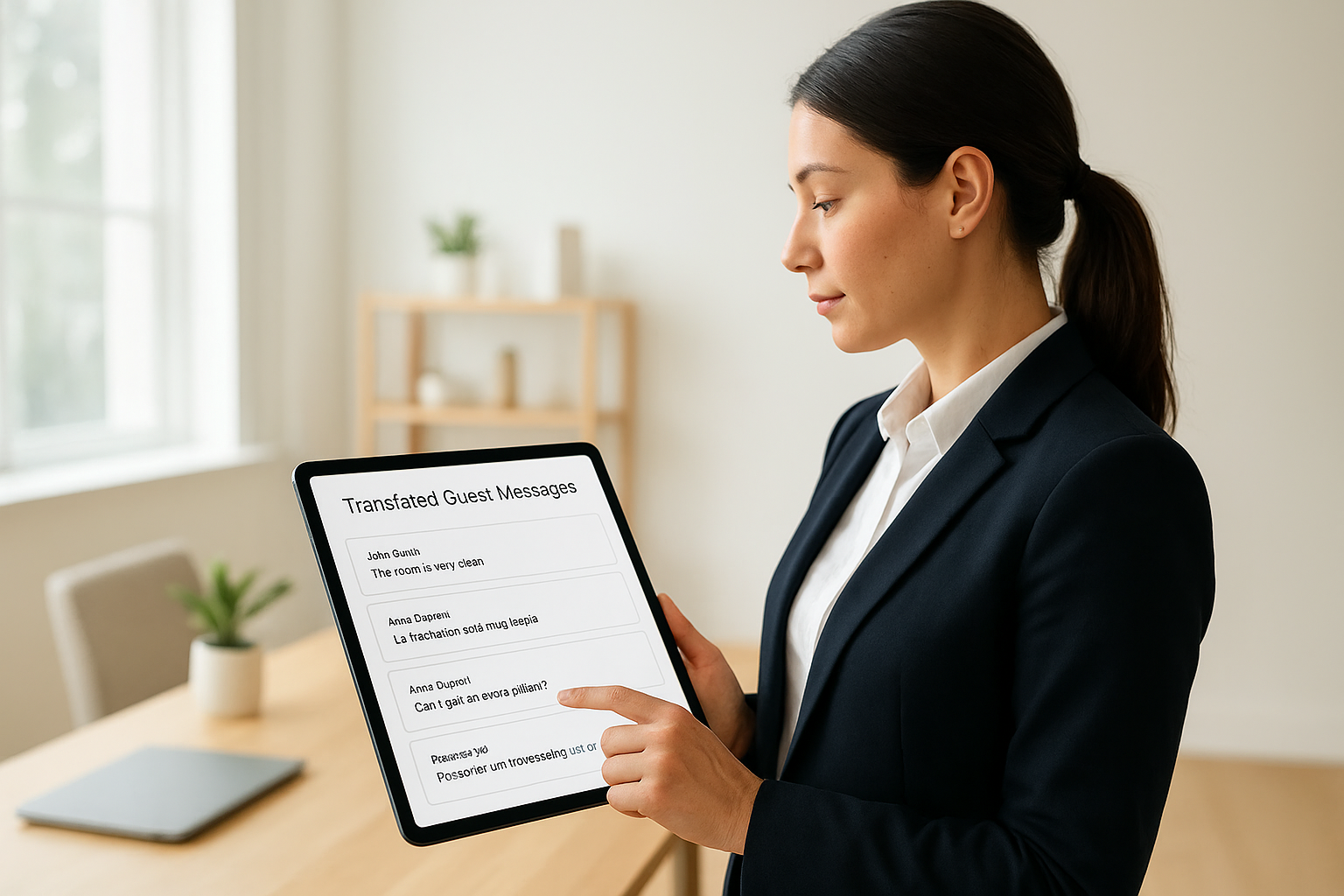
A translated dashboard helps lean teams keep housekeeping requests organized during International Housekeeping Week and beyond.
Choosing the Right Guest Experience Platform
Not every guest experience tool fits a small property. Many enterprise platforms are built around a full PMS integration, native app downloads, and pricing sized for a 300-room chain, which rarely makes sense for a 10 to 150-room boutique hotel. In contrast, properties evaluating their options may want to compare approaches directly, such as this breakdown of Cortesia against Canary Technologies, this look at Cortesia versus Akia, or this comparison of Cortesia and Bellboy. Reviewing the pricing, onboarding terms, and language coverage, outlined on the Cortesia terms page, helps a small team pick a platform that matches its actual size rather than a chain-level budget.
Supporting Housekeeping Year-Round, Not Just One Week
The most effective properties treat International Housekeeping Week as a starting point, not a one-time event. Specifically, that means checking in regularly on workload, fixing recurring sources of friction, and keeping communication channels simple enough that nothing gets lost between a guest request and the person who has to act on it. For a real-world look at what this takes, see these lessons from Housekeeping Week 2025 for boutique hotels.
A visit to Cortesia's live demo shows how a 42-room boutique hotel handles guest requests in eight languages without adding headcount, which gives a useful reference point for properties trying to reduce pressure on their own teams long after the week ends.
Short-Term Rentals and International Housekeeping Week
Short-term rental housekeeping looks different from hotel housekeeping because there is no front desk standing between the guest and the person who has to act. Therefore, when a cleaning crew misses a message about a late checkout or a broken lock, there is no backup staff member nearby to catch the problem before the next guest arrives. For hosts managing even a handful of properties, International Housekeeping Week is a good moment to review how cleaning schedules get communicated and whether guests have a reliable way to flag problems before they turn into a bad review.
Frequently Asked Questions About International Housekeeping Week
What is International Housekeeping Week?
International Housekeeping Week is an annual observance that recognizes housekeeping professionals who clean, maintain, and prepare rooms in hotels, short-term rentals, hospitals, and other facilities. It highlights the physical demands and attention to detail the role requires.
When is International Housekeeping Week in 2026?
Most hospitality associations mark International Housekeeping Week during the second full week of September 2026, though dates can vary slightly by region. Hotels can also run their own recognition events at other times of the year.
Is "International Housekeepers Week" the same as "International Housekeeping Week"?
Yes. "International Housekeepers Week" and "International Housekeeping Week" refer to the same observance and are used interchangeably across the hospitality industry, hospitals, and cleaning associations.
What is the difference between International Housekeeping Week and National Housekeeping Week?
National Housekeeping Week usually refers to the U.S.-focused version of the observance, while International Housekeeping Week is the broader global framing. Most properties celebrate both under the same banner during the same week.
Who started International Housekeeping Week?
The observance grew out of advocacy by executive housekeeper associations seeking formal recognition for a department that is often invisible to guests but essential to operations. Today it is recognized informally across hotels, hospitals, and cleaning associations worldwide.
Why does housekeeping matter so much for boutique hotels?
Boutique and independent hotels run with far fewer staff per room than large chains, so each housekeeper covers more ground with less backup. A single staffing gap can directly affect guest experience the same day.
How many hotels report housekeeping staffing shortages?
A survey from the American Hotel & Lodging Association and Hireology found that 65% of hotels reported staffing shortages, with housekeeping named the most critical gap by 38% of respondents. Front desk staffing followed at 26%.
What is the best way to celebrate International Housekeeping Week?
Simple, consistent gestures work best: personalized thank-you notes, a shared meal, and public recognition in front of other departments. Pairing appreciation with real operational fixes has the longest-lasting impact.
How can technology reduce housekeeping workload during Housekeeping Week and beyond?
Guest-facing tools that let travelers request service on their own schedule cut down on wasted trips to occupied rooms. When requests route directly to a staff dashboard, housekeepers spend more time cleaning and less time guessing.
Does language barrier affect housekeeping requests?
Yes. CSA Research found that 76% of consumers prefer engaging in their own language, and a housekeeper who cannot understand a note about a broken air conditioner or an allergy risks missing it entirely.
What mistakes do hotels make during housekeeping appreciation events?
The most common mistake is treating appreciation as a once-a-year event instead of pairing it with year-round workload support. A pizza party does little if housekeepers are still interrupted constantly or juggling scattered requests.
How much does guest request software typically cost for a small hotel?
Pricing varies by provider, but many tools built for boutique properties use simple per-room, month-to-month pricing instead of enterprise contracts. Cortesia, for example, prices per room with no long-term commitment and includes onboarding.
How long does it take to set up a digital concierge for housekeeping requests?
Properties that avoid a PMS integration project can typically go live in days rather than months. Setup usually includes building the property knowledge base, importing rooms and staff, and printing QR materials.
Can International Housekeeping Week help with staff retention?
Recognition alone will not fix staffing shortages, but consistent appreciation combined with reduced daily friction can improve morale and reduce turnover. Housekeepers who feel seen and supported are more likely to stay through peak season.
Is International Housekeeping Week only for hotels?
No. The observance is also recognized in hospitals, schools, and commercial cleaning operations, since all rely on housekeeping staff for safety and cleanliness. Hospitality is simply one of the most visible industries to mark it publicly.
How does short-term rental housekeeping differ from hotel housekeeping?
Short-term rental hosts often manage housekeeping remotely without a front desk, which makes direct communication with guests even more important. A single-property host depends entirely on clear requests to schedule cleans and repairs correctly.
What should a hotel do if a guest mentions a food allergy to housekeeping?
Any allergy mention should be logged and routed to staff who can acknowledge and act on it, not left as a verbal note between departments. Systems that trigger a staff alert requiring acknowledgment reduce the risk of the information getting lost.
Final Thoughts on International Housekeeping Week
International Housekeeping Week gives every property, from a 42-room boutique hotel to a single short-term rental, a reason to pause and recognize the people who make a clean, well-run stay possible. However, recognition lands best when it is backed by real changes: clearer communication, fewer wasted trips, and tools that remove language as a barrier between guests and staff. Properties that combine genuine appreciation with practical support, such as a multilingual guest request system like Cortesia, give their housekeeping teams the best chance of carrying that five-star service well beyond one week a year.