Hotel Chatbot Explained: Features, Costs & Benefits
A hotel chatbot is the AI concierge that lets guests get answers, make requests, and talk with staff in their own language, all from a QR code in their room, without downloading an app or creating a login. For boutique and independent hotels running lean teams, this single tool can replace dozens of repetitive phone calls and sticky notes every day. This guide explains what a hotel chatbot actually does, how it works step by step, what it costs, and how properties like a 42-room boutique hotel or a single short-term rental use one to deliver five-star service without adding headcount.
Direct answer: A hotel chatbot is a conversational AI tool, usually reached by scanning a QR code, that answers guest questions, logs service requests, and translates messages between guests and staff in real time. It works around the clock in the guest's own language and does not require an app, a login, or a hotel app download.
What Is a Hotel Chatbot?
A hotel chatbot differs from a general-purpose AI assistant because it is trained on one property's actual information: room types, menus, amenity hours, Wi-Fi details, and nearby restaurants or attractions. In technical terms, it relies on natural language processing, a branch of artificial intelligence that lets software interpret everyday human sentences rather than rigid commands, to understand what a guest means even if the phrasing is casual.
Consequently, when a guest types "is breakfast still open" or "mi aire acondicionado no funciona," the chatbot does not just translate the words. It matches the request to the right answer or the right department, then hands off anything it cannot resolve itself to a human, translated into whatever language staff use on the dashboard. That hand-off is what separates a genuine hotel chatbot from a simple FAQ widget, as described on the general chatbot reference on Wikipedia.
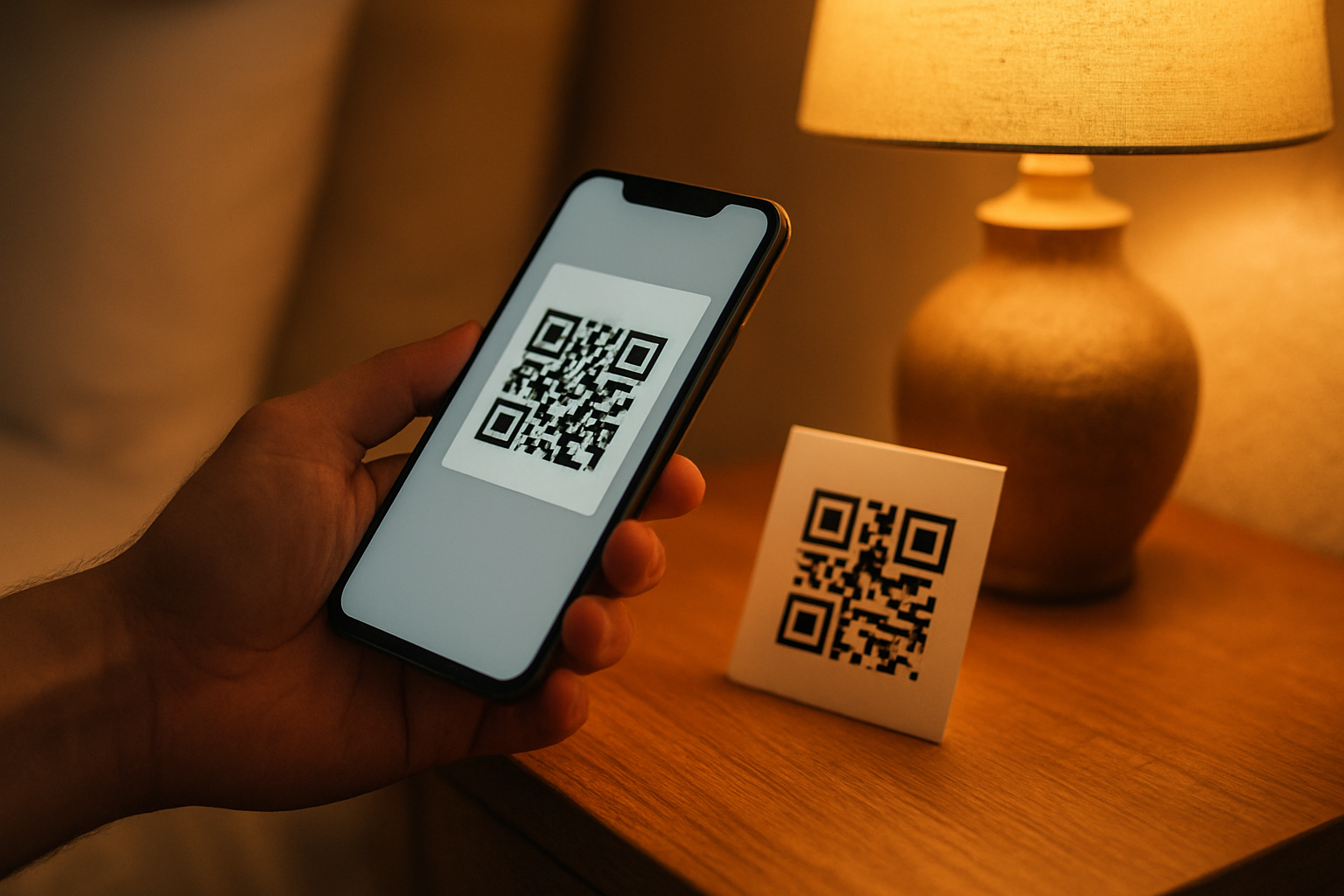
A guest scans a room QR code to open the hotel chatbot, no app or login required.
Why Boutique Hotels Need an AI Guest Concierge Now
Independent hotels are being asked to deliver more personal service with fewer people, and staffing is the real pressure point behind that squeeze. An AHLA and Hireology survey found that 65% of hotels report staffing shortages, with housekeeping (38%) and the front desk (26%) named as the most critical gaps. As a result, the same ten questions, Wi-Fi passwords, checkout time, restaurant suggestions, get answered over and over by whoever happens to be at the desk.
Language adds another layer of friction. Research from CSA Research shows that 76% of consumers prefer to interact in their own language, and international travel has returned to record levels, with roughly 1.5 billion international arrivals in 2025 according to the UN World Tourism Organization. In contrast to large chains that can staff multilingual front desks, a 30-room independent property rarely has someone fluent in German, Japanese, and Spanish on every shift.
Meanwhile, guest apps have largely failed to solve this. Hotels have pushed app downloads for years, yet industry research has long shown only a small minority of guests ever install one for a two-night stay. A hotel chatbot sidesteps that entirely because it opens in the browser a guest already has.
How a Hotel Guest Messaging Tool Works, Step by Step
So what actually happens between a guest typing a message and staff getting it done? Here is the typical path a request takes through a well-built hotel chatbot system:
Guest scans the QR code. The guest opens their phone camera and scans a printed QR code placed in the room, which opens the chatbot instantly in a browser tab with no download or account creation needed.
Guest asks a question or makes a request. They type naturally in whichever language they are comfortable using, whether that is a question about parking or a request to fix a slow drain, and the system detects the language automatically.
The chatbot answers or flags the request. Simple questions already covered in the property's knowledge base get an instant reply, while service requests, allergy mentions, or complaints are logged and routed to the correct department.
Staff see it translated on one dashboard. Housekeeping, the front desk, and maintenance all see the same live dashboard, with every message translated into the language the team actually works in, removing the need for a bilingual staff member on every shift.
The guest gets a reply in their own language. Once staff respond or complete the task, the guest receives the update back in the language they started in, closing the loop without manual translation on either side.
For a deeper look at organizing everything that comes in through phone calls, texts, and in-person requests alongside a chatbot, see this guide on organizing guest requests fast.
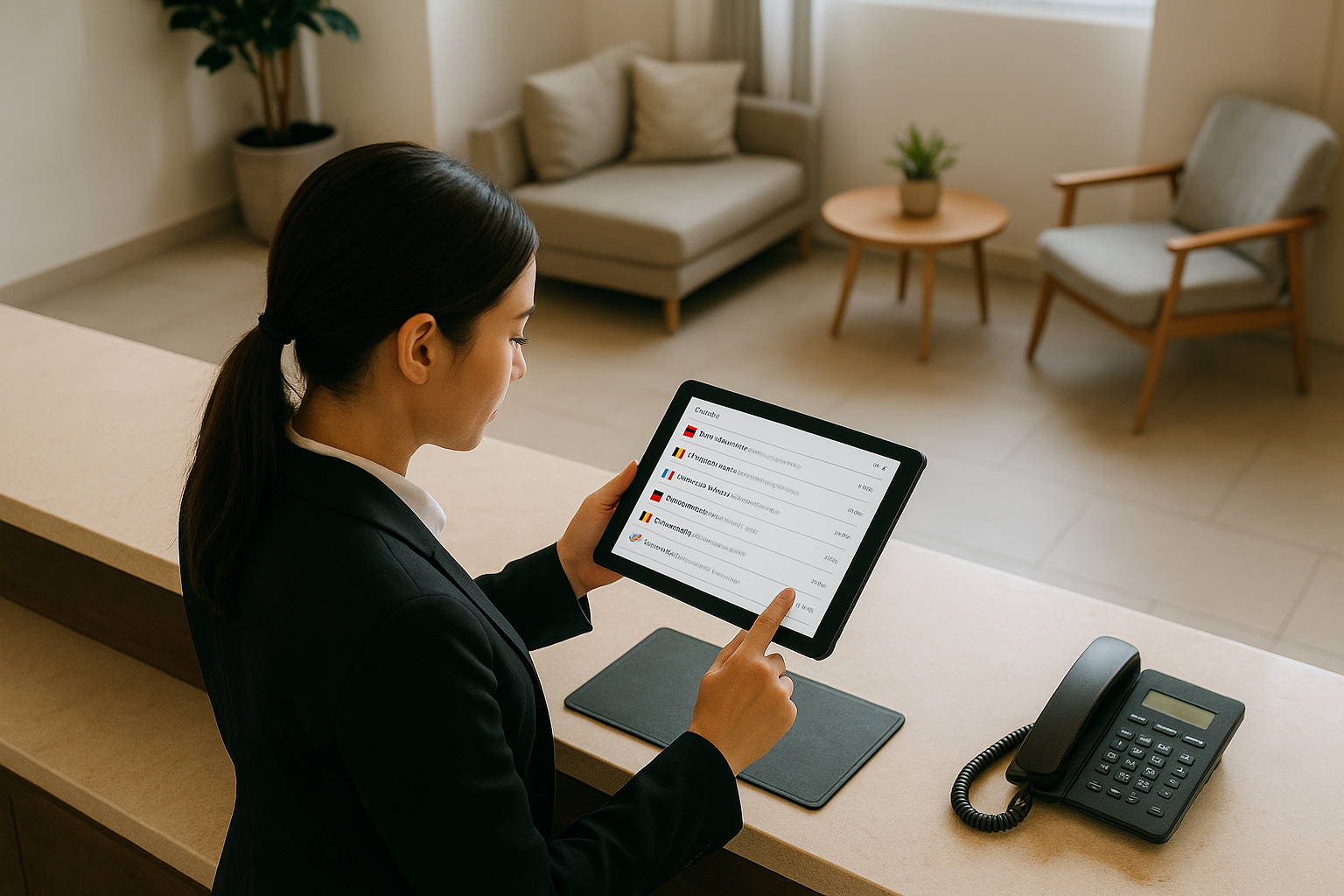
Every hotel chatbot conversation lands on one staff dashboard, translated for the team.
Hotel Chatbot vs. Traditional Front Desk Service
A hotel chatbot is not meant to replace the front desk; rather, it absorbs the repetitive layer of questions so staff can focus on moments that need a human. The table below summarizes the practical differences.
Factor | Front Desk Only | Hotel Chatbot |
|---|---|---|
Availability | Limited to staffed hours | 24/7, no wait |
Languages | Depends on who is on shift | Consistent across all guests |
Request tracking | Sticky notes, radios, memory | Logged on one dashboard |
Allergy/safety notes | Easily lost between shifts | Flagged with required acknowledgment |
Choosing the Right Virtual Concierge for Your Property
Not every virtual concierge is built for independent hotels. Many enterprise guest platforms assume a property management system (PMS) integration project, native app development, and a price tag sized for a 300-room property. For a 10 to 150-room boutique hotel, that mismatch is exactly what stalls adoption for months.
When evaluating options, look for a few specific things: no required PMS integration so the property can go live in days, genuine multilingual support rather than machine translation bolted on top, an allergy or safety alert workflow, and simple per-room pricing instead of tiered enterprise contracts. Cortesia, for example, supports eight languages end to end, including full right-to-left Arabic, with unlimited guest usage and unlimited staff seats, and a live demo available at cortesia.ai.
It also helps to see how a chatbot handles a specific, high-stakes request type. This breakdown of how boutique hotels respond fast to room upgrade requests shows the kind of routing and response speed worth testing before committing to any platform. For a side-by-side look at alternatives, the comparison at Cortesia vs. GuestAI is a useful starting point.
Pricing and Setup Time for an AI Concierge
Cost is usually the first question an owner-operator asks, and for good reason. Independent-hotel chatbots tend to use simple per-room, month-to-month pricing rather than long enterprise contracts, which means a property can cancel anytime without penalty. Setup typically includes building the property knowledge base, importing rooms and staff, and producing print-ready QR materials for every door or table tent.
Because there is no PMS integration to negotiate, most properties can go live within days rather than the months a traditional enterprise rollout demands. Data exportability also matters: a hotel should be able to request its guest and request history on demand, not be locked into a single vendor's format. Full terms covering cancellation and data handling are worth reading before signing up, such as the Cortesia terms of service.
Common Mistakes When Adopting Hotel Guest Chatbots
Even a strong hotel chatbot underperforms if it is rolled out poorly. The most frequent mistake is choosing a tool that still requires a guest app download, which defeats the entire purpose given how few travelers install apps for short stays. A second mistake is placing the QR code somewhere guests rarely look, such as a drawer, instead of the nightstand or a table tent they will actually see.
Additionally, some properties skip staff training on the dashboard itself, treating it as an afterthought rather than the primary request queue. Finally, overlooking safety routing, specifically allergy and maintenance alerts that require acknowledgment, can turn a convenience feature into a liability gap. Properties that avoid these pitfalls tend to see faster adoption and fewer missed requests within the first week.
Frequently Asked Questions About Hotel Chatbots
What is a hotel chatbot?
A hotel chatbot is an AI tool that answers guest questions, takes requests, and relays them to staff, usually reached by scanning a QR code with no app or login required. It works in the guest's own language and uses the property's real information rather than generic web answers.
How does a hotel chatbot handle multiple languages?
A multilingual hotel chatbot detects the language the guest types in, answers in that same language, and translates the message into the staff's working language on the dashboard side. Cortesia, for example, supports eight languages end to end, including full right-to-left Arabic.
Why do boutique hotels need a hotel chatbot?
Boutique hotels run lean teams but promise personal service, and a hotel chatbot absorbs repetitive questions so staff can focus on guests who need a human touch. With staffing shortages affecting most properties, automating routine requests protects both service quality and review scores.
How is a hotel chatbot different from a hotel app?
A hotel app requires a download, an account, and app-store approval, while a hotel chatbot opens instantly through a QR code or link in the guest's existing browser. Because there is nothing to install, far more guests actually use it during a short stay.
How much does a hotel chatbot cost?
Pricing for independent-hotel chatbots is typically a simple per-room monthly fee rather than an enterprise licensing deal. Cortesia, for instance, charges month-to-month per room with unlimited guest and staff usage, and no long-term contract.
How long does it take to set up a hotel chatbot?
A modern hotel chatbot built for independent properties can go live in days rather than months because it skips PMS integration projects. Setup usually covers importing the property knowledge base, rooms and staff, plus print-ready QR materials.
Does a hotel chatbot require PMS integration?
No, the better independent-hotel chatbots are designed to work without a property management system integration. This is what allows a 42-room boutique property or a single short-term rental to launch in days instead of waiting on an IT project.
Can a hotel chatbot handle food allergy alerts?
Yes, a well-built hotel chatbot flags safety-related messages, such as a guest mentioning a shellfish or nut allergy, and routes them to staff as alerts requiring acknowledgment. This creates a documented trail instead of relying on someone remembering a verbal mention.
What common mistakes do hotels make when adopting a chatbot?
The most common mistake is choosing a chatbot that requires a guest app download, which most travelers never install for a short stay. Other mistakes include skipping staff training on the dashboard and failing to print QR codes somewhere guests will actually see them.
Is a hotel chatbot only for large hotel chains?
No, hotel chatbots built for independents are specifically priced and designed for 10 to 150 room boutique hotels, not just large chains. Enterprise guest platforms usually assume a PMS integration and a price tag sized for much larger properties.
Can short-term rental hosts use a hotel chatbot?
Yes, a hotel chatbot works equally well for a single short-term rental or a small portfolio managed remotely with no front desk at all. A guest simply scans a QR code in the unit and reaches the host's virtual concierge the same way a hotel guest would.
What best practices improve hotel chatbot adoption?
Place the QR code somewhere guests naturally look, such as the nightstand or welcome folder, and mention it briefly at check-in. Training staff to treat the dashboard as their primary request queue, rather than a side channel, also drives faster adoption.
Does a hotel chatbot replace the front desk staff?
No, a hotel chatbot is designed to absorb repetitive questions like Wi-Fi passwords and checkout times, not to replace staff judgment. Staff still handle the requests that need a human decision, just with fewer interruptions for routine information.
How does a hotel chatbot improve guest reviews?
Guests who get fast, accurate answers in their own language are less likely to leave a review citing miscommunication or slow service. Because requests are logged and routed instead of lost, fewer things fall through the cracks during a stay.
What languages does Cortesia's hotel chatbot support?
Cortesia supports eight languages end to end, including full right-to-left Arabic, for both the guest-facing chat and the translated staff dashboard. This covers most of the international and non-English-speaking guest traffic that independent hotels see near borders, gateway cities, and universities.
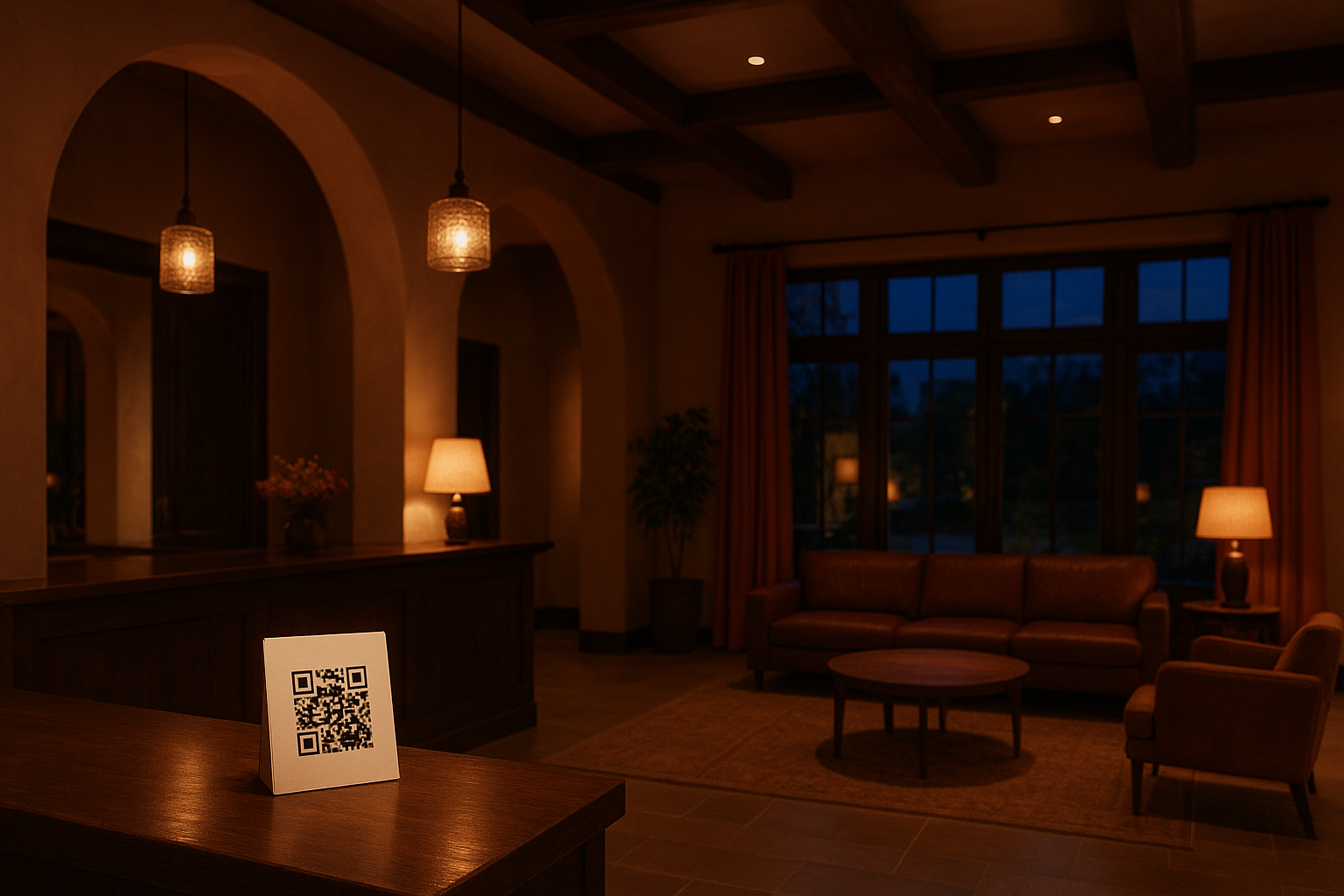
A simple printed QR code is often all it takes to introduce guests to a hotel chatbot.
Conclusion
A hotel chatbot is no longer a nice-to-have for independent properties; it is quickly becoming the difference between a lean team that keeps up and one that burns out answering the same questions all day. As staffing stays tight and international travel keeps climbing, properties that offer instant, multilingual answers through a simple QR code are positioned to protect both their service reputation and their review scores. Whether the goal is cutting front-desk interruptions, catching allergy mentions before they become incidents, or simply giving every guest an answer in their own language, a well-chosen hotel chatbot delivers all of it without a long implementation project. Properties ready to see the approach in action can explore the live demo at cortesia.ai.