Hotel Guest Language Translation: Complete 2026 Guide
Hotel guest language translation is the technology that lets a property answer guest questions in the guest's own language, instantly, without a human interpreter standing by. For a boutique hotel running on a lean staff, that one shift changes everything: a guest from Tokyo or Berlin gets the same confident, personal answer as a guest from down the street.
Independent hotels have always won on personality and attention. However, that personal touch breaks down fast when a guest cannot explain an allergy, a broken air conditioner, or a request for a late checkout. In particular, the front desk ends up guessing, and guessing wrong is how a five-star stay turns into a two-star review.
Direct answer: Hotel guest language translation uses a QR code or chat link to let guests message a hotel in their own language, with AI translating both directions so staff reply in the language they work in. Platforms built for independents, like Cortesia, add this without an app download or a property management system integration.
What Is Hotel Guest Language Translation?
Hotel guest language translation refers to any system that converts a guest's message into the language staff use, and converts the staff reply back into the guest's language, in real time. Unlike a generic translation app, a purpose-built concierge also understands the property: its amenities, menus, house rules, and neighborhood.
As a result, the guest gets an answer that is both linguistically correct and factually accurate. For example, a guest asking about breakfast hours in Spanish gets the real hours for that property, not a generic guess.
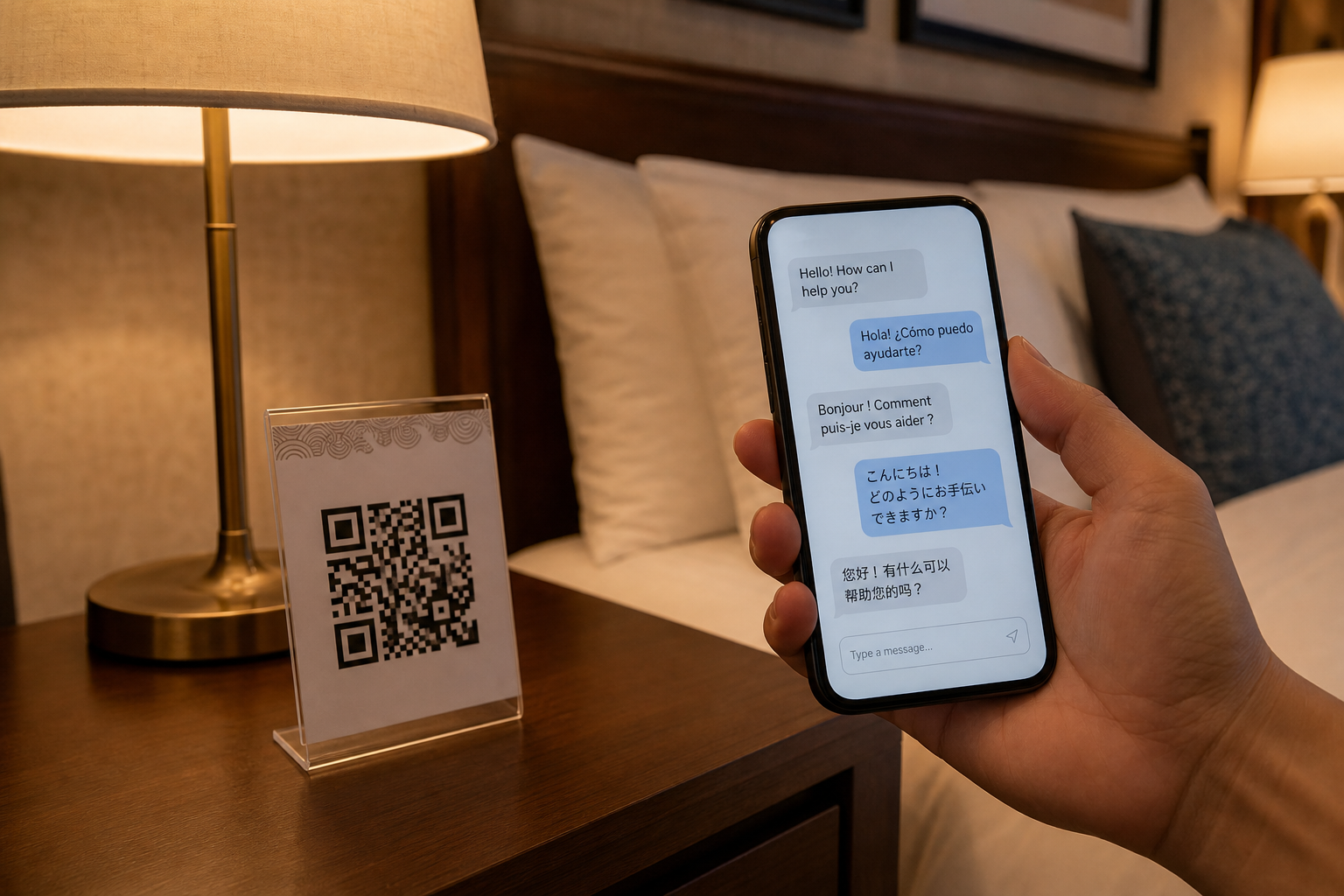
A guest opens hotel guest language translation by scanning a QR code, with no app download needed.
Why Guest Language Barriers Hurt Independent Hotels
Staffing is already the pressure point at most independent properties. An AHLA and Hireology survey found that 65% of hotels report staffing shortages, with housekeeping at 38% and the front desk at 26% among the most critical gaps, according to the American Hotel & Lodging Association. Consequently, the same small team is stretched across checkout questions, Wi-Fi passwords, and a ringing phone.
Meanwhile, the guest mix keeps getting more international. International arrivals reached roughly 1.5 billion in 2025, and research from CSA finds that 76% of consumers prefer to engage in their own language. In short, hotels are serving more non-English speakers with fewer staff to help them.
Guest apps rarely solve this. Industry research has long shown only a small minority of guests ever install a hotel app, because asking someone to download software for a two-night stay is asking them to do work they did not come on vacation to do.
How Hotel Guest Language Translation Works, Step by Step
A well-designed system removes friction for both the guest and the staff. Here is how it typically comes together at a property:
Map the common guest questions and the languages your current guests actually speak.
Choose a QR-code based concierge instead of an app guests must download and install.
Load the property's knowledge base: rooms, amenities, menus, and local recommendations.
Connect every translated request to one live staff dashboard, instead of scattered texts and sticky notes.
Print and place QR codes in rooms, at check-in, and in common areas.
Train staff on how allergy and safety alerts appear and require acknowledgment.
Cortesia follows this exact sequence for boutique hotels and short-term rentals. Because there is no PMS integration step, properties typically go live in days rather than months, with the knowledge base, room import, and printed QR materials included in onboarding.
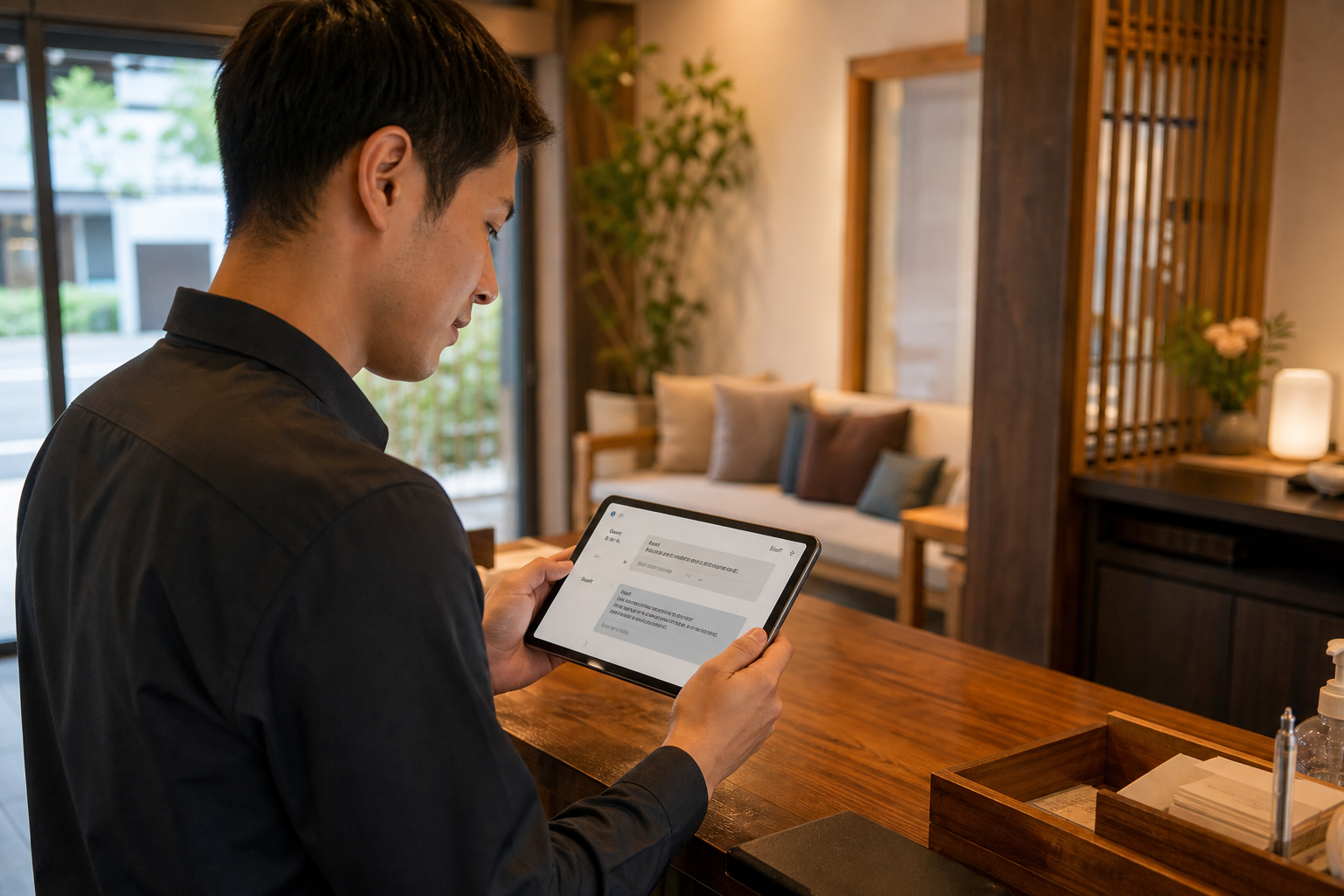
Translated guest requests arrive on one dashboard, so staff never have to switch tools or guess at meaning.
Multilingual Guest Communication vs. Traditional Methods
Many hotels still rely on bilingual staff, translation apps on a shared tablet, or printed phrasebooks. Each approach helps a little, but none of them scale across a full shift or a full guest list. The table below compares the common options.
Method | Knows the Property? | Needs an App? | Routes to Staff? |
|---|---|---|---|
Bilingual staff only | Yes, when on shift | No | No |
General translation app | No | Usually | No |
Enterprise guest app | Yes | Yes | Yes, with integration |
QR-based hotel guest language translation | Yes | No | Yes, no PMS needed |
Best Practices for Implementing Guest Translation Technology
Implementation success depends less on the technology itself and more on how a property rolls it out. Above all, the goal is to reduce friction for the guest, not add another screen to manage.
First, place the QR code where guests naturally look: the nightstand, the bathroom mirror, and the check-in counter. Second, make sure the knowledge base reflects real amenities and hours, since an inaccurate answer is worse than no answer. Third, treat allergy and safety mentions as alerts that require acknowledgment, not casual notes.
Finally, review which languages guests actually use each month and adjust coverage accordingly. A property near a university or convention center may need broader language support than one in a smaller market. For a deeper look at the surrounding systems, this complete guide to hotel guest communication covers the full picture beyond translation alone.
Hotel Guest Language Translation for Short-Term Rentals
Short-term rental hosts face the same problem with none of a hotel's staff. A single owner managing a property remotely cannot answer a 2 a.m. message in a language they do not speak. Similarly, a guest who cannot explain a locked door or a broken appliance ends up frustrated and reviews the stay poorly.
Therefore, the same QR-based approach applies directly: the guest scans a code at the door, asks in their own language, and the host reads the translated message whenever they check the dashboard, day or night. Readers comparing messaging options across formats may find this buyer's guide to hotel guest messaging software useful alongside this one.

A simple printed card lets rental guests reach translated support without calling the host directly.
Common Mistakes to Avoid
Even well-intentioned hotels make a few recurring errors. For instance, relying solely on one bilingual staff member means coverage disappears the moment that person is off shift. In addition, pushing guests toward an app download for a short stay often means the tool goes unused entirely.
Another common mistake is treating allergy or safety information as a verbal note instead of a tracked alert. Without acknowledgment, a shellfish allergy mentioned once to housekeeping may never reach the kitchen. Hotels that want a side-by-side look at how this compares to manual front-desk processes can review this comparison of Cortesia against traditional front-desk tools.
Setting the Tone Before Guests Arrive
Translation technology works best alongside strong pre-arrival communication. A welcome note that already signals multilingual support sets expectations early. Properties refining this step may find these guest welcome note templates helpful, and those exploring the broader concierge concept can review this guide to QR code hotel concierge systems for boutique properties.
Cortesia, built specifically for boutique and independent hotels, demonstrates this approach on its live demo property, The Mesquite, a 42-room hotel serving guests across eight languages. Readers can explore the Cortesia live demo to see how a guest request moves from scan to translated staff reply in real time.
Frequently Asked Questions
What is hotel guest language translation?
Hotel guest language translation is technology that converts guest questions and staff replies between languages in real time. It typically runs through a QR code or chat link rather than requiring a human interpreter on site.
How does hotel guest language translation work without a mobile app?
Guests scan a printed QR code, which opens a branded web page in their phone's browser with no download or login required. The guest types or speaks their request, and the system translates it instantly for staff.
Why do boutique hotels need multilingual guest communication?
Boutique hotels compete on personal service, but lean teams cannot staff interpreters for every language. Multilingual guest communication prevents misunderstandings over allergies, amenities, and requests that otherwise lead to negative reviews.
How many languages should a hotel support for guest translation?
Most independent hotels cover their guest mix well with six to eight languages, including regional languages common near the property. Properties near airports, universities, or borders may need broader coverage, including right-to-left languages such as Arabic.
What is the cost of a hotel guest language translation system?
Enterprise guest platforms are usually priced for large chains and tied to long contracts. Tools built for independents, such as Cortesia, typically use simple per-room, month-to-month pricing with no long-term commitment.
How long does it take to set up guest translation technology?
Platforms that skip PMS integration can go live in days rather than months. Setup usually involves loading the property's knowledge base, importing rooms and staff, and printing QR code materials.
What's the difference between a translation app and a dedicated guest translation platform?
A general translation app converts text but has no knowledge of the property and no routing to departments. A dedicated platform understands the hotel's amenities and policies and routes requests to the right team automatically.
How does language translation help with food allergy alerts?
When a guest mentions a food allergy in their own language, a well-built platform flags it as a safety alert that staff must acknowledge. This creates a record of who was notified, instead of relying on a note that can be forgotten.
Can short-term rentals use hotel guest language translation too?
Yes. A single host running a rental with no front desk benefits from the same QR-based approach, since it replaces late-night phone calls with translated messages the host can answer whenever convenient.
What mistakes do hotels make when handling language barriers?
The most common mistake is relying only on staff who happen to speak a second language. Another is pushing guests to download an app for a short stay, which most guests simply ignore.
Does hotel guest language translation require integrating with the PMS?
Not necessarily. Several modern tools, including Cortesia, are designed to work without a property management system integration, allowing independent properties to launch in days instead of months.
How does staff see translated messages from guests?
Guest requests land on a single live staff dashboard, already translated into the language the team works in. Staff reply in their own language, and the guest reads the response translated back into theirs.
Final Thoughts
Hotel guest language translation is no longer a luxury reserved for large chains with big IT budgets. Independent hotels and short-term rentals, in particular, can now offer the same instant, personal response to a guest in any language through a simple QR code and a live staff dashboard. As a result, the front desk spends less time repeating the same answers, housekeeping stops guessing at knocks, and allergy mentions get tracked instead of lost.
Ultimately, properties that adopt hotel guest language translation without an app or a lengthy PMS project tend to see the fastest results, often going live within days. Reviewing a live example, such as Cortesia's demo property at cortesia.ai, is a practical next step for any boutique hotel or rental host ready to close the language gap.