
Hotel guest request routing is the practice of sending every guest request to the right department, with one clear owner and a clear deadline. For a small property, it is the difference between a calm shift and a front desk buried in calls. This guide explains how routing works, how to set it up, and where small hotels go wrong.
Short answer: Name one owner for each request type, give guests one channel to ask, set a response target, and review late requests weekly. Tools help, but the rules come first.
What Is Hotel Guest Request Routing?
It is the path a request takes from the guest to the person who can fix it. A guest asks for extra towels. The request reaches housekeeping, someone accepts it, and the guest gets an answer. That is routing at its simplest.
Without it, requests travel by phone, text, sticky note and radio. Some get done twice. Others get forgotten. Therefore, the guest feels the gap before the team even notices it.
Why Lean Teams Feel the Pain First
Boutique hotels compete on personal service, yet they run on small teams. An AHLA and Hireology survey found 65% of hotels reporting staffing shortages, with housekeeping (38%) and the front desk (26%) the most critical gaps. When people are scarce, every lost request costs more.
In addition, the front desk ends up answering the same questions all day: Wi-Fi, breakfast hours, checkout times. Routing routine items away from the counter frees staff for guests who are standing in front of them.
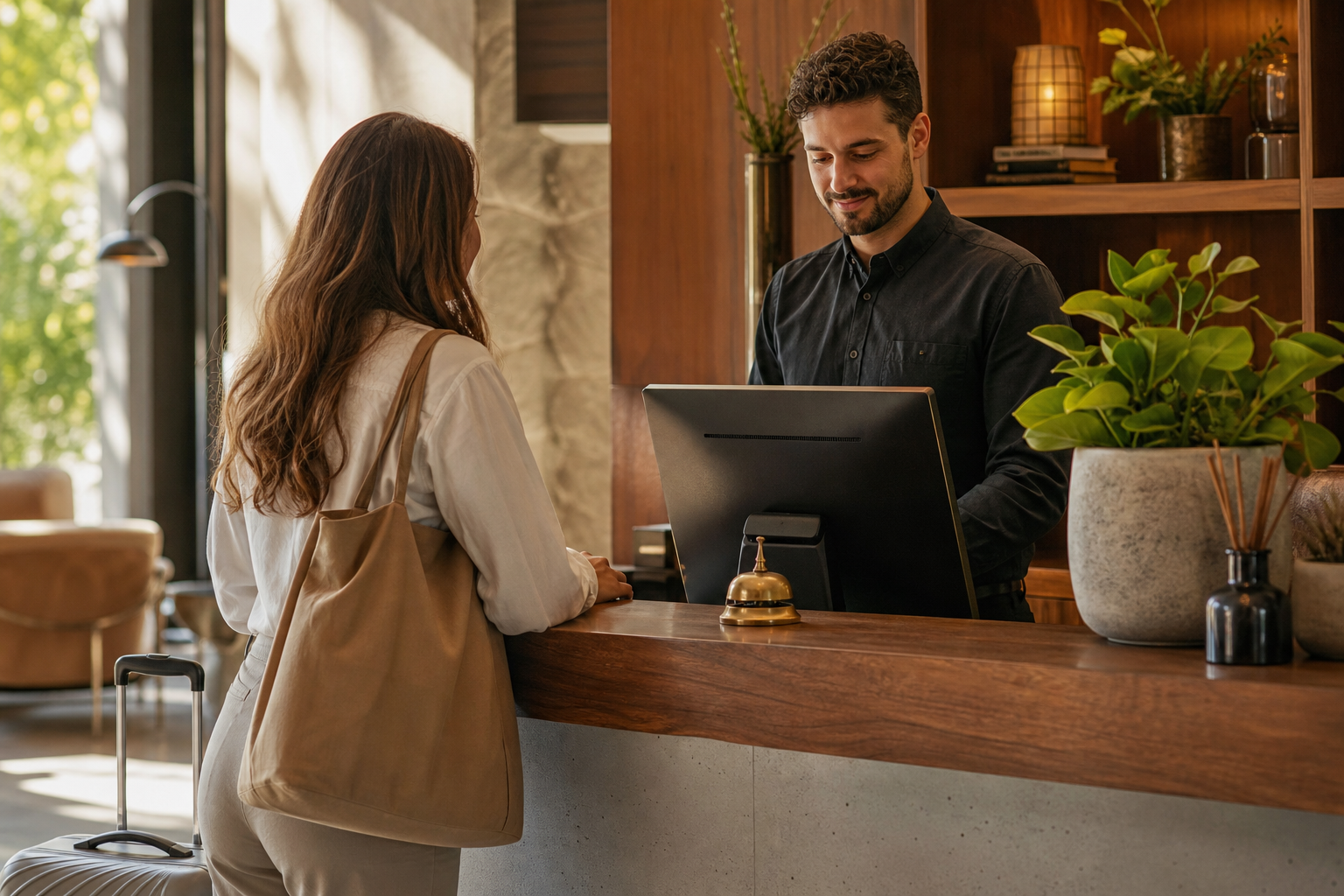
A calm front desk is easier to keep when hotel guest request routing handles routine asks.
How to Route Guest Requests Step by Step
You can build a working process in about an hour. Follow these steps in order.
- List your request types. Write down everything guests ask for, from towels and Wi-Fi to repairs and late checkout.
- Assign one department to each type. Housekeeping, maintenance, front desk, or food and beverage. Never two owners.
- Set response targets. Agree on realistic times and decide who steps in when nobody acknowledges a request.
- Give guests one way to ask. A printed QR code in each room works well because it needs no download.
- Track and review weekly. Look at open, done and late requests, then adjust owners and staffing.
Who Should Own Which Request?
A simple table keeps everyone aligned. Adjust it to your property.
| Request | Owner | Priority |
|---|---|---|
| Extra towels, linens, cleaning | Housekeeping | Routine |
| Air conditioner or plumbing issue | Maintenance | Urgent |
| Late checkout, general questions | Front desk | Routine |
| Dining and allergy notes | Food and beverage staff | Urgent |
For upgrade asks specifically, see how boutique hotels respond to room upgrade requests fast. For broken or blocked rooms, read about tracking out-of-order rooms.
Routing Requests in the Guest's Own Language
Language is where routing often breaks. CSA Research reports that 76% of consumers prefer to engage in their own language. A guest who cannot explain a broken air conditioner in English may simply give up.
The fix is two-way translation. The guest writes in their language, staff read it in theirs, and the reply goes back in the guest's own language. As a result, nobody needs a translator on shift.
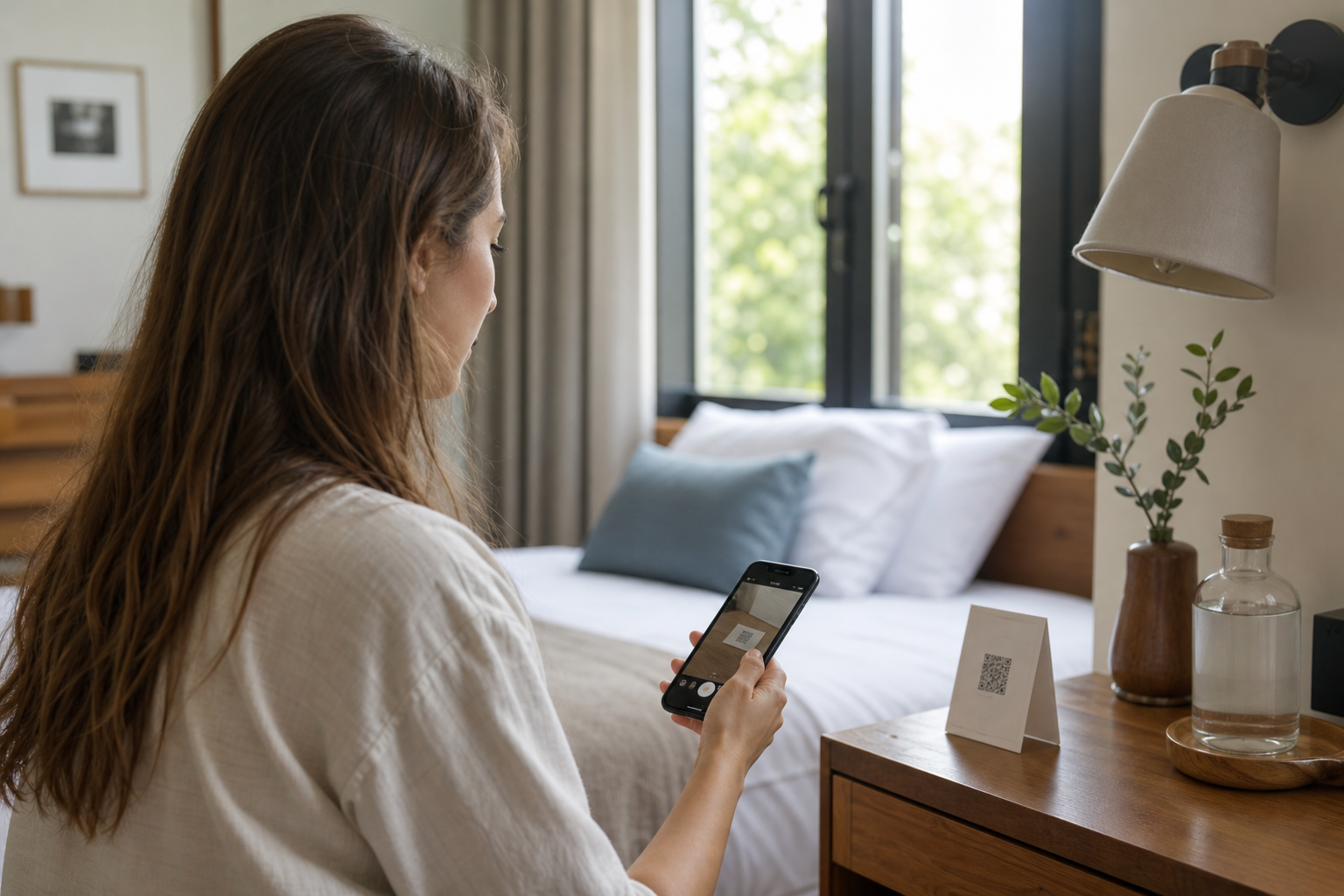
A printed QR code lets guests send a request without an app or an account.
How an AI Concierge Handles Routing
Cortesia is a multilingual AI concierge for boutique and independent hotels and short-term rentals. Guests scan a QR code in the room, with no app, no login and no account. Their request goes to one live staff dashboard, translated for the team and routed to the right department.
The setup includes the property knowledge base, room and staff import, and print-ready QR materials. There is no PMS integration required, so properties go live in days. Guests can use it in eight languages, and staff seats are unlimited. To learn more about the format, read this guide to QR code hotel concierge service.
Allergy Messages Need Extra Care
Food-allergy mentions trigger staff alerts that require acknowledgment. Even so, hotel staff preparing food are the final authority. Guests should always confirm allergy information directly with staff. Allergy details are used only for guest safety.
Common Routing Mistakes to Avoid
- Unclear owners, so two teams assume the other has it.
- Too many channels, such as calls, texts and notes all at once.
- No deadlines, so routine items quietly age.
- No weekly review, so the same delays repeat.
Furthermore, scattered inboxes make all four worse. This piece on organizing hotel messages and guest requests shows how to bring them together.
Frequently Asked Questions
What is hotel guest request routing?
Hotel guest request routing is the process of sending each guest request to the right department, with a clear owner and a deadline. It replaces scattered calls, notes and radio messages with one organized flow.
Why does request routing matter for small hotels?
Small teams cannot afford lost or duplicated work. Good routing means the right person sees the request first, which saves time and prevents missed service.
Which department should own each request?
Housekeeping usually owns towels, linens and cleaning. Maintenance owns repairs, the front desk owns checkout and general questions, and food and beverage owns dining requests.
How fast should a hotel respond to a guest request?
There is no universal standard, so set targets that fit your team. Urgent items like a broken air conditioner should be acknowledged within minutes, while routine items can have longer windows.
How do you handle requests from guests who speak another language?
Let guests write in their own language and translate the request for staff. Then send the reply back in the guest's language so nothing is lost in either direction.
Is a phone call or a QR code better for guest requests?
A QR code creates a written record and does not tie up the front desk line. Phone calls still help guests who prefer them, but they are harder to track.
Do guests need to download an app to send requests?
Not with every approach. With Cortesia, guests scan a room QR code on their own phone, with no app, no login and no account.
How should a hotel route allergy-related messages?
Send them straight to staff who prepare food and require acknowledgment. Hotel staff are the final authority on food safety, and guests should confirm allergy information directly with staff.
What are the most common routing mistakes?
The most common mistakes are unclear owners, too many channels, no deadlines and no follow-up. Each one lets requests slip through.
How can routing help housekeeping?
Guests can say when they want service, so staff stop knocking on occupied rooms. That cuts wasted visits and guest annoyance.
Does hotel guest request routing require a PMS integration?
It does not have to. Cortesia works without a PMS integration, and properties can go live in days.
How long does it take to set up a routing process?
The planning steps, such as listing requests and naming owners, can take about an hour. Tools and printed materials add a few days at most.
Conclusion
Strong hotel guest request routing comes down to a few habits: one owner per request, one channel for guests, clear response targets and a weekly review. Add translation in the guest's own language, and a lean team can serve every guest well. To see how it works in practice, try the live demo or visit Cortesia.