
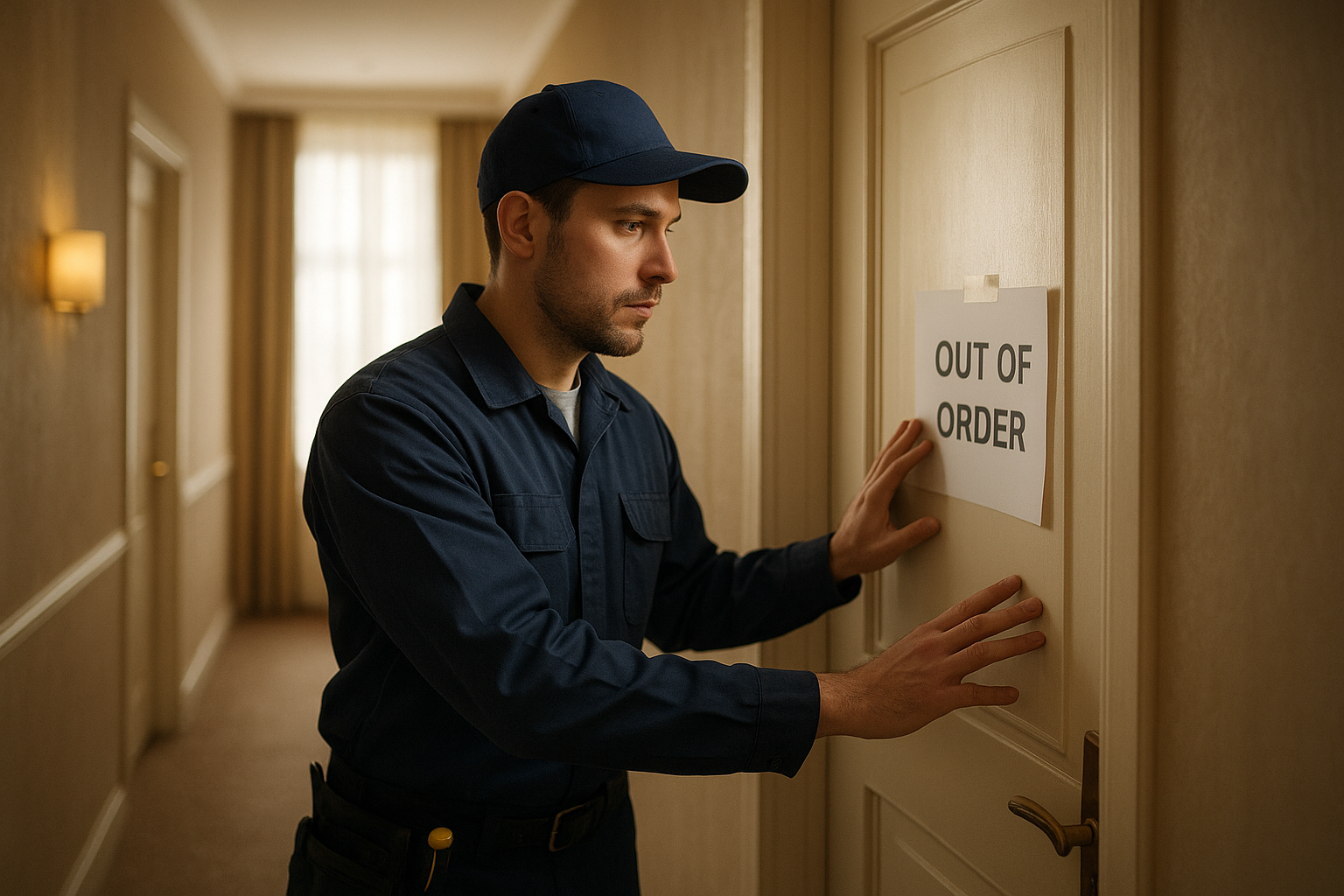
Out of Order Rooms: How to Track and Resolve Them Fast
Out of order rooms are guest rooms pulled from sellable inventory because of damage, a maintenance failure, or a safety issue that makes the space unfit to sell. For a boutique hotel running a lean team, every out of order room is lost revenue and, often, a scramble to relocate a guest who already has a key in hand. Because this guide goes further than the typical overview, it covers not just the definition but the PMS status codes, the exact revenue math, the legal exposure, and the step-by-step workflow that keeps the out-of-order list short instead of growing quietly in the background.
Quick answer: Out of order rooms are rooms removed from available inventory because of maintenance, damage, or safety problems, and they differ from "out of service" rooms, which are blocked temporarily for a shorter, planned reason. The fastest way to shrink their impact is to log, assign, and track every out of order room in one shared system rather than a whiteboard, two-way radio, or group chat.
What Are Out of Order Rooms?
In short, out of order rooms are units that cannot be assigned to a guest because something inside them is broken, unsafe, or otherwise unfit for use. The front desk removes the room from the availability chart until maintenance clears the issue and the unit passes a final inspection.
Typically, this status applies to problems without a fixed timeline: a failed air conditioning unit, a leaking pipe, a damaged door lock, or a pest report. Unlike a quick deep-clean block, an out of order room can sit unsellable for hours, days, or occasionally weeks, depending on the fix required.
For a 10 to 150-room independent property, even one or two rooms out of order at a time can meaningfully dent occupancy on a busy weekend. As a result, how quickly a hotel notices, logs, and resolves the issue matters just as much as the repair itself.
Catching out of order rooms early keeps minor repairs from turning into multi-day closures.
PMS Status Codes: Where OOO Fits In
Most property management systems (PMS) use short codes to describe a room's condition at a glance. Understanding these codes matters because an out-of-order room is just one status among several, and mixing them up leads to overselling or wasted housekeeping trips.
OOO (Out of Order): unsellable due to an unresolved maintenance, damage, or safety problem with no fixed return date.
OOS (Out of Service): temporarily blocked for a planned, short reason such as a scheduled deep clean.
DND (Do Not Disturb): occupied and sellable, simply flagged so housekeeping skips the room that day.
VC / VD (Vacant Clean / Vacant Dirty): ready or awaiting cleaning, but otherwise fully sellable.
HU (Held for Use): blocked for a specific operational reason, such as a VIP or group hold.
Because OOO is the only one of these codes tied to an open-ended problem, it deserves its own tracking process rather than being lumped in with routine housekeeping statuses. The next sections cover exactly why that distinction pays off.
Common Causes Behind an Out-of-Order Room List
Most out-of-order room reports trace back to a handful of recurring issues: plumbing leaks, HVAC breakdowns, electrical faults, broken locks, and pest sightings. In addition, cosmetic damage from a previous guest, such as a stained carpet or a cracked mirror, can also force a room offline until it is repaired.
Because lean teams juggle many priorities at once, small issues sometimes get deferred until they escalate. A slow drip, for instance, can quietly turn into water damage that takes a room out of service for far longer than the original fix would have required.
For a deeper breakdown of specific causes and the real financial impact of each, see this dedicated guide on out of order room causes and costs, which pairs well with the management steps covered later in this article.
The Real Cost of an Out-of-Order Room for Boutique Hotels
Every out of order room is a night of revenue that can't be recovered once it's gone. Furthermore, the hidden costs often matter more: relocating a guest, comping an upgrade, or managing an unhappy review all add up quickly for a small property.
Staffing pressure makes the problem worse. According to a survey by the American Hotel & Lodging Association and Hireology, 65% of hotels report staffing shortages, with housekeeping at 38% and the front desk at 26% among the most critical gaps. Consequently, fewer staff means slower reporting, slower repairs, and longer out of order windows.
Data point: 65% of hotels report staffing shortages, with housekeeping (38%) and front desk (26%) the hardest-hit departments, a direct contributor to slower out of order room turnaround. (Source: AHLA/Hireology survey)
On top of that, language gaps compound the problem. Research from CSA Research shows 76% of consumers prefer to engage in their own language, which means a guest who can't clearly describe a broken air conditioner in English may simply stay silent until the issue gets worse.
How to Calculate Revenue Lost to Out of Order Rooms
Specifically, the math is simple but worth running once a quarter: multiply the average daily rate by the number of nights the room sits out of order, then multiply again by how many rooms are affected at once. For example, a $180 average rate, a 4-night repair, and two rooms down simultaneously equals $1,440 in lost room revenue before counting relocation costs or lost ancillary spend.
Beyond the direct loss, every out of order room also drags down revenue per available room (RevPAR), a core metric hotels use to benchmark performance. Therefore, tracking total out-of-order nights per month gives ownership a concrete number to weigh against the cost of better tracking tools or additional maintenance staff.
Out of Order vs. Out of Service: What's the Difference?
An out of order room has an unresolved problem with no fixed return date, while an out of service room is blocked temporarily for a planned, short reason, such as a scheduled deep clean or carpet shampoo. Essentially, one is reactive and open-ended; the other is proactive and scheduled.
This distinction matters for forecasting. Housekeeping leads can plan around out of service blocks, whereas out of order rooms require ongoing status checks because nobody knows exactly when the fix will finish.
How to Manage an Out-of-Order Room List Without Chaos
A clear, repeatable process keeps an out of order room from sitting forgotten. Below is the workflow that works well for independent properties, regardless of whether they use a full property management system.
Log the room the moment it's found: record the issue immediately in a shared digital log that housekeeping, maintenance, and the front desk can all see in real time.
Assess severity and assign an owner: have a manager review the issue, assign it to maintenance, housekeeping, or an outside vendor, and set a realistic completion window.
Flag safety or guest-impact issues: mark any issue tied to safety, heating, cooling, or a documented guest allergy for immediate escalation rather than routine handling.
Relocate any guest already assigned: move anyone booked into that room to equivalent or upgraded inventory before arrival, and notify them proactively. This is where fast handling of room upgrade requests protects the guest experience.
Update status in real time: keep the out of order status current as work progresses so the front desk never oversells a room maintenance hasn't released.
Inspect and return to inventory: complete a final inspection, confirm the fix meets brand standards, then close the ticket and make the room sellable again.
Choosing the right system to run this process matters. For properties comparing options, this hotel staff task management software buyer guide walks through what to look for beyond basic ticketing.
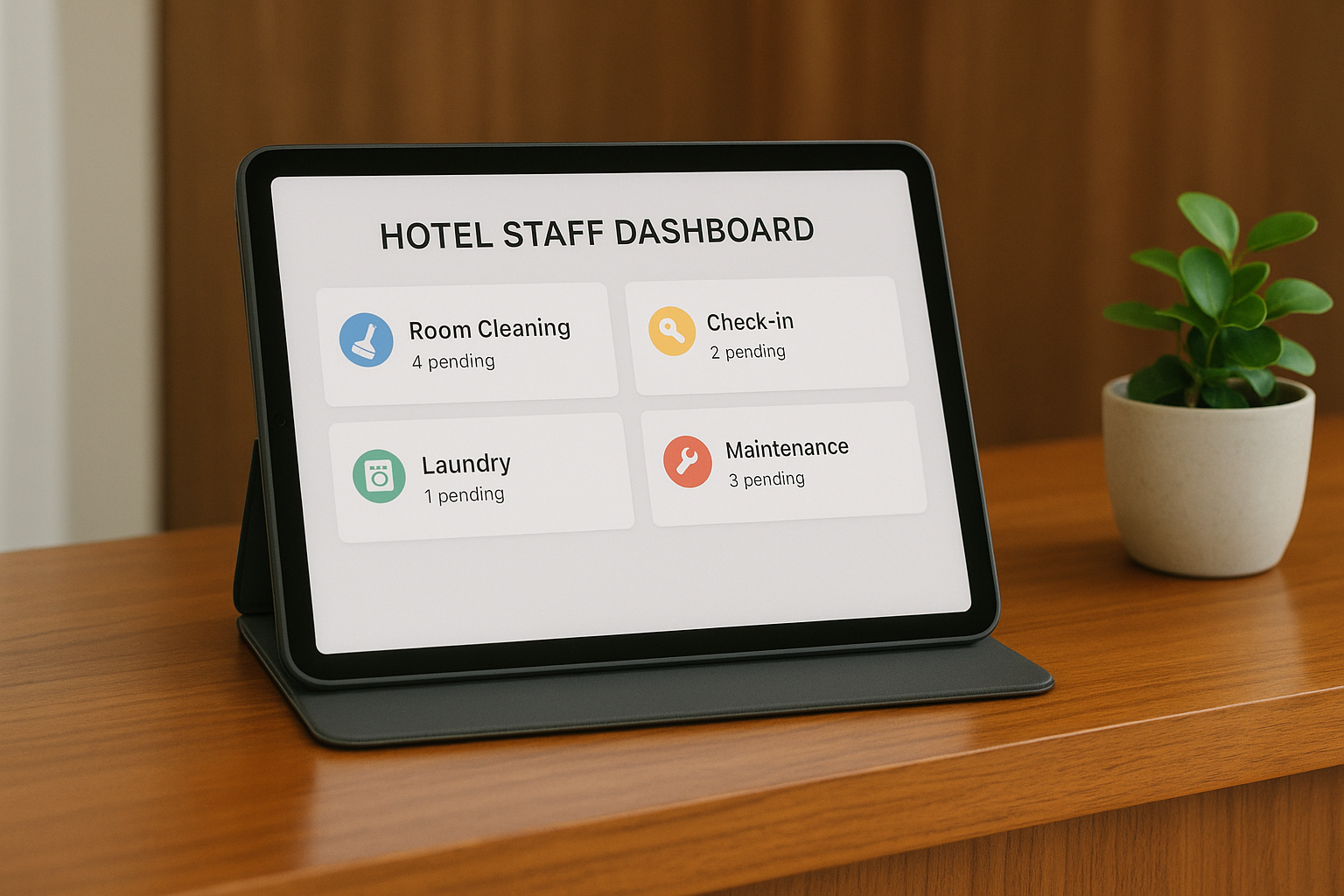
A shared dashboard keeps every out of order room visible to housekeeping, maintenance, and the front desk at once.
Sample Out-of-Order Room Log Template
If a full system isn't ready yet, a simple shared spreadsheet or log with the following fields prevents rooms from falling through the cracks:
Room number and issue description
Date and time reported, and who reported it
Assigned owner (maintenance, housekeeping, or vendor)
Severity level and target completion window
Current status (reported, in progress, awaiting parts, ready for inspection)
Final inspection date and the name of whoever cleared it for sale
Even this low-tech version beats verbal updates, because every field is time-stamped and visible to the whole team instead of living in someone's memory.
Legal and Safety Considerations for Out of Order Rooms
Beyond lost revenue, an out of order room can carry legal exposure if it isn't handled carefully. For instance, accessible rooms taken out of order for extended periods may need to be temporarily substituted with equivalent accessible inventory under guidelines described by the Americans with Disabilities Act, since properties are generally expected to maintain accessible room availability.
Similarly, any issue tied to fire safety, carbon monoxide detection, or structural integrity should never wait for a routine maintenance cycle. In practice, this means safety-related out-of-order rooms deserve a separate escalation path with a shorter response window than a cosmetic repair.
Documenting every step (who reported the issue, when it was fixed, and who signed off on the final inspection) also protects the property if a guest disputes a relocation or files a complaint later.
How a QR Concierge Dashboard Keeps Rooms Moving Faster
Many out of order rooms start as a small complaint that never reaches the front desk, especially when the guest doesn't speak the staff's language. A printed QR code in the room gives guests a private, branded way to report a problem instantly, in their own language, with no app or login required.
Cortesia routes that message straight to a live staff dashboard, translated into the language the team works in, so a broken thermostat or a water leak gets flagged while it's still a minor fix rather than a multi-day closure. Food-allergy mentions, for example, trigger a staff alert that requires acknowledgment, which closes the same kind of communication gap that causes bigger problems.
To see how this approach works end to end, this QR code hotel concierge guide covers setup for boutique properties, and this comparison with Duve is useful for teams evaluating guest messaging platforms side by side.
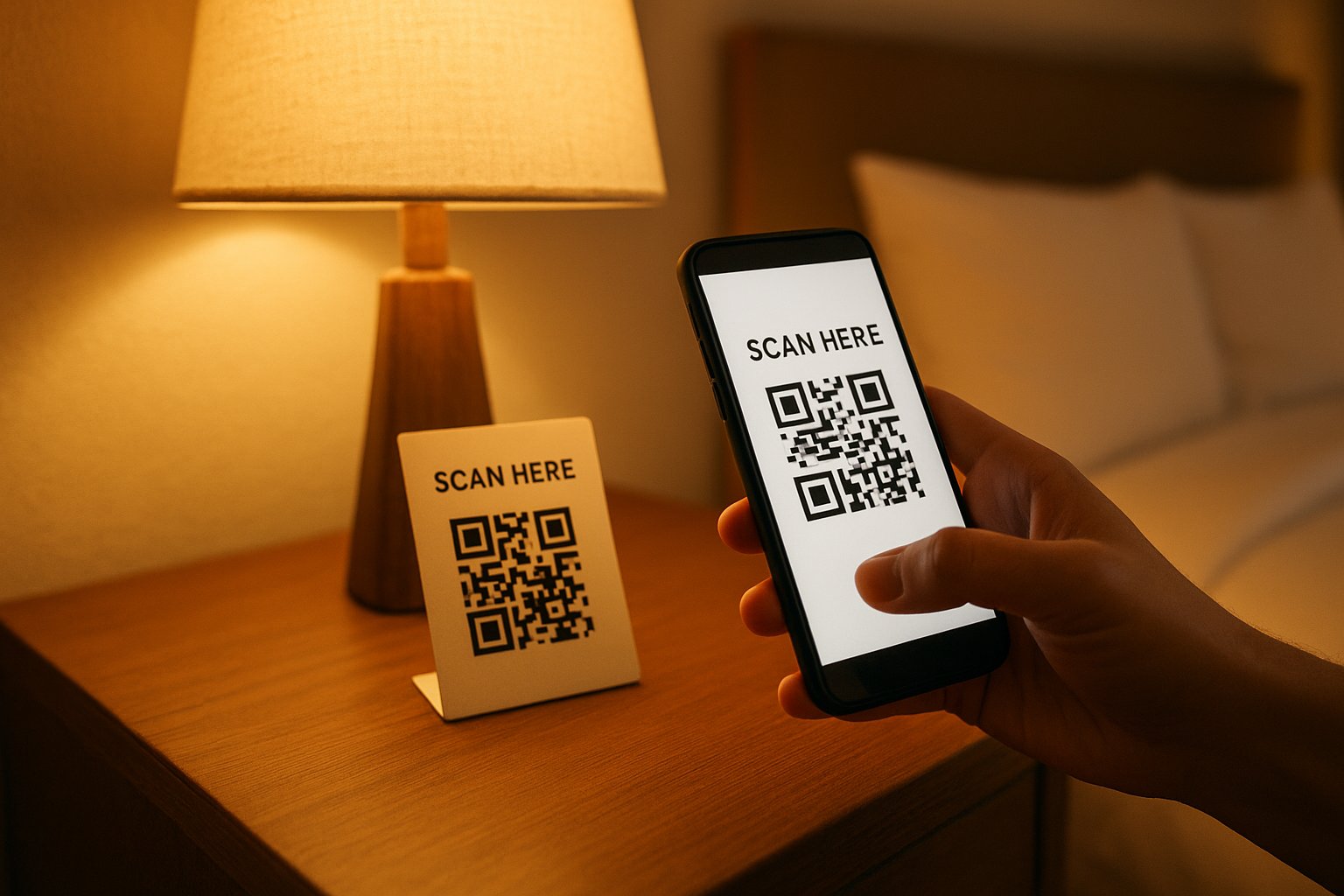
Early guest reports through a QR concierge can stop a minor issue from becoming an out of order room.
Preventive Maintenance Tips for Boutique Hotels
Prevention is cheaper than repair. A few habits reduce how often rooms go out of order in the first place:
Run a brief, scheduled inspection of HVAC, plumbing, and locks in each room on a rolling basis rather than waiting for a complaint.
Give guests a low-friction way to report small issues early, before a minor problem becomes a major one.
Track recurring issues by room number so patterns, such as a unit with repeated AC trouble, get addressed at the source.
Keep a short list of trusted vendors on call for plumbing, electrical, and HVAC emergencies so repairs don't wait on availability.
These habits align closely with the practices highlighted during Housekeeping Week 2025, where lean teams shared how small process changes cut down on preventable maintenance escalations.
Globally, demand for well-run accommodations keeps climbing; the UN World Tourism Organization reports international arrivals back near record levels, with roughly 1.5 billion trips in 2025. Consequently, the margin for unsellable rooms keeps shrinking as more guests compete for the same inventory.
Seasonal Patterns and Forecasting Around Out-of-Order Rooms
During peak season, even a single out-of-order unit carries more weight because there is less spare inventory to absorb it. As a result, many revenue managers build a small buffer into their run-of-house allocation to account for rooms that may need to come offline unexpectedly during high-demand weekends.
Conversely, shoulder season is the ideal window for larger preventive projects, such as replacing aging HVAC units across several rooms at once, since the revenue impact of planned downtime is far lower when occupancy is already softer.
Frequently Asked Questions About Out of Order Rooms
What are out of order rooms?
Out of order rooms are guest rooms taken out of sellable inventory because of damage, a maintenance failure, or a safety issue. They stay off the sales chart until the problem is fixed and the room passes a final inspection.
What is the difference between out of order and out of service rooms?
An out of order room has an unresolved problem and no fixed return date, while an out of service room is blocked temporarily for a planned, short-term reason such as deep cleaning. Out of service rooms typically return to inventory on a known schedule.
How long can a room stay out of order?
There is no fixed limit; it depends entirely on the severity of the issue. A clogged drain might clear in an hour, while a water-damaged bathroom can keep a room down for days or weeks.
What causes most out of order rooms in boutique hotels?
Common causes include HVAC failures, plumbing leaks, broken locks, pest reports, and general wear that gets deferred until it becomes urgent. Lean maintenance teams and delayed reporting often make small issues turn into longer closures.
How do out of order rooms affect hotel revenue?
Every out of order room is unsellable inventory, so it directly reduces occupancy and revenue per available room. Beyond the lost night's rate, it can also force last-minute relocations, upgrades, or refunds that add further cost.
How can small hotels track out of order rooms without a PMS?
A shared digital dashboard that housekeeping, maintenance, and the front desk can all view works well without full property management system integration. The key is a single source of truth instead of sticky notes, radios, and group texts.
Who should be responsible for updating out of order room status?
Whoever discovers the issue should log it immediately, but a designated manager or maintenance lead should own the status updates until the room reopens. Clear ownership prevents a room from sitting forgotten after the initial report.
What common mistakes make out of order rooms worse?
The biggest mistakes are logging issues verbally instead of in writing, leaving status updates to memory, and failing to flag guest-impact problems like allergies for escalation. These gaps lead to rooms staying down longer than necessary.
What is the best way to prevent out of order rooms?
Preventive maintenance schedules, routine inspections, and a low-friction way for guests and staff to report small problems early all reduce how often rooms go out of order. Catching a leak early is far cheaper than fixing water damage later.
Should guests be moved out of an out of order room immediately?
Yes, any guest already assigned to a room that goes out of order should be relocated to equivalent or better inventory before they notice a problem. Proactive communication about the change also helps protect the guest experience.
Does a QR code concierge help with out of order rooms?
Yes, because guests can report issues the moment they notice them instead of waiting at the front desk or not reporting at all. That early signal often prevents a minor problem from becoming a multi-day out of order room.
How much does fixing an out of order room typically cost?
Costs vary widely depending on the issue, from a quick appliance swap to a full bathroom repair after water damage. The bigger hidden cost for most boutique properties is the lost room revenue while the unit sits unsellable.
How do I bring an out of order room back into inventory?
Complete the repair, run a final inspection against brand and safety standards, and then close the ticket in your tracking system. Only after that confirmation should the room reappear as sellable on the front desk's availability chart.
Can out of order rooms affect online reviews?
Indirectly, yes. A poorly handled relocation or an unresolved complaint tied to an out of order room often shows up in guest reviews, especially when communication was slow or unclear.
Is housekeeping or maintenance responsible for out of order rooms?
It depends on the cause: housekeeping typically flags the issue first, while maintenance usually owns the repair. Either way, the room should stay logged as out of order until both teams confirm it is ready.
What PMS codes are used for out of order rooms?
Most property management systems use "OOO" for out of order and "OOS" for out of service, though exact labels vary by platform. Regardless of the code, the room should be excluded from the sellable count until it's formally cleared.
Can out of order rooms create legal or ADA compliance issues?
Yes, particularly when an accessible room goes out of order for an extended stretch. Properties are generally expected to offer an equivalent accessible alternative rather than simply removing that inventory from the pool without substitution.
Final Thoughts on Out of Order Rooms
Out of order rooms will never disappear completely; plumbing fails, HVAC units age, and guests occasionally cause damage. However, how fast a boutique hotel logs, assigns, and resolves each one makes the real difference between a brief inconvenience and a lost weekend of revenue.
A single shared system, paired with a way for guests to report problems early in their own language, keeps the out-of-order list short and the stay smooth. Learn more about how Cortesia supports this kind of workflow at cortesia.ai, or explore the live demo to see the staff dashboard in action.