
Run of House: What It Means for Hotel Room Assignments
Run of house is the single most important phrase to understand if you want to know how hotels really assign rooms. In a run of house arrangement, a property sells a room category, not a specific room, floor, or view, and the front desk hands out whatever qualifying room is clean and ready the moment a guest checks in. For a forty-room boutique hotel running a skeleton crew on a sold-out Friday, that flexibility can save the night. However, run of house only works smoothly when housekeeping status, guest preferences, and special requests live in one shared system instead of scattered sticky notes, radio calls, and guesswork.
Quick answer: Run of house (often shortened to ROH) means a hotel assigns any available room within a booked category at check-in rather than guaranteeing a specific room number. The guest reserves a rate and a minimum standard, not a room, and the property matches them to whichever qualifying room is ready when they arrive. This gives hotels pricing and operational flexibility, but it also places extra weight on fast, accurate housekeeping communication between departments.
What Does Run of House Mean in a Hotel?
Run of house is a booking category, not a fixed room type. Instead of promising an ocean view or a corner suite, the hotel promises a room that meets a minimum standard (clean, inspected, and within the booked category) and the final room number is decided close to arrival. As a result, the guest gets a confirmed stay at a predictable rate, while the hotel keeps full control over which specific room goes to which guest.
In practice, this means a reservation flagged as run of house sits in a general pool rather than being tied to a single unit. Therefore, the hotel can fill that pool with whichever comparable room finishes cleaning first, which is especially useful on nights when every room is booked and timing is tight. For a more exhaustive breakdown of every definition and real-world use case, see this complete run of house definition and uses guide.
Where the Term Run of House Comes From
The phrase likely traces back to theater and print, where "run of the mill" or "run of the house" described whatever came off the standard batch without special selection. In ticketing, a run of house seat still means a general-admission seat assigned by the venue rather than chosen by the customer, as explained in Wikipedia's overview of the box office and how general-admission seating has historically worked.
Hospitality borrowed the same logic. A guest books into the general pool of comparable rooms, not a specific, guaranteed unit. Consequently, the underlying idea, "any qualifying unit, assigned by the operator", shows up across industries wherever a business needs flexibility to fill inventory quickly. For background on how room categorization evolved alongside the broader lodging business, Wikipedia's entry on the hotel industry is a useful starting point.
How Run-of-House Room Assignments Work Day to Day
A run-of-house booking enters the property management system, or PMS (the software that tracks reservations, room status, and billing), flagged as flexible inventory. As housekeeping clears rooms overnight and through the morning, each one is marked ready in a status board or dashboard. When a guest with a run-of-house reservation checks in, the front desk simply looks for the next qualifying room that is clean, undamaged, and not already promised to someone else.
This sounds simple on paper, yet it depends entirely on how current the room status data actually is. If housekeeping finishes a room but the system still shows it as dirty, that room sits empty while a guest waits in the lobby. Similarly, if a maintenance issue goes unlogged, a guest can be walked into a room with a broken air conditioner or a leaking faucet. For more detail on how unavailable rooms distort inventory counts, see this guide on out-of-order room causes and management costs, and this companion resource on how to track and resolve out-of-order rooms fast.
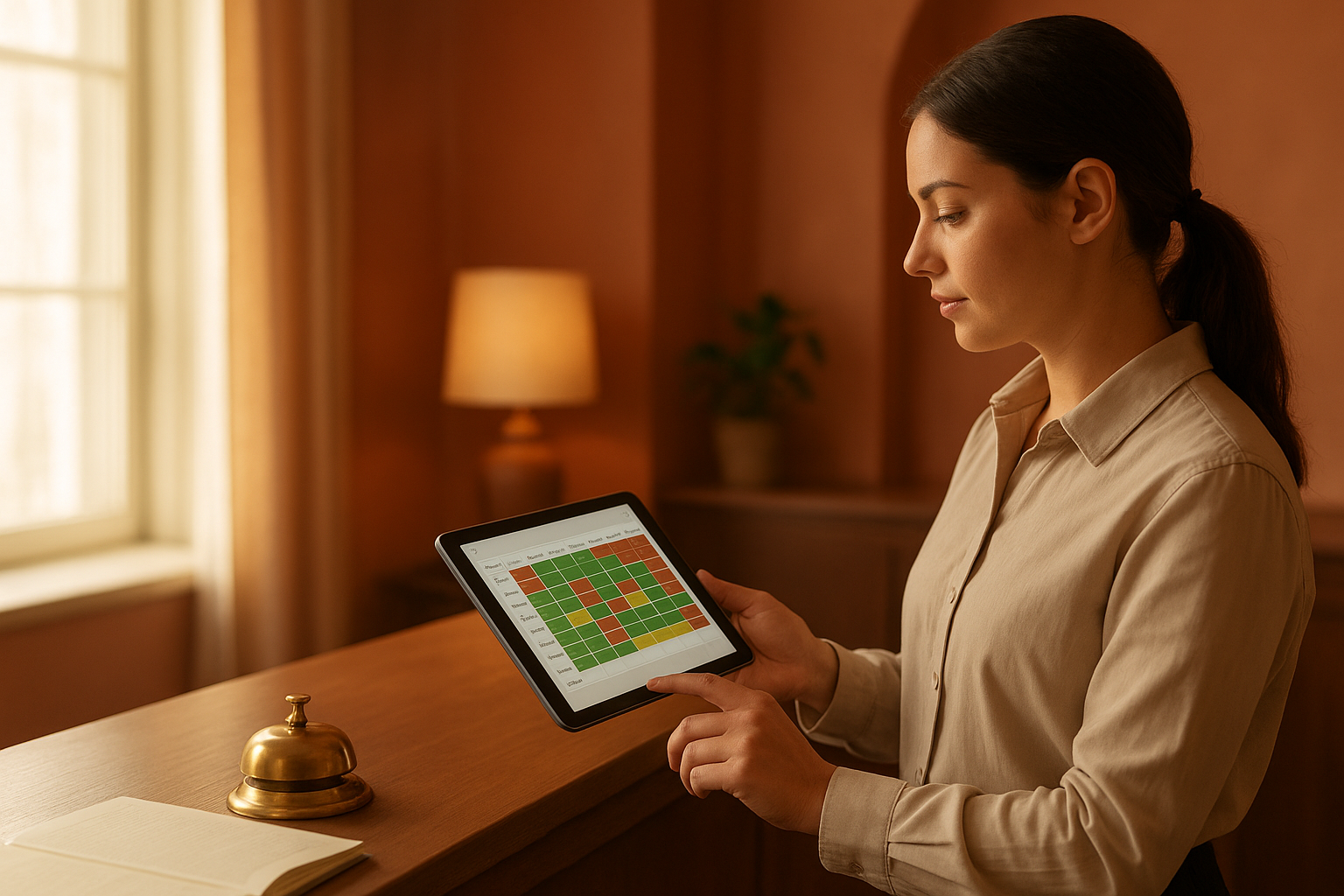
A live dashboard keeps run of house assignments accurate between housekeeping and the front desk.
Run of House in Group and Convention Room Blocks
Run of house shows up constantly in group and convention contracts, and it is worth understanding this use case separately from the leisure-guest scenario above. When a conference organizer blocks one hundred rooms at a property, the contract often specifies a run-of-house rate for the entire block. This means every attendee pays the same price regardless of which specific room they receive, as long as it falls within the agreed category.
For meeting planners, a run-of-house group rate simplifies budgeting because there is one price to negotiate instead of a dozen. For the hotel, it simplifies allocation because the sales and front-office teams do not need to pre-assign specific rooms months in advance. In turn, this frees up inventory to respond to last-minute changes in group size, which happens often with corporate bookings and association conferences.
Why Run of House Matters for Lean, Independent Hotels
Boutique and independent properties rarely have the staffing cushion that larger chains carry. An AHLA and Hireology survey found that 65% of hotels report staffing shortages, with housekeeping (38%) and the front desk (26%) identified as the most critical gaps, according to the American Hotel & Lodging Association. When a team is already stretched thin, a rigid room-type system adds friction every time a specific room is delayed or taken out of service.
Run of house reduces that friction because it widens the pool of acceptable rooms for each guest. In addition, it simplifies training, since new staff only need to understand one category's standard rather than memorizing dozens of micro room types. Still, the flexibility only pays off when housekeeping updates are fast and visible, which is exactly where many lean teams struggle; this guide to smart housekeeping tech covers practical ways to close that gap.
Run of House vs. Guaranteed Room Type: What Is the Difference?
A guaranteed room type promises a specific view, floor, or bed configuration before arrival. A run-of-house rate, by contrast, only promises a room that meets the category's minimum standard. Therefore, the two approaches sit at opposite ends of the same spectrum: certainty versus flexibility.
Guaranteed rooms suit guests celebrating a specific occasion or travelers with strict accessibility needs. Run-of-house rates, on the other hand, suit price-sensitive bookers and properties that want to maximize occupancy without overcomplicating inventory. Many boutique hotels use a blend: guaranteed rates for suites and accessible rooms, and run of house for standard rooms that are largely interchangeable.
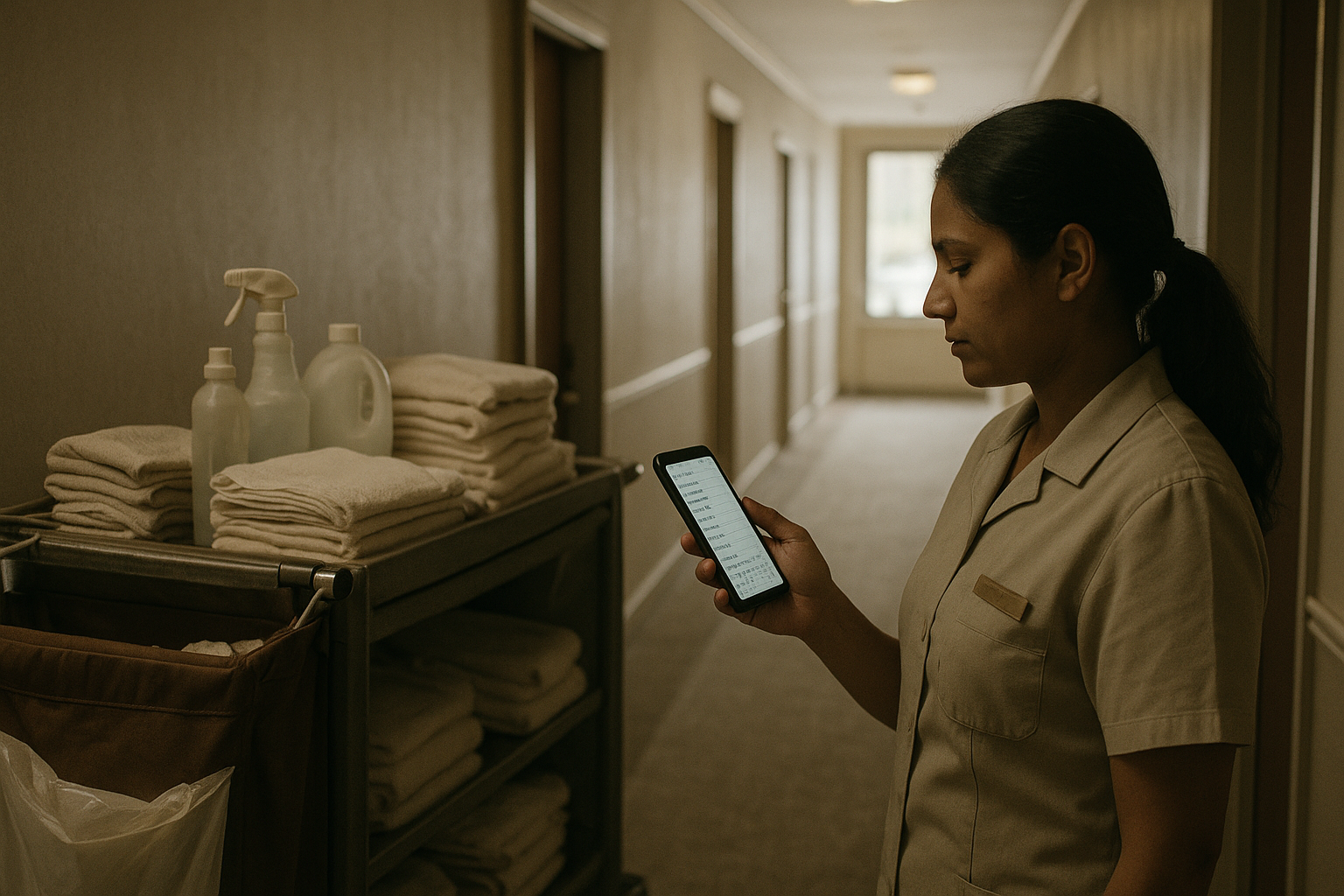
Accurate housekeeping status is the backbone of every run of house assignment.
Run of House, Run-of-House Rate, and Space-Available: Clearing Up the Terms
These three terms get mixed up often, so it helps to separate them clearly. Run of house describes the assignment method: any qualifying room, decided at check-in. A run-of-house rate is the price tag attached to that method, usually one flat rate for an entire category. Space-available pricing, meanwhile, refers to selling rooms only when inventory happens to be open, often at a discount, which is a separate yield management practice (adjusting prices and availability based on demand) that can exist alongside run of house but is not the same thing.
Understanding this distinction matters because guests and even new staff sometimes use the terms interchangeably, which leads to confusion at check-in. For instance, a guest might assume a run-of-house rate automatically means a discounted rate, when in reality the price reflects flexibility, not necessarily a lower cost.
How to Manage Run-of-House Assignments Without Frustrating Guests
Managing run-of-house rooms well comes down to sequence and communication. The following steps outline a process that small front-office and housekeeping teams can follow during any sold-out night.
Confirm housekeeping status first, using a live dashboard instead of radio calls, so staff never send a guest to a room that looks clean but has not actually been checked.
Match guest preferences and prior notes, such as a quiet floor request or a stated allergy, to the available inventory before finalizing the room number at check-in.
Flag any out-of-order or maintenance-hold rooms immediately so they never appear in the run-of-house pool, protecting both the guest experience and the nightly room count.
Communicate the final room assignment to the guest in their own language, through a concierge tool or staff member, and confirm the arrival time so housekeeping can prioritize that room.
Log every late or delayed run-of-house assignment so the team can review patterns weekly and adjust staffing or cleaning order ahead of the next sold-out night.
Notably, teams that review these patterns regularly tend to catch recurring bottlenecks, such as a single floor that consistently finishes cleaning last. For seasonal operational planning around these patterns, see this lessons guide for boutique hotels.
Run of House and the Language Barrier Problem
A run-of-house delay is annoying in any language, but it becomes worse when a guest cannot understand why their room is not ready yet. Research from CSA Research shows that 76% of consumers prefer to engage with businesses in their own language. Meanwhile, international travel has returned to record levels, with roughly 1.5 billion international arrivals in a single recent year reported by global tourism bodies.
For boutique hotels with guests arriving from Germany, Japan, Mexico, or the Gulf states, a simple status update in English can land as confusion rather than reassurance. This is where a multilingual concierge tool closes the gap. Cortesia, for example, lets a guest scan a QR code in their room and ask about a delayed assignment in their own language, while the request reaches staff translated into the language the team works in, with no app download or front-desk queue required.

A QR-code concierge helps guests get run of house updates in their own language, without an app.
Run-of-House Best Practices for Boutique Hotel Teams
First, keep a single source of truth for room status. Paper logs and verbal updates cause most run-of-house complaints, because two people can believe different things about the same room at the same time. Second, record guest preferences permanently, not just for the current stay, so a returning guest is not asked the same questions twice.
Third, treat allergy and safety notes as non-negotiable alerts rather than casual comments. A guest who mentions a shellfish allergy once should not have to repeat it to housekeeping, room service, and the front desk separately. Finally, review run-of-house delays weekly, much like many properties already do during International Housekeeping Week planning, so recurring bottlenecks get fixed instead of repeated. Teams planning ahead can also check when Housekeeping Week falls in 2026 to align training and recognition efforts with operational reviews, and browse these fresh housekeeping week ideas for keeping morale high during the busiest stretches.
Run of House Outside Hotels: Theater, Events, and Staffing
Although this guide focuses on hotels, run of house pops up in other industries too, and understanding those uses helps clarify the hotel meaning by contrast. In theater and live events, a run-of-house ticket means general admission to any available seat, rather than an assigned one. Catering and staffing agencies sometimes use "run of house" to describe assigning any qualified staff member to a shift, rather than guaranteeing a specific person.
In every case, the core idea stays the same: the operator keeps control over the exact assignment, while the customer or worker accepts a slightly lower level of certainty in exchange for simplicity, speed, or a lower price. Recognizing this pattern makes it easier to explain run of house to new hires who may have encountered the phrase in a different context before joining a hotel team.
Common Mistakes Hotels Make With Run of House
Even experienced teams slip up on run of house occasionally. The most frequent mistake is assigning a room that looks clean but has not been formally inspected, which risks walking a guest into an unfinished room. Another common error is ignoring a recorded preference or allergy note because it was logged in a different system than the one the front desk checks at check-in.
A third mistake is failing to remove out-of-order or maintenance-hold rooms from the available pool, which inflates the apparent inventory and sets up a guest for disappointment. Above all, these errors trace back to one root cause: information sitting in silos instead of one shared, real-time view that every department can trust.
Frequently Asked Questions About Run of House
What does run of house mean in a hotel?
Run of house means a hotel assigns any available room within a booked category at check-in rather than guaranteeing a specific room number or view. Guests reserve a rate and room standard, and the property matches them to a qualifying room once it is clean and ready.
How is a run-of-house rate different from a standard room rate?
A standard room rate guarantees a specific room type, such as a king suite or a courtyard view. A run-of-house rate only guarantees a minimum room standard, and the exact room is decided close to arrival.
Why do hotels use run of house pricing?
Hotels use run of house pricing to simplify inventory and protect revenue on sold-out nights. It also lets small front-office teams fill rooms quickly without managing dozens of narrow room categories.
How does run of house affect housekeeping?
Run of house puts pressure on housekeeping because any clean room in the category can be assigned at any moment. As a result, accurate, real-time room status becomes essential to avoid check-in delays.
Can guests request a specific room under a run-of-house booking?
Guests can ask for a preference, such as a quiet floor or an accessible room, but a run-of-house booking does not guarantee it. Staff try to honor requests when inventory and cleaning schedules allow.
Is run of house cheaper than booking a specific room type?
Run of house is often priced at or slightly below a guaranteed room type, since the guest accepts less certainty about the exact room. The exact savings vary by property and season.
How long does a run-of-house check-in usually take?
A well-run run-of-house check-in takes only a minute or two longer than a guaranteed room check-in. Delays happen mainly when housekeeping status is not updated in real time.
What common mistakes do hotels make with run-of-house assignments?
Common mistakes include assigning rooms that look clean but have not been formally checked, ignoring noted allergies or preferences, and failing to pull out-of-order rooms from the available pool. These errors usually trace back to communication gaps between departments.
What is the best practice for assigning run-of-house rooms fairly?
The best practice is to assign rooms in the order guests arrive while matching any recorded preferences first. A shared live dashboard, rather than memory or paper, keeps this process consistent.
Does run of house work for short-term rentals?
Run of house is less common for single-unit short-term rentals since there is usually only one room to assign. It applies more directly to small hotels and multi-unit rental portfolios with several comparable units.
How does language affect run-of-house guest communication?
A guest who cannot read a check-in text or understand a delay explanation in English is more likely to feel frustrated by a run-of-house wait. Translating that status update into the guest's own language removes most of the friction.
What technology helps manage run-of-house assignments?
A live housekeeping dashboard paired with a guest messaging tool helps staff see room status instantly and keep guests informed. Multilingual concierge platforms like Cortesia add the benefit of translating those updates automatically for both sides; you can review a live example at cortesia.ai.
Is run of house the same as space-available pricing?
They are related but not identical. Run of house refers to room assignment flexibility within a booked category, while space-available pricing refers to selling rooms only when inventory is open, often at a discount.
What does run of house mean in event, catering, or ticketing contracts?
In events and ticketing, run of house usually means general admission to any available seat or table rather than a reserved, numbered spot. Catering and staffing contracts sometimes use the same phrase to describe assigning any qualified worker rather than a named individual.
How do online travel agencies display run of house rooms?
Online travel agencies typically list a run-of-house booking under a generic label, such as "standard room" or "classic room," with a note that the exact room is assigned at check-in. The listing usually states the minimum standard rather than specific features like a view or floor.
Can a hotel overbook its run of house inventory?
Yes, and this is actually one reason hotels like the category: overbooking a shared run-of-house pool is lower risk than overbooking a specific room type, since any qualifying room can satisfy the booking. However, overbooking still requires careful forecasting to avoid walking guests to another property.
What is the origin of the term run of house?
The phrase likely descends from theater and print terminology describing whatever came off the standard batch without special selection. Hospitality adopted the same logic to describe a guest accepting any qualifying room instead of a specific, guaranteed unit.
Final Takeaways on Run of House
In summary, run of house gives boutique and independent hotels welcome flexibility during busy, sold-out nights, but that flexibility depends entirely on accurate, shared housekeeping information. When status updates are fast and requests are tracked in one place, guests barely notice the system working behind the scenes. When they are not, a run of house booking can turn into a long lobby wait and a frustrated guest, especially one who does not speak the staff's language. For properties ready to pair this operational discipline with multilingual guest communication, a tool like Cortesia shows what that combination can look like in practice.