Knowing how to implement multilingual hotel concierge service is now a practical skill for any independent property. A multilingual hotel concierge is a digital service that answers guests and takes their requests in their own language, then passes those requests to staff in the language the team works in. Done well, it takes days, not months.
Short answer: Audit your guest questions, write a strong knowledge base, import rooms and staff, set safety rules, place QR codes, and train the team. Cortesia needs no app, no login and no PMS integration, so a small property can be live in days.
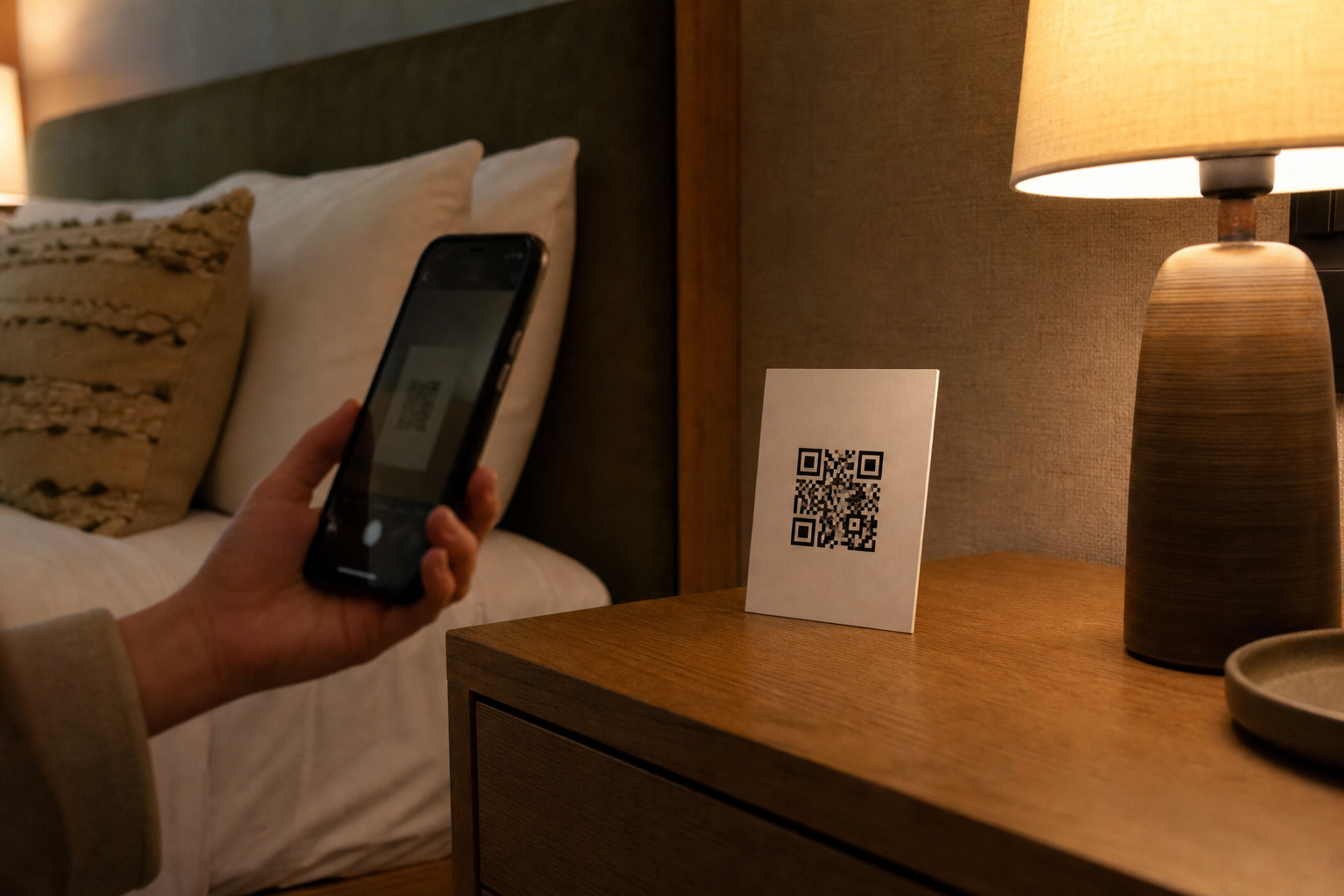
A printed QR code turns the guest's own phone into a concierge.
Why Boutique Hotels Need a Multilingual Concierge
Boutique hotels win on personal service, but they run on lean teams. According to an AHLA and Hireology survey, 65% of hotels reported staffing shortages, with housekeeping (38%) and the front desk (26%) the most critical gaps.
Language adds pressure. CSA Research found that 76% of consumers prefer to engage in their own language. As a result, a guest who cannot explain a broken air conditioner or a late checkout often gives up. For a deeper look, see our multilingual hotel concierge guide for boutique hotels.
What Is a Multilingual Hotel Concierge?
It is an AI concierge that guests reach by scanning a QR code in the room. It answers in the guest's own language and handles common questions about Wi-Fi, breakfast hours, amenities and the neighborhood.
It also takes requests. Each one goes to the right department on a live dashboard, translated for staff. Learn more about multilingual guest messaging and how it works on a small team.
How to Implement Multilingual Hotel Concierge: Six Steps
- Audit guest questions and languages. List the questions your front desk answers every day. Then note which languages your guests speak most.
- Build the knowledge base. Write clear answers for amenities, hours, menus, policies and local tips. A manager should review each one.
- Import rooms and staff. Add rooms, departments and team members so requests route correctly from day one.
- Set safety and escalation rules. Decide who acknowledges allergy alerts and urgent requests.
- Place QR materials. Put print-ready cards on nightstands, desks and the check-in counter.
- Train staff and review weekly. Show the team the dashboard. Then check requests each week to close gaps.
Prepare Your Property Knowledge Base
The knowledge base decides how good the concierge feels. Therefore, write answers the way your best front desk agent would say them: short, specific and current.
- Wi-Fi details, parking and checkout times
- Breakfast, pool and gym hours
- Menus and room service options
- House rules and quiet hours
- Neighborhood tips and transport advice
Cortesia setup includes the property knowledge base, room and staff import, and print-ready QR materials. In addition, no PMS integration is required.
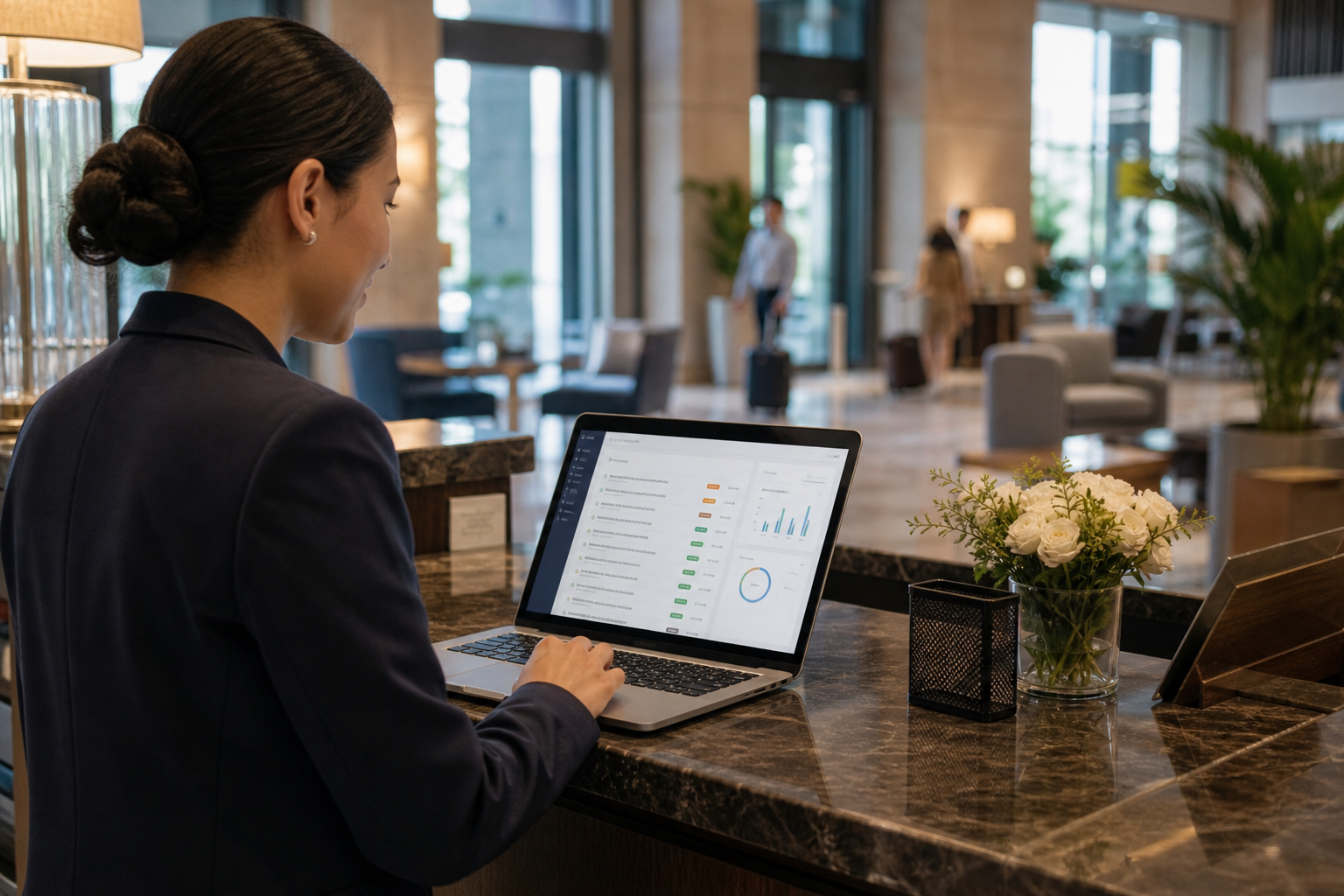
One live dashboard replaces calls, texts and sticky notes.
Set Up Staff Routing and Safety Rules
Next, decide who owns each request type. Housekeeping gets towel and cleaning requests. The front desk gets late checkout. Maintenance gets repairs. Because guests message when it suits them, housekeeping no longer needs to knock on doors guests do not want opened.
Handle allergy mentions carefully
Food-allergy mentions trigger staff alerts that require acknowledgment. Allergy information is used only for guest safety. However, the concierge is not the authority on food safety. Hotel staff preparing food are the final authority, and guests should confirm allergy information directly with staff.
Launch With QR Codes and Staff Training
Place QR cards where guests already look. Also mention the service at check-in, since a short sentence from staff lifts use. Guests never create an account, and the app runs no analytics or advertising trackers.
Train staff for about an hour on the dashboard. Meanwhile, point them to our guide on instant guest service chat for hotels for response habits that work.
Measure Results and Improve
Review requests weekly. Look for questions the concierge could not answer, then add those answers. Also watch which languages guests use, since this shows where your guest mix is shifting. International travel remains strong, with roughly 1.5 billion international arrivals in 2025. For wider context, read this 2026 guide to hotel guest communication.

Guests get answers in their own language, with no app to install.
Is Cortesia a Fit for Your Property?
Cortesia is built for boutique and independent hotels and short-term rentals. It offers eight languages, unlimited guest usage, unlimited staff seats and simple per-room pricing, month-to-month. You can try the live demo or see the page for boutique hotels. For general background on the role, see Concierge on Wikipedia, and for industry data visit AHLA.
Frequently Asked Questions
What does a multilingual hotel concierge do?
It answers guest questions, takes service requests and shares local knowledge in the guest's own language. Requests reach staff translated into the language the team works in.
How long does it take to implement a multilingual hotel concierge?
With Cortesia, properties go live in days. Most of that time goes to gathering accurate property information and placing QR materials.
Do guests need to download an app?
No. Guests scan a QR code with their own phone. There is no app, no login and no guest account.
Do I need a PMS integration?
No. Cortesia does not require a PMS integration, so there is no integration project before launch.
How many languages are supported?
Cortesia works in eight languages end to end, including full right-to-left support. Ask the team for the current list for your guest mix.
What should go into the property knowledge base?
Include Wi-Fi details, breakfast and amenity hours, checkout rules, parking, menus and neighborhood tips. Keep every answer current and specific.
Can the AI answer allergy questions?
Allergy mentions trigger staff alerts that require acknowledgment. Hotel staff preparing food are the final authority, and guests should confirm allergy information directly with staff.
Will it replace my front desk team?
No. It handles repeat questions and routes requests so staff can spend time on guests who need a person.
How do staff receive guest requests?
Every request lands in one live staff dashboard, routed to the right department and translated for the team.
What does a multilingual concierge cost?
Cortesia uses simple per-room pricing, month-to-month, with onboarding included. Contact the team for a quote for your property.
Is it suitable for short-term rentals?
Yes. Hosts with no front desk can use the same QR approach to answer guests in their own language.
What is the most common mistake when launching?
Launching with a thin or outdated knowledge base. Guests quickly lose trust if answers are vague or wrong.
Conclusion
Knowing how to implement multilingual hotel concierge service comes down to six steps: audit, write, import, set rules, place QR codes and train. Keep the knowledge base accurate, keep staff in charge of safety, and review requests weekly. With no app, no login and a team that goes live in days, even a small property can serve every guest in their own language.