
Multilingual Hotel Concierge: Guide for Boutique Hotels
A multilingual hotel concierge gives boutique hotels and short-term rentals a way to answer guest questions, take requests, and solve small problems in whatever language a guest actually speaks, without hiring more staff or asking anyone to download an app. For a 42-room property or a single rental home, that single shift changes how every stay feels, especially when guests arrive speaking German, Spanish, Japanese, or Arabic.
Independent properties win on personality, yet they run on small teams. Consequently, the front desk often answers the same ten questions all day while the phone keeps ringing and a guest at the counter waits. A multilingual concierge removes that bottleneck by letting guests help themselves, in their own language, the moment they want an answer.
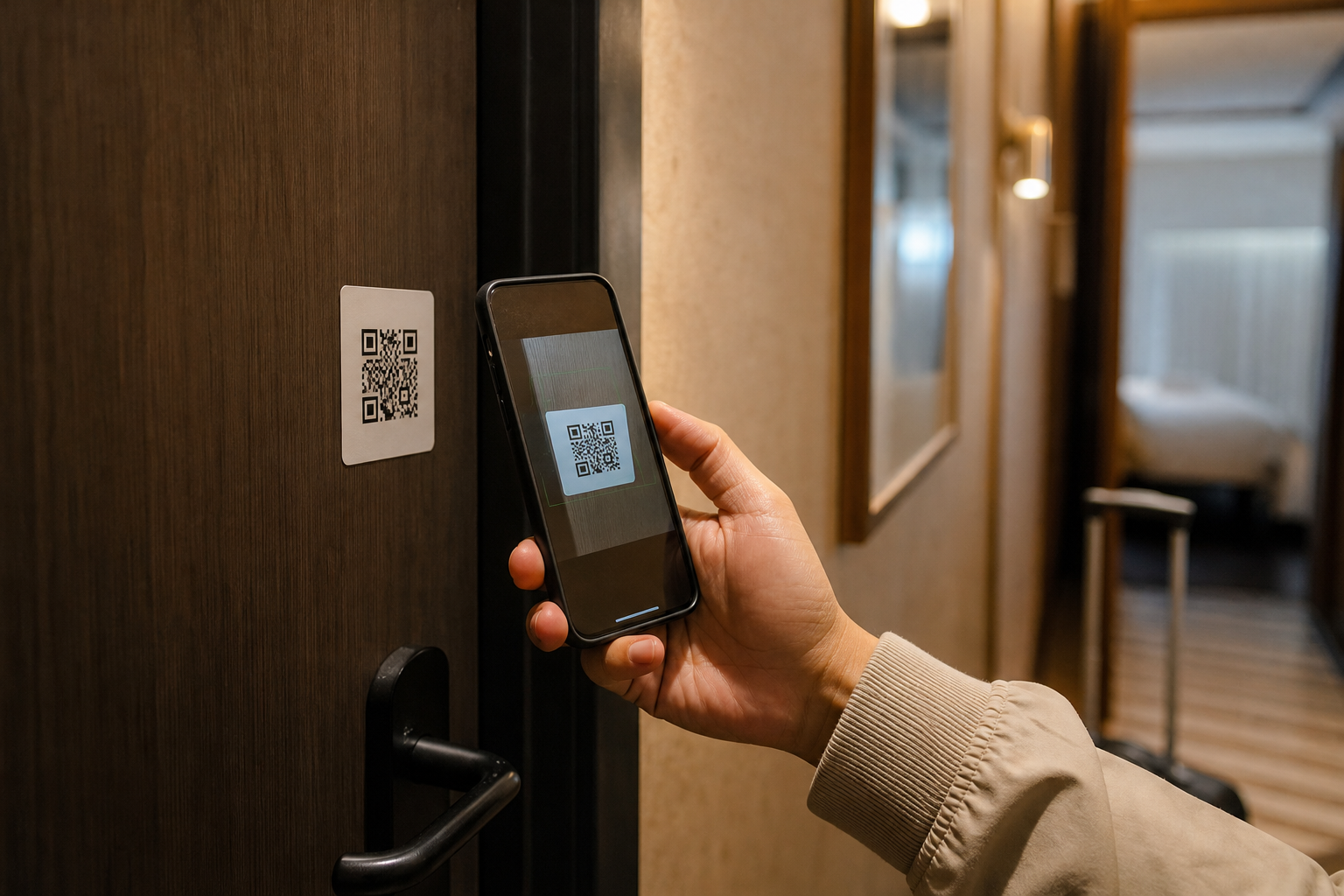
A quick QR code scan is often all it takes to reach a multilingual hotel concierge.
What Is a Multilingual Hotel Concierge?
A multilingual hotel concierge is a digital service, typically reached by scanning a QR code, that answers guest questions and manages requests in the guest's own language while forwarding a translated version to staff. In short, it is a bridge between a guest who speaks one language and a team that works in another.
Unlike a generic chatbot, it is trained on the specific property: room details, breakfast hours, Wi-Fi passwords, nearby restaurants, and house rules. Therefore, when a guest asks "what time is checkout," the answer reflects that exact hotel, not a generic template. Requests that need a human, such as extra towels or a late checkout, get routed to the right department automatically.
Why Boutique Hotels Need Multilingual Guest Communication
Staffing is the pressure point behind most service gaps at independent properties. According to an AHLA and Hireology survey, 65% of hotels report staffing shortages, with housekeeping (38%) and the front desk (26%) named as the most critical gaps. As a result, the few staff on duty are stretched across check-ins, phone calls, and walk-up questions at the same time.
Language adds a second layer of friction. Research from CSA shows that 76% of consumers prefer to engage with a business in their own language, and international travel has returned to record levels, with roughly 1.5 billion international arrivals recorded in 2025 according to UN Tourism (UNWTO). A guest who cannot explain an allergy or a broken air conditioner in English often gives up rather than ask twice.
Guest apps rarely solve this. Hotels have spent years pushing app downloads, yet most guests never install one for a two-night stay. A browser-based multilingual guest communication tool sidesteps that resistance entirely, because there is nothing to install in the first place. For a deeper look at the service side of this challenge, see this guide to boutique hotel customer care strategies.
How a Multilingual Concierge Service Works
Setting up a multilingual concierge at a small property follows a short, repeatable process. Here is what it typically looks like from first scan to resolved request:
Build the property knowledge base. Rooms, amenities, menus, policies, and local recommendations are imported so the concierge answers accurately from day one.
Print and place QR codes. Print-ready materials go in every room and common area, giving guests an obvious, branded way to reach the concierge instantly.
Guests chat in their own language. A scan opens a private chat; the guest writes in their language and staff see the translated request on a live dashboard.
Staff route, respond, and acknowledge. Requests land with the right department, replies go back translated, and flagged items such as food allergies require acknowledgment.
Notably, none of this depends on a PMS integration. That single design choice is why a property can go live in days rather than months, which matters most for owner-operators who cannot afford a long technology rollout.
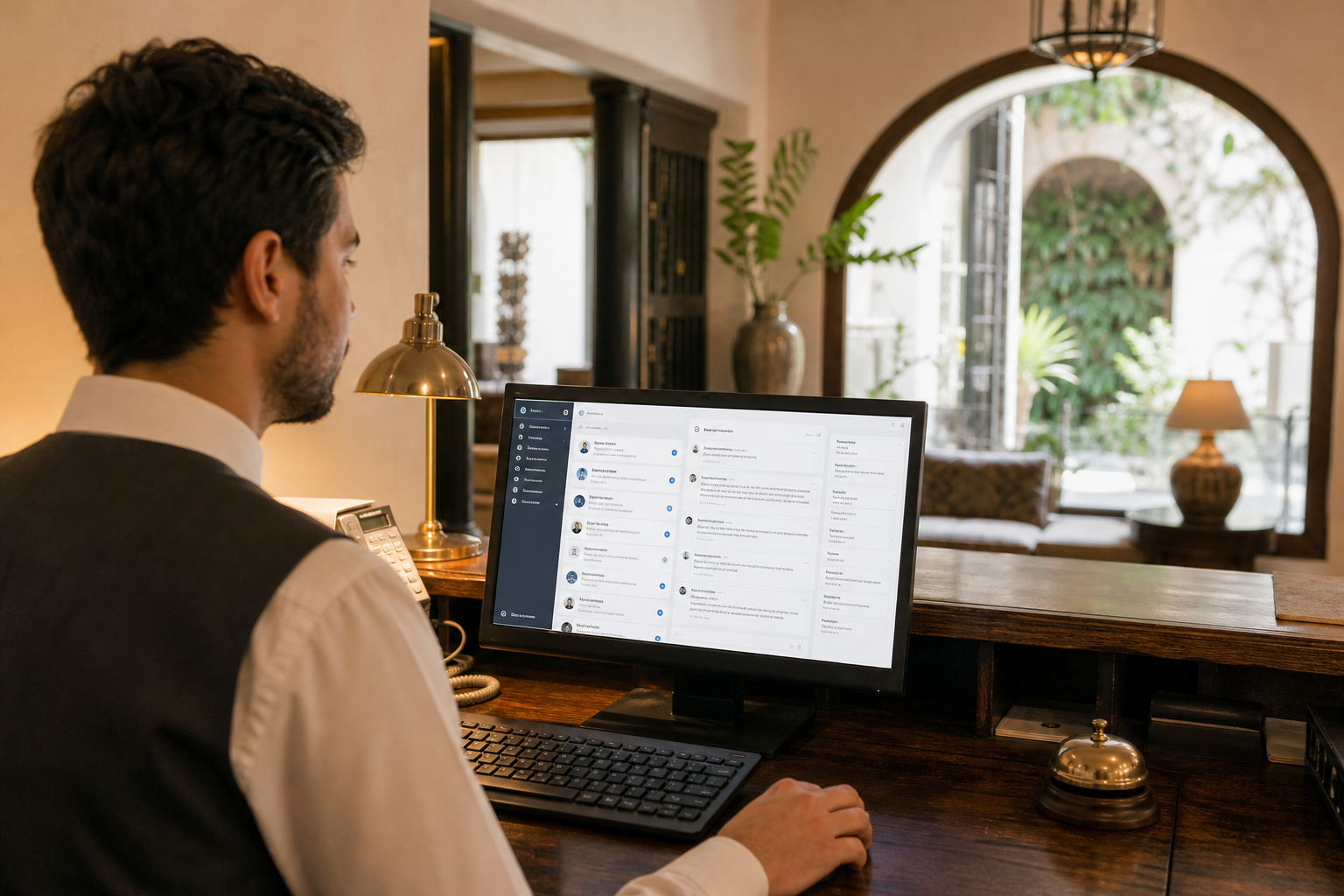
Every guest message lands on one dashboard, already translated for the team.
Key Features of Multilingual Hotel Concierge Software
Not every tool labeled "concierge software" delivers the same depth. When comparing options, a few features separate a genuinely useful multilingual hotel concierge from a basic chatbot:
Full two-way translation, not just a translated greeting message.
A single live dashboard where staff see every request regardless of guest language.
No app, login, or account creation required from the guest.
Safety alerts, such as food-allergy flags, that require staff acknowledgment.
Setup that does not depend on a PMS integration project.
For a broader comparison of messaging platforms built for this purpose, this hotel guest messaging software buyer's guide covers the category in more depth.
Multilingual Concierge vs. Traditional Front Desk Support
A multilingual concierge does not replace the front desk; it changes what the front desk spends time on. The table below compares how each handles common scenarios.
Scenario | Traditional Front Desk | Multilingual Concierge |
|---|---|---|
Guest asks for breakfast hours in Japanese | Staff attempts gestures or a phone translation app | Guest reads the answer instantly in Japanese |
Allergy mentioned at check-in | Noted verbally; may not reach kitchen staff | Logged and routed with required acknowledgment |
Housekeeping timing | Staff knock blindly, sometimes repeatedly | Guest requests a time directly through chat |
How Cortesia Delivers a Multilingual Hotel Concierge
Cortesia is built specifically for boutique and independent properties rather than large chains. Guests scan a room QR code and chat in one of eight supported languages, including full right-to-left Arabic, with no app, no login, and no guest account. Every request lands on one live staff dashboard, already translated for the team.
Because there is no PMS integration requirement, properties go live in days. Pricing is a simple per-room, month-to-month fee with unlimited guest usage, unlimited staff seats, and onboarding included. Setup covers the property knowledge base, room and staff import, and print-ready QR materials. The live demo properties, a 42-room boutique hotel called The Mesquite and a single Dallas rental called Henderson House, show how this works for both a full-service hotel and an unstaffed short-term rental.
For teams exploring the category more broadly before choosing a tool, two further resources may help: a guide to QR code concierge systems for boutique hotels, and a complete guide to hotel guest communication.
Small, personality-driven properties benefit most from a multilingual hotel concierge.
Frequently Asked Questions About Multilingual Hotel Concierge
What is a multilingual hotel concierge?
A multilingual hotel concierge is a digital service, usually accessed by scanning a QR code, that lets guests ask questions and make requests in their own language while staff receive everything translated on a single dashboard. It replaces repetitive front-desk calls with instant, self-serve answers.
How does a multilingual hotel concierge work without an app?
Guests scan a printed QR code with their phone's camera, which opens a mobile web page, so there is nothing to download or install. The page loads a branded chat that already knows the property's rooms, menus, and local recommendations.
Why do boutique hotels need multilingual guest communication?
Boutique hotels run lean teams but compete on personal service, and a language gap can turn a small misunderstanding into a bad review. Multilingual guest communication lets a small staff serve international travelers confidently without hiring bilingual employees for every shift.
How is a multilingual concierge different from a translation app?
A general translation app only converts words; it does not know the hotel's rooms, hours, or policies, and it cannot route a request to housekeeping or the front desk. A multilingual concierge is trained on the property's own knowledge base and forwards requests to the right staff member automatically.
How much does multilingual hotel concierge software cost?
Pricing varies by provider, but platforms built for independent hotels typically charge a simple per-room monthly fee rather than enterprise licensing sized for a large chain. Month-to-month plans with no long-term contract are increasingly common for small properties.
How long does it take to set up a multilingual concierge system?
Because most modern concierge tools skip PMS integration, setup can take just a few days rather than months. The main work is importing room and menu details and printing QR materials for each space.
What languages can a multilingual hotel concierge support?
Capability depends on the platform, though leading tools support at least eight common travel languages, including right-to-left scripts like Arabic. Coverage should match the markets a property actually serves, such as Spanish, German, or Japanese-speaking guests.
What common mistakes do hotels make with guest language support?
The most frequent mistake is relying on staff memory or sticky notes to track a guest's language needs or allergies instead of a documented system. Another is assuming an app download will solve the problem, when most guests never install hotel apps for a short stay.
Can a multilingual hotel concierge handle food allergies and safety requests?
Yes, well-built systems flag sensitive requests like food allergies and route them to staff with an acknowledgment requirement, so nothing gets lost in translation. This creates a record showing exactly who knew about the allergy and when.
Do guests need to download an app to use a multilingual concierge?
No, the better tools run entirely in a mobile browser after a QR code scan, with no login and no account creation. This removes the biggest barrier to adoption, since most guests skip app downloads for short stays.
What is the best practice for rolling out a multilingual concierge at a small hotel?
Start by loading accurate property information, then place QR codes in rooms, common areas, and printed materials where guests naturally look for help. Train staff on the dashboard for a day before launch so requests are answered promptly from day one.
Does a multilingual hotel concierge replace the front desk staff?
No, it supports the front desk rather than replacing it, by absorbing repetitive questions so staff can focus on service that needs a human touch. Front desk and housekeeping still handle the actual delivery of service; the concierge just removes the language and routing friction.
Final Thoughts on Choosing a Multilingual Hotel Concierge
A multilingual hotel concierge solves a problem that staffing alone cannot fix: guests who speak a different language than the team on duty. Instead of adding headcount, a small property can let every guest's own phone become a private, branded concierge that answers in their language and routes real requests to the right person. For boutique hotels and short-term rentals weighing their options, platforms like Cortesia show that going live does not require months of PMS work or a large budget. Ultimately, the properties that adopt multilingual guest communication early are the ones best positioned to turn international guests into five-star reviews.