A property knowledge base for hotels is the single, verified source of everything your guests ask about your property. Think Wi-Fi, breakfast hours, pool rules and the best coffee nearby. When it is done well, guests get fast, correct answers and your front desk gets its shift back.
Short answer: Write down what guests ask most, answer each question in one or two plain sentences, add menus and local tips, and mark sensitive topics for staff. Then test it and review it monthly.
What Is a Property Knowledge Base for Hotels?
It is an organized set of facts about your hotel or rental. It covers policies, amenities, menus, services and the neighborhood. Staff can use it, and so can an AI concierge that answers guests directly.
It is different from a website page. A website sells the stay. A knowledge base supports the stay, with the practical detail guests need once they have arrived.

A front desk team gathering the answers that go into a property knowledge base for hotels.
Why Boutique Hotels Need One
Boutique properties run on lean teams. According to an AHLA and Hireology survey, 65% of hotels reported staffing shortages, with housekeeping (38%) and the front desk (26%) the most critical gaps. Therefore, every repeated question costs time you may not have.
Language matters too. CSA Research found that 76% of consumers prefer to engage in their own language. As a result, a clear knowledge base that can be shown in the guest's own language protects both service and reviews.
For a wider view of this topic, see our guide to hotel guest service automation.
What to Include in Your Hotel Information Base
Start with the basics guests ask within the first hour. Then add depth.
- Wi-Fi name and password, check-in and checkout times
- Breakfast, bar and restaurant hours, plus current menus
- Pool, gym, spa and parking rules
- Housekeeping options, such as when and how to request service
- Late checkout and luggage storage policies
- Neighborhood tips your team truly recommends
- Emergency numbers and who to call after hours
In addition, keep each entry short. A guest on a phone wants the answer, not a paragraph.
How to Build It: Five Steps
- List the questions guests ask. Ask the front desk and housekeeping what they answer most often.
- Write short, factual answers. Use exact hours, locations and steps.
- Add menus, amenities and local tips. Keep the neighborhood list short and honest.
- Mark what needs a person. Complaints, maintenance and allergies should go to staff.
- Test, publish and review. Ask the questions the way a guest would, then fix the gaps.
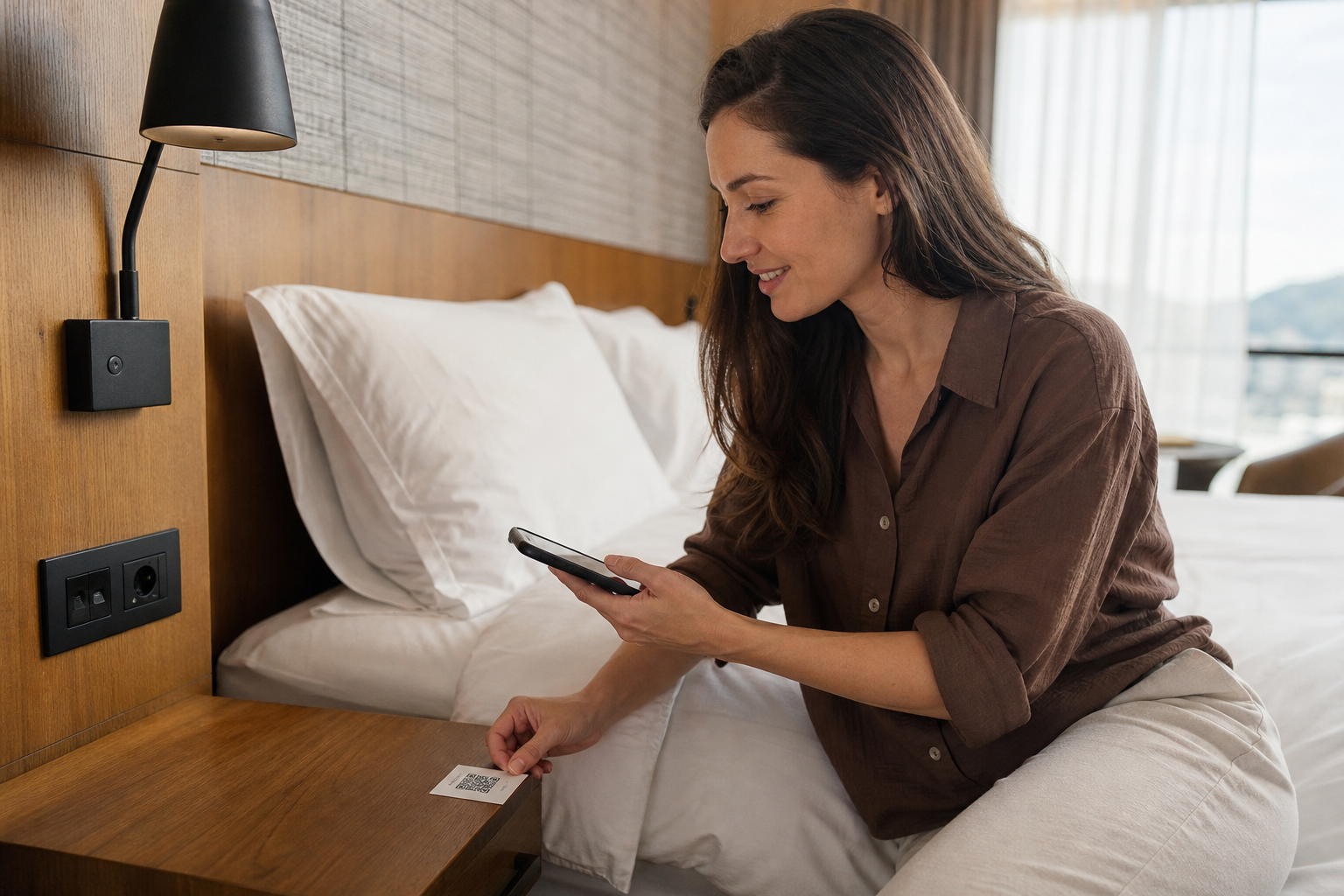
Guests reach the answers from their own phone, with no app and no login.
Handling Allergies and Sensitive Topics
An AI concierge is not the authority on food safety or allergies. Your knowledge base should say so plainly. Hotel staff preparing food are the final authority, and guests should confirm allergy information directly with staff.
With Cortesia, food-allergy mentions trigger staff alerts that require acknowledgment. Allergy information is used only for guest safety.
Turning It Into a Digital Concierge
A knowledge base is most useful when guests can reach it easily. Cortesia is a multilingual AI concierge for boutique and independent hotels and short-term rentals. Setup includes the property knowledge base, room and staff import, and print-ready QR materials, so properties go live in days.
Guests answer in their own language, in one of eight languages. Requests then reach one live staff dashboard, translated for the team. Learn more about the digital concierge approach and guest language translation. You can also try the live demo.
Keeping Your Hotel Knowledge Base Accurate
Name one owner, usually the general manager or front office lead. Department heads then send updates for their areas. Update entries the same day something changes, and review everything monthly.
Also watch what guests ask that you have not answered. Those gaps show what to add next. Our staff task management buyer guide explains how to route the requests that follow.
Frequently Asked Questions
What is a property knowledge base for hotels?
It is an organized collection of verified information about your property, such as hours, amenities, policies, menus and local tips. An AI concierge or your staff can use it to answer guests consistently.
Why does a hotel need a knowledge base?
It keeps answers consistent and frees the front desk from repeating the same replies all day. It also gives guests instant answers at any hour.
What should a hotel knowledge base include?
Include Wi-Fi details, check-in and checkout times, breakfast and restaurant hours, amenities, house rules, parking, and neighborhood recommendations. Add menus and emergency contacts too.
How long does it take to build one?
A first version for a small property often takes a few hours of focused work. Plan a short monthly review to keep it current.
Who should own the knowledge base?
One named person, usually the general manager or front office lead, should own it. Department heads supply updates for their areas.
How often should I update it?
Review it monthly and update it the same day anything changes, such as new restaurant hours or a closed pool.
Can a knowledge base answer guests in other languages?
Yes, when it feeds a multilingual AI concierge. You write the content once, and guests read answers in their own language.
Should it cover allergies and food safety?
Include general menu information, but state clearly that hotel staff preparing food are the final authority. Guests should confirm allergy information directly with staff.
Is a knowledge base the same as an FAQ page?
Not quite. An FAQ page lists a fixed set of questions, while a knowledge base holds fuller property detail that can answer many differently worded questions.
Do guests need to download an app to use it?
Not with Cortesia. Guests scan a QR code in the room, with no app and no login.
Does it work for short-term rentals?
Yes. Hosts who manage a home remotely can answer door codes, appliance questions and house rules before guests ask.
What are common mistakes when building one?
The most common are outdated hours, vague answers, and copying marketing text. Skipping a list of topics that must go to staff is another.
Conclusion
A strong property knowledge base for hotels starts with the questions guests already ask. Keep answers short and accurate, route sensitive topics to staff, and review the content every month. Do that, and your team spends less time repeating itself and more time on real hospitality, in the guest's own language.