
Hotel guest service automation is the use of AI tools that let guests get instant answers, make requests and see service updates from their own phone, with no app, no login. For boutique and independent hotels, that matters more every year. A lean team cannot answer the same ten questions all day in several languages while also checking guests in and coordinating housekeeping. As a result, more owner-operators use platforms such as Cortesia. It turns a printed QR code into a multilingual concierge that answers in the guest's own language and lands every request on one staff dashboard.
What You Will Learn in This Guide
This guide explains what automated guest service means, why it is urgent for small properties, and how a request travels from scan to resolution. It also covers benefits, challenges, features to look for, and the questions operators ask most. For a broader view of the category, the complete guide to AI concierge benefits covers adjacent use cases in more depth.
What Is Hotel Guest Service Automation?
In short, it means replacing phone-and-paper guest requests with software that answers instantly. Anything the software cannot resolve goes to the right staff member. It usually combines three parts: a messaging screen, a property-specific knowledge base, and a translation layer. Guests and staff can then each use their own language.
For a boutique hotel, this often starts with a QR code printed in the room, on a keycard sleeve, or at the front desk. A guest scans it and asks a question in their own language. Within seconds, they get an answer about breakfast hours, Wi-Fi, or the nearest pharmacy. If a person must act, such as an extra towel or a late checkout, the request is translated and sent to the right department.
How It Differs From a Generic Hotel Chatbot
Furthermore, this is not a generic chatbot bolted onto a website. A chatbot often answers only a fixed FAQ and has no link to the team. Automated guest service ties into that property's menus, amenities, house rules and neighborhood. The QR code is only the entry point. The value comes from what happens after the scan.
Automation Supports Staff, It Does Not Replace Them
Automation handles the repetitive questions. Your team keeps the moments that need warmth and judgment. Think of it as a second pair of hands at the front desk, not a substitute for the people behind it.
Why Boutique Hotels Are Turning to Guest Service Automation Now
Independent hotels are asked to deliver more personal service with fewer people. According to an AHLA and Hireology survey, 65% of hotels report staffing shortages. Housekeeping (38%) and the front desk (26%) are named as the most critical gaps. Consequently, the same small team checks guests in, answers the phone, cleans rooms, and still delivers the personal touch.
Language adds more pressure. Research from CSA Research found that 76% of consumers prefer to engage in their own language. International travel has also returned to record levels, with roughly 1.5 billion international arrivals recorded in 2025 according to the UN World Tourism Organization. In other words, many guests may not speak fluent English. One misunderstood request, such as a broken air conditioner, can turn into a bad review.
Meanwhile, hotel apps have not solved the problem. Few guests install a property's own app for a two-night stay. That is the gap this approach closes: no app, no login, just a QR code and an answer in the guest's own language. Properties also struggle to keep requests organized once they arrive. The guide on how to organize guest requests fast covers that piece directly.
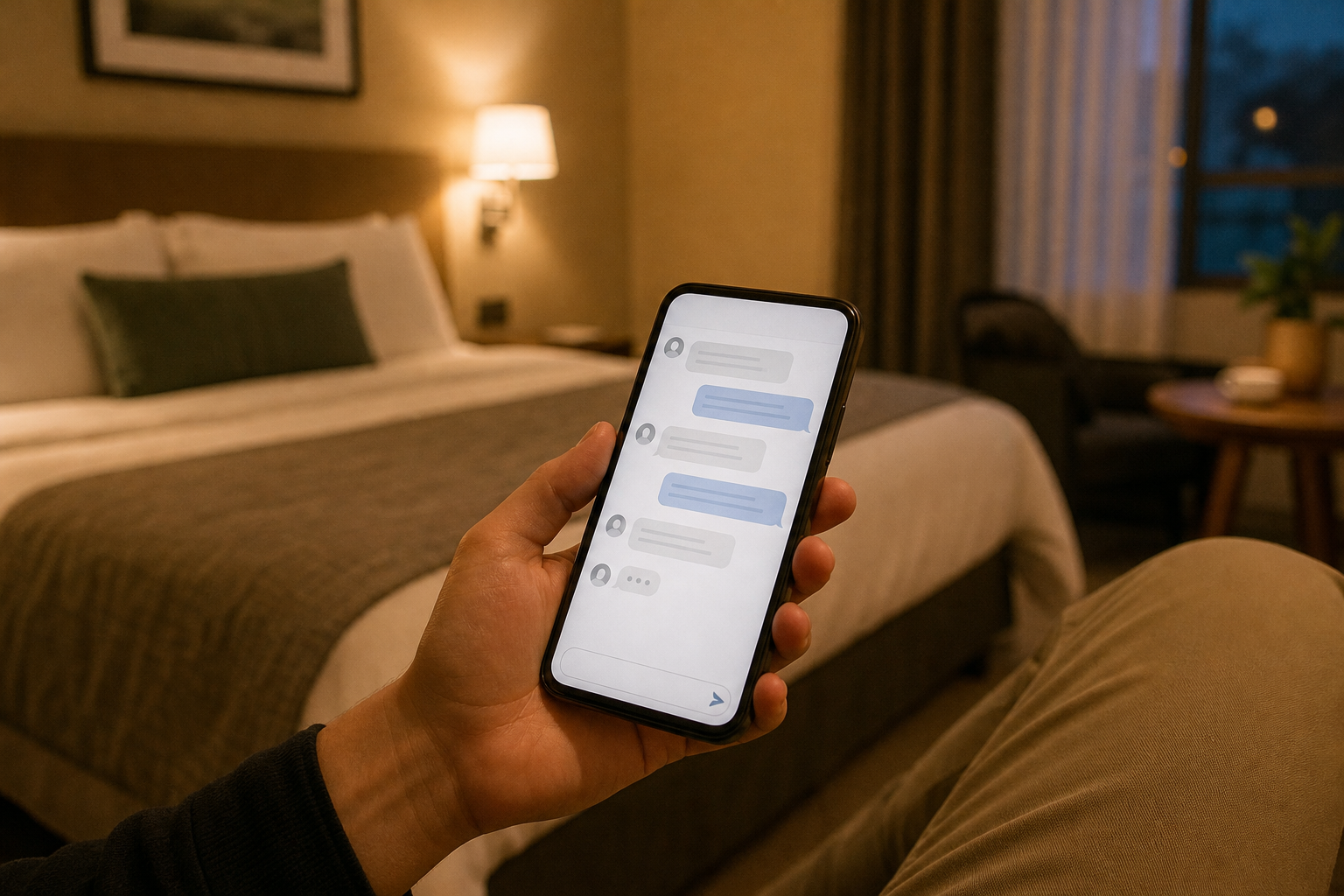
Hotel guest service automation lets guests get answers from their own phone instead of calling the front desk.
How Automated Guest Service Works, Step by Step
Although every platform differs a little, the core workflow is predictable. Here is how a typical request moves from scan to resolution.
- Guest scans the room QR code. No login or app download is needed. The guest's own phone browser opens a private chat for that property, branded with its name and look.
- The guest asks a question in their own language. The system answers common questions instantly, such as breakfast hours, Wi-Fi and parking, using that property's own knowledge base.
- Unresolved requests route to the right department. A broken air conditioner or a food allergy note is translated and sent to housekeeping, the front desk, or food and beverage on one live dashboard.
- Staff respond in the language they work in. The reply is translated back automatically. The guest reads it in their own language, and staff never leave theirs.
- The request is logged and tracked to completion. Nothing gets lost between a phone call, a sticky note and a radio call, because every request has a record and a named owner.
Allergy and Safety Mentions
This structure also helps with safety notes. A food allergy mention can trigger a staff alert that must be acknowledged, so the note cannot quietly disappear. However, the AI is not the authority on food safety. Hotel staff who prepare food are the final authority, and guests should confirm allergy information directly with staff. Allergy information is used only for guest safety.
Where Automation Helps Across the Guest Stay
Before and During Arrival
Arrival is when the same questions pile up: directions, parking, check-in time, Wi-Fi. A scannable code at the door or in the room answers them without a line at the front desk. As a result, staff can greet people instead of reciting the same answers.
Requests, Housekeeping and Maintenance
Guests ask for towels, report a leak, or say a room needs a refresh. Routed requests reach the right team at once. Housekeeping can plan rounds around real needs rather than knocking on doors guests do not want opened. For the mechanics, see this practical guide to hotel guest request routing.
Answers in the Guest's Own Language
Chat support removes the wait for a staff member who happens to speak the guest's language. Cortesia works across eight languages, and every answer arrives in the guest's own language at any hour. Staff read the translated request in the language they work in.
Personal Service That Remembers Guests
Automation does not have to feel generic. Knowing a guest's preferences sharpens the experience over time. For instance, the piece on how to profile guest preferences to boost boutique hotel service explains how repeat visitors can be recognized rather than treated as strangers.
Learning From What Guests Ask
Every question shows what your property has not made clear. If ten guests ask about late checkout, the answer belongs in your knowledge base. Reviewing unresolved questions weekly turns guest messages into practical service improvements.
Hotel Guest Service Automation vs. Traditional Front Desk Service
To see the practical difference, compare how the same guest request plays out under each approach.
Factor | Traditional Front Desk | Guest Service Automation |
|---|---|---|
Response time | Depends on staff availability | Instant for common questions |
Language coverage | Limited to staff's languages | Guest and staff each use their own language |
Request tracking | Phone calls, sticky notes, radios | One dashboard, logged and timestamped |
Guest effort | Walk to the desk or call | Scan a QR code from the room |
In contrast to large chains, boutique properties rarely have a multi-line phone system or a 24-hour call center. Therefore, the gap between a guest's expectation and what a small overnight shift can deliver is wider. That gap is where automation earns its value.
Benefits of Automated Guest Service for Guests and Staff
Faster Answers, Fewer Misunderstandings
Guests get an answer in seconds, in their own language, at any hour. Consequently, fewer small problems grow into complaints.
A Calmer Front Desk and Housekeeping Team
When routine questions are handled up front, staff can focus on guests who need a person. Housekeeping also gets clear, routed tasks instead of scattered calls.
Accountability and a Clear Record
Every request has a timestamp and an owner. Managers can see what was asked, who handled it, and what is still open. This replaces guesswork with facts.
Challenges to Plan For Before You Automate
Cost and Rollout Effort
Every tool has a cost, so weigh it against the hours your team spends on repeat questions. Lighter tools built for small properties can be live in days, while heavy chain systems can take months.
Staff Training and Habits
Tools only work if staff check them. Show every shift how to read and close requests on the dashboard. Short, hands-on training usually beats long manuals.
Keeping the Human Touch
Guests should always be able to reach a person. Automate the routine, but keep the welcome, the recommendation and the apology human. Also keep the knowledge base current, because outdated answers hurt trust quickly.
What About Smart Rooms, Voice Controls and Robots?
Hotel technology articles often lump everything together. Smart thermostats, voice assistants and service robots belong to a different, hardware-heavy category. They can be useful at larger properties, but they are separate investments. Guest service automation can start with a printed code and the guest's own phone. For most boutique hotels and short-term rentals, that is the faster first step.
Key Features to Look for in a Guest Service Automation Platform
Not every platform is built for a 40-room property. Before committing, check for the following:
- No app download or guest account required
- Genuine multilingual support, including right-to-left scripts
- A short path to going live, measured in days
- Unlimited guest usage and unlimited staff seats, rather than per-seat pricing
- Safety features such as acknowledgment-required allergy alerts
- Simple, cancel-anytime terms instead of a long contract
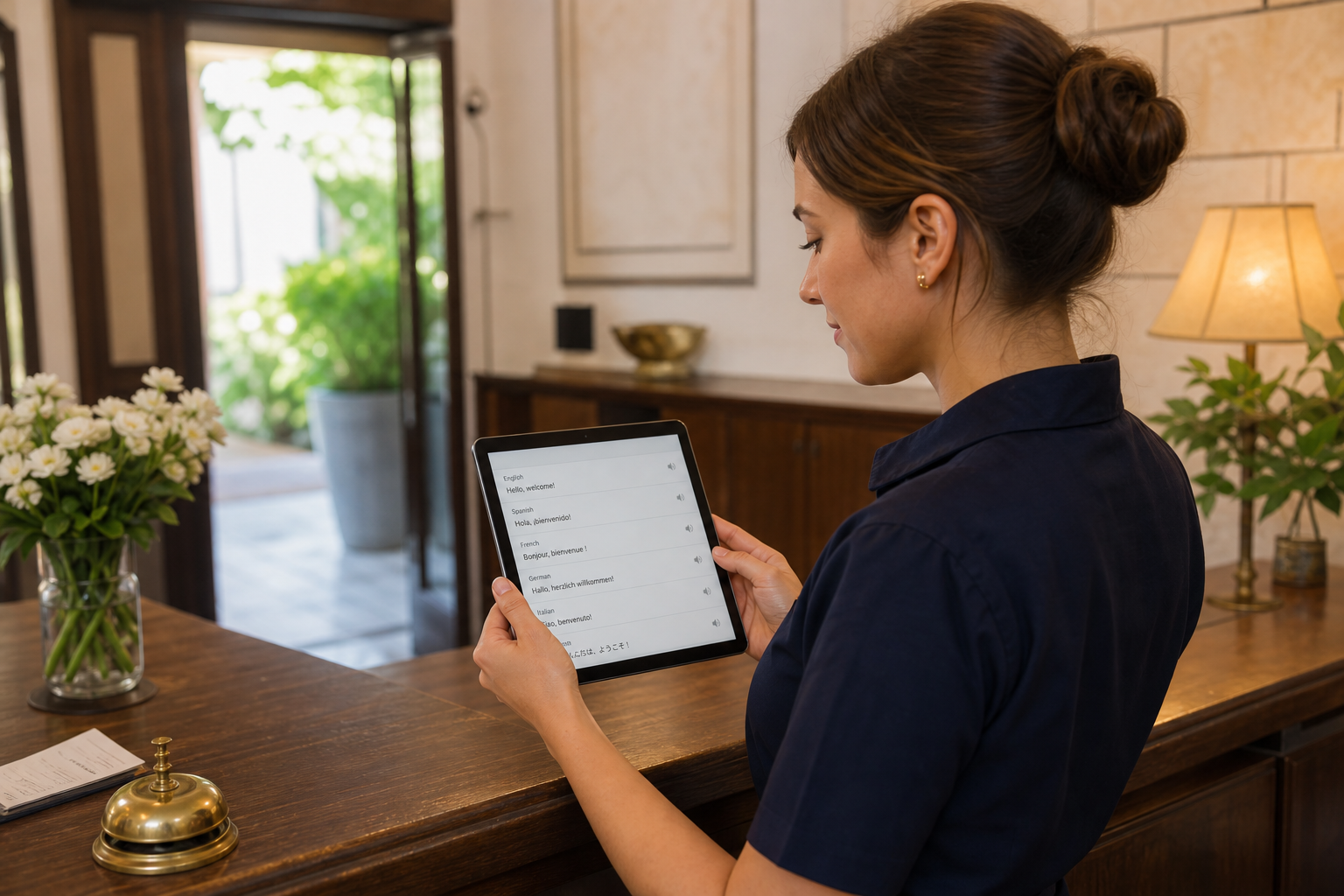
Every guest request lands on one translated dashboard for the whole team to see.
Guest Data and Privacy
Guests care about what happens to their information. With Cortesia, guests never create an account. The app runs no analytics or advertising trackers, and allergy information is used only for guest safety. Ask any vendor you evaluate for the same plain answers.
Choosing the Right Automated Concierge for Your Property
Above all, the platform should fit your property's size and staffing model rather than force the team to change how it works. A 42-room boutique hotel does not need the same rollout as a 400-room chain. A short-term rental host managing one unit remotely needs something even lighter.
When comparing vendors, it also helps to see how staff workflow tools fit alongside guest-facing automation. The 2026 buyer's guide to hotel staff task management software is a useful companion. Similarly, properties already evaluating vendors may find the direct Cortesia vs. GuestAI comparison helpful.
Cortesia is built for boutique and independent hotels and short-term rentals, typically between 10 and 150 rooms. Its demo property, The Mesquite, is a sample 42-room boutique hotel that shows the system working across eight languages. The Henderson House demo shows how a single rental can run the same setup with one owner-operator. You can explore the live walkthrough at app.cortesia.ai/demo.
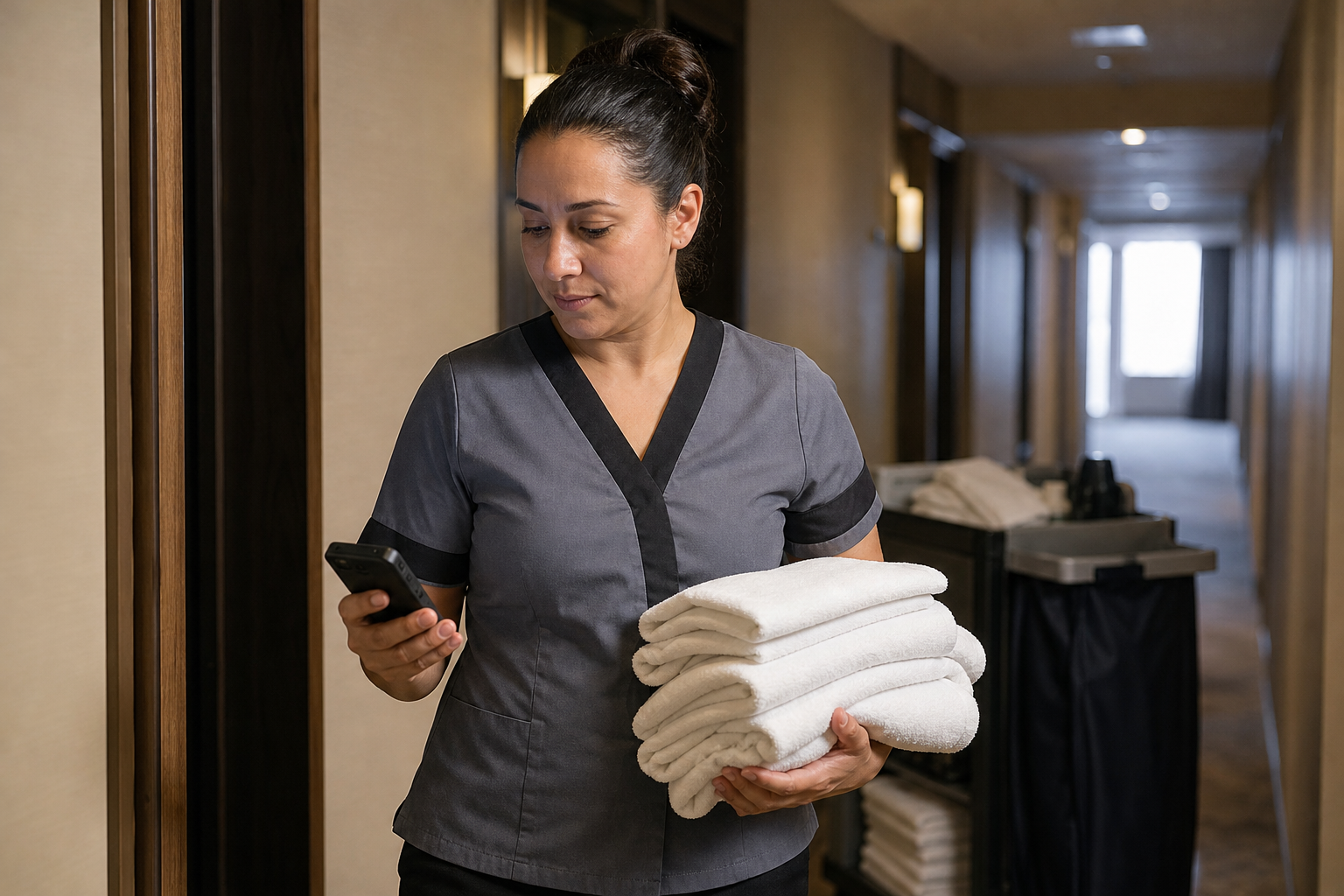
Housekeeping gets routed requests instead of knocking on doors guests never wanted opened.
Frequently Asked Questions About Hotel Guest Service Automation
What is hotel guest service automation?
Hotel guest service automation is AI software that answers guest questions, takes requests and routes them to staff, usually through a QR code the guest scans with their own phone. It removes the need to call the front desk for routine needs.
How does hotel guest service automation work?
A guest scans a QR code and asks a question in their own language. The system answers from the property's knowledge base or routes the request to the right staff member. Staff see it translated on a shared dashboard and reply in their own language.
How long does it take to set up?
Boutique properties can be live in days. Setup usually involves loading the knowledge base, adding rooms and staff, and printing QR materials.
How much does hotel guest service automation cost?
Pricing varies by vendor. Platforms for independent hotels generally use simple monthly pricing rather than enterprise contracts. Cortesia offers month-to-month terms with unlimited guest usage and unlimited staff seats.
Can automation replace human staff in hotels?
No. It takes over repetitive questions so staff can spend their time on guests who need a person. Warmth, judgment and problem solving stay with your team.
Do guests need to download an app?
No. With Cortesia, guests scan a QR code and chat in a browser window. It is no app, no login, and guests never create an account.
Can it handle food allergies and safety alerts?
It can flag allergy mentions and send a staff alert that requires acknowledgment. However, the AI is not the authority on food safety. Hotel staff preparing food are the final authority, and guests should confirm allergy information directly with staff.
How many languages does it support?
Coverage depends on the platform. Cortesia supports eight languages, so guests communicate in their own language while staff keep working in theirs.
Is it suitable for every type of property, including short-term rentals?
Yes, when the tool is sized correctly. Boutique hotels, independent properties and short-term rentals all benefit. A remote host with no front desk can answer check-in, Wi-Fi and local questions instantly instead of juggling texts and calls.
What best practices improve results?
Keep the knowledge base current and have every staff member monitor the dashboard during their shift. Place QR codes where guests naturally look, such as the nightstand or keycard sleeve. Review unresolved questions weekly so answers keep improving.
Final Takeaways
Ultimately, hotel guest service automation is not about replacing the personal touch that makes boutique hotels special. It removes the repetitive, language-dependent work that quietly eats a lean team's day. Staff can then spend their hours on the guests and moments that need a human. Staffing shortages and multilingual demand are not easing, so a QR-based, no-app approach gives guests a faster, clearer answer in their own language. For a closer look at how this works at a boutique property, the Cortesia demo is a practical next step for any owner-operator weighing the switch.