
Hotel Guest Experience Software for Boutique Hotels
Hotel guest experience software is the technology that lets guests get answers, make requests, and reach staff without waiting at a front desk or downloading an app. For boutique and independent hotels and short-term rentals, it is the simplest way to deliver attentive service in the guest's own language with a lean team. This guide explains what the category does, why independent properties are adopting it, and how Cortesia puts it to work live in days rather than months.
Hotel Guest Experience Software in Brief
Quick answer: Hotel guest experience software is a QR-based or app-based platform that answers guest questions, collects requests, and translates them for staff in real time. It takes the place of phone calls, sticky notes, and a bottlenecked front desk as the way requests travel.
What Is Hotel Guest Experience Software?
Hotel guest experience software is a digital layer between a guest and hotel operations. It handles questions and requests that used to need a phone call or a trip downstairs. Specifically, it combines a guest-facing chat with a staff-facing dashboard, so nothing gets lost between departments.
In practice, the guest reaches the system through a printed QR code. As a result, there is no account to create and nothing to install. The platform answers routine questions from the property's own knowledge base, such as menus, Wi-Fi details, and checkout times. Anything more specific goes to a real staff member.
What it handles day to day
- Guest questions: Wi-Fi, breakfast hours, parking, amenities, and neighborhood tips.
- Service requests: extra towels, late checkout, a room upgrade, or a broken air conditioner.
- Routing: each request goes to the right department, such as housekeeping or the front desk.
- Translation: guests and staff each read and write in their own language.
- Safety notes: allergy mentions are flagged so a staff member must acknowledge them.
Why Independent Hotels Need Guest Experience Technology
Boutique and independent properties compete on personality and attentive service, not on loyalty programs. However, they are asked to deliver that personal touch with fewer people on the schedule. A survey from the American Hotel & Lodging Association and Hireology found that 65% of hotels report staffing shortages. Housekeeping at 38% and front desk roles at 26% are among the most critical gaps.
In addition, language quietly costs hotels good reviews. Research from CSA Research shows that 76% of consumers prefer to interact in their own language. International travel has also returned to record volumes, with roughly 1.5 billion international arrivals tracked by the UN World Tourism Organization in 2025. Consequently, a guest who cannot explain a broken air conditioner in English either gives up or gets it wrong.
Pairing guest experience software with a clear internal process helps lean teams close both gaps at once. This hotel staff task management guide shows how to organize the work behind each request.
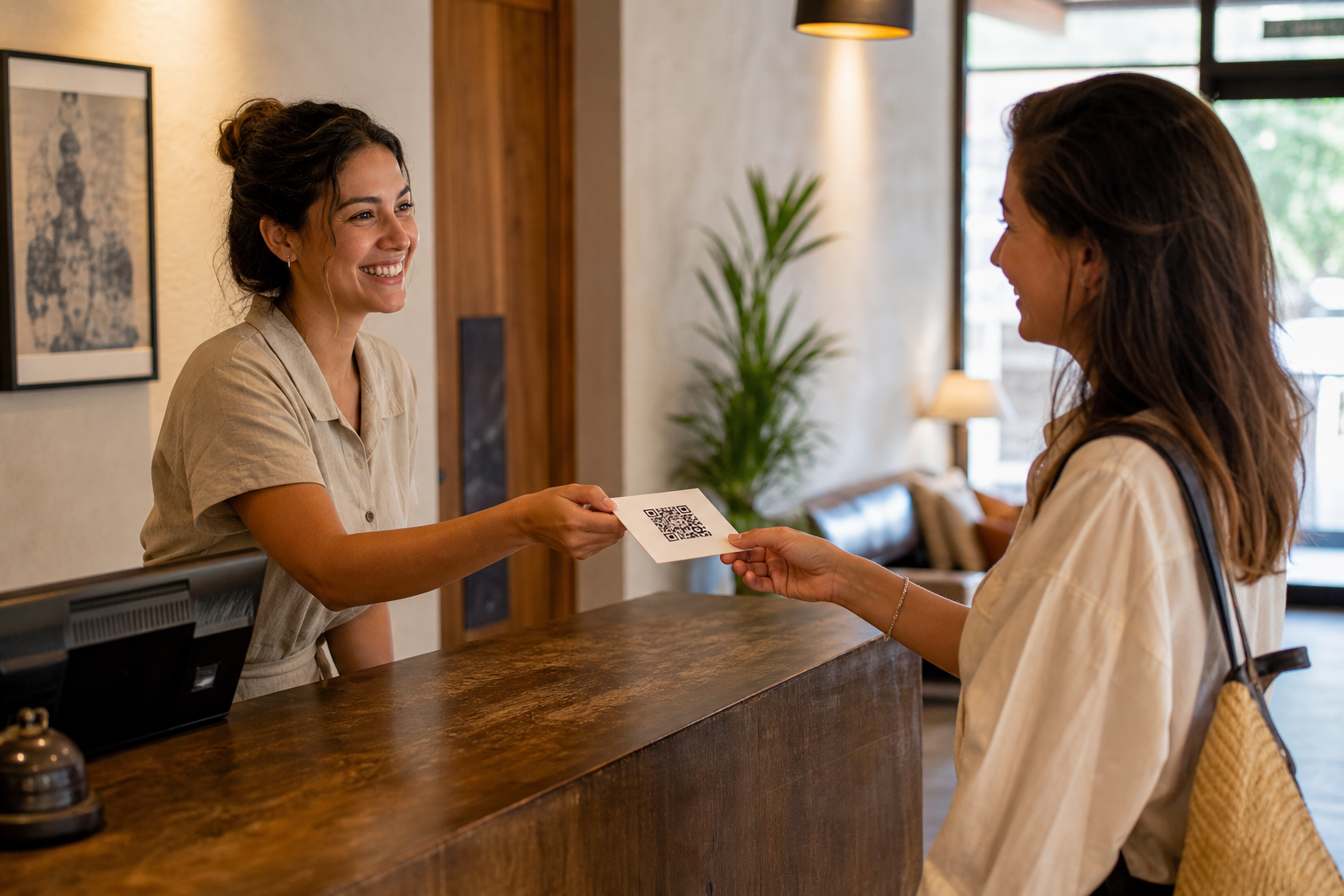
A simple QR code at check-in is often all it takes to introduce hotel guest experience software to a guest.
How Hotel Guest Experience Software Works
Most platforms follow a similar path from the moment a guest scans a code to the moment the request is resolved. Here is the typical sequence:
- Guest scans the room QR code. This opens a private concierge chat in the phone's browser, with no app download or account required.
- Guest asks a question in their own language. The system understands whichever supported language the guest chooses to type in.
- The request is translated and routed to staff. It lands on a live dashboard in the language the team works in, sorted to the right department.
- Staff respond, and the guest reads the reply in their language. Translation happens in both directions, so nobody needs a second language to finish the conversation.
Therefore, a guest never needs to know the staff does not speak their language. The staff never has to decode a message word by word. For a closer look at the messaging layer, the hotel guest messaging software buyer's guide goes into more detail.
Core Capabilities of Guest Service Management Tools
Many guest service platforms are built around a request tracker. A good one gives the whole team a shared view of every open item. Use the list below as a checklist when you compare vendors.
Request logging and assignment
Every request should be logged once, assigned to a department or person, and visible until it is closed. If a request lives on a sticky note, it can disappear. In contrast, a shared dashboard shows what is open, who owns it, and how long it has waited.
Follow-up and completion alerts
A request is only finished when the guest's problem is fixed. Ask whether staff can see status at a glance and whether the guest hears back. Some enterprise suites add multi-level escalation rules, so confirm what a vendor actually offers before assuming it.
Multi-part requests
Guests rarely ask for one thing. A late arrival might need a crib, extra pillows, and a dinner reservation. Look for a way to see related requests together, so housekeeping and the front desk are not working from separate lists.
Records and audit trail
A record of who saw a request and when protects both guests and staff. This matters most for safety notes. Likewise, a history of past requests helps managers spot patterns, such as the same question asked all day. The guide to hotel guest request software for boutique hotels compares options in this area.
Live dashboard and reporting
Managers need to see open requests, busy departments, and slow responses without asking around. Reporting should answer simple questions first. Which requests come up most? Which department is overloaded? Where do guests wait longest?
Hotel Guest Experience Software vs. Traditional Guest Apps
For years, the default answer to guest communication was a native hotel app. In contrast, adoption data has never supported that approach for smaller properties. Few guests install a hotel app for a two- or three-night stay. A QR code removes that friction, because the guest's own phone browser becomes the concierge. That is what "no app, no login" means in practice.
Similarly, enterprise guest platforms built for 300-room chains often assume a lengthy PMS project before a single guest can use the system. Independent hotels rarely have the time, budget, or IT staff for that. Above all, the right comparison is not "app versus no app." It is which platform gets a lean team to a working, multilingual guest experience the fastest. A side-by-side look is available in this Cortesia versus GuestAI comparison.
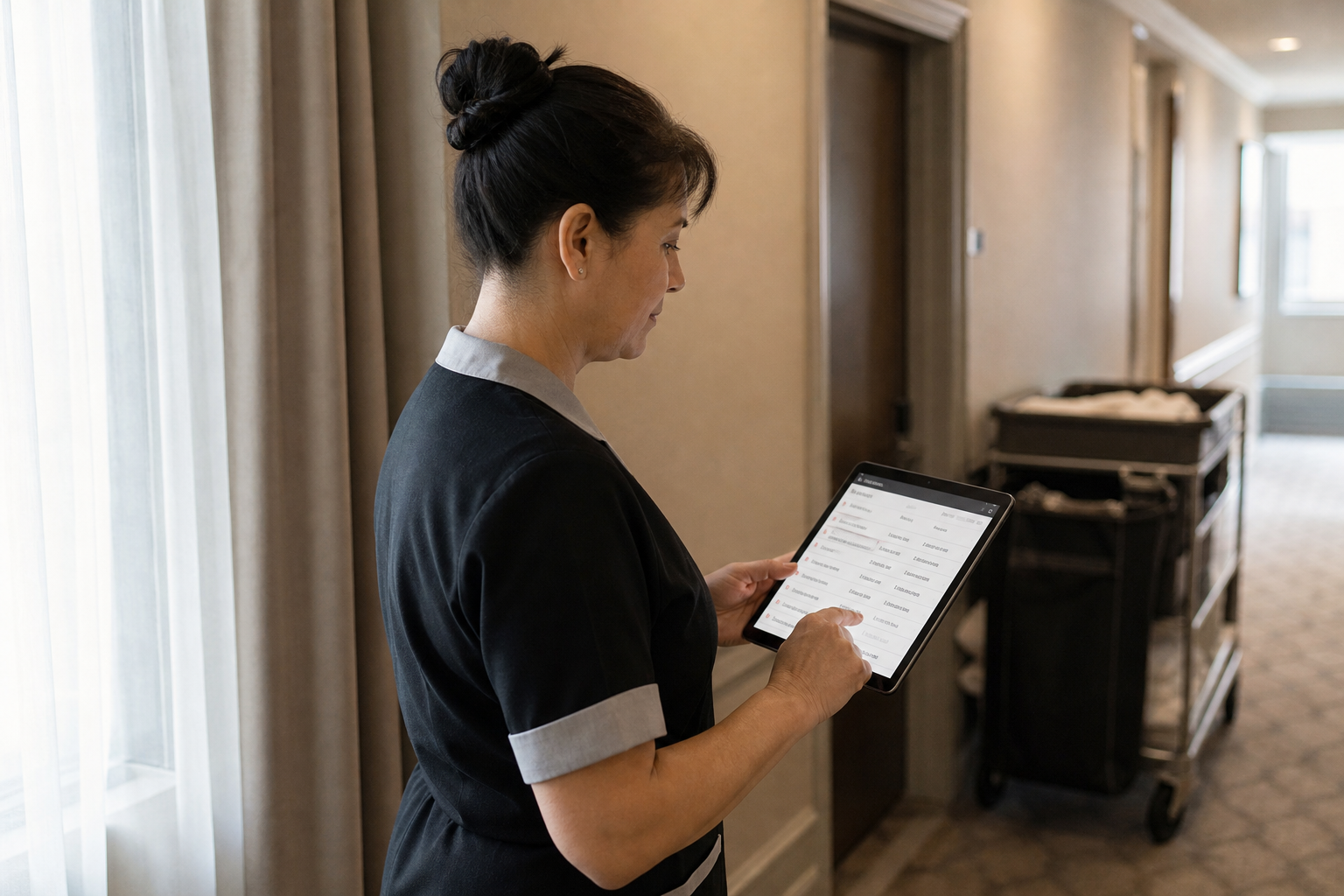
Every request, in every language, lands on one dashboard the whole team can see.
Boutique Guest Experience Software vs. Enterprise Service Suites
Large resorts often run full service management suites. These can include call queues, phone system links, incident cost tracking, and detailed staff performance reports. That makes sense for a property with many departments and a dedicated operations team.
However, a 40-room hotel has different needs. The team is small, so the software must be quick to learn. Guests are short-stay, so it must work without an app. Many are international, so translation matters as much as tracking. For that reason, boutique properties should weigh setup time and daily simplicity above feature count.
Key Features to Look for in a Guest Experience Platform
Not every tool labeled as hospitality technology solves the same problem. Specifically, independent hotels should look for the features below before signing a contract.
| Feature | Why It Matters |
|---|---|
| No-app guest access | Removes the single biggest barrier to adoption during a short stay. |
| Two-way translation | Lets guests and staff each use their own language without a third-party interpreter. |
| Live staff dashboard | Keeps every department on one screen instead of radios, texts, and sticky notes. |
| Safety alert acknowledgment | Creates a record that an allergy or safety note was actually seen by staff. |
| No PMS integration required | Shortens rollout from months to days for a small property. |
| Simple per-room pricing | Keeps cost predictable as the team and guest volume grow. |
How Cortesia Delivers Guest Experience Software for Boutique Properties
Cortesia was built for the properties enterprise platforms tend to ignore: boutique hotels and short-term rentals, typically 10 to 150 rooms, that run lean. Guests scan a QR code in the room and reach a branded AI concierge chat that knows the property's menus, amenities, and neighborhood. There is no app and no login. The live demo property, The Mesquite, is a 42-room boutique hotel handling guests across eight languages. The Henderson House demo shows how a single Dallas rental owner can manage the same flow remotely.
Requests that reach the right team
Every request, from a late checkout to a room upgrade, is translated and sent to one live staff dashboard. For example, the approach to fast-moving requests is covered in this piece on responding quickly to room upgrade requests. Hotels can also use guest history to personalize service over time. That practice is explored in this guide to profiling guest preferences in boutique hotels.
Pricing and rollout
Pricing is a simple per-room monthly fee, month-to-month, with unlimited guest usage and unlimited staff seats. Onboarding is included, and data is exportable on request. Properties go live in days, not months. Readers can see the full platform at cortesia.ai.
Guest data and privacy
Guests never create an account. The app runs no analytics or advertising trackers. Allergy information is used only for guest safety.
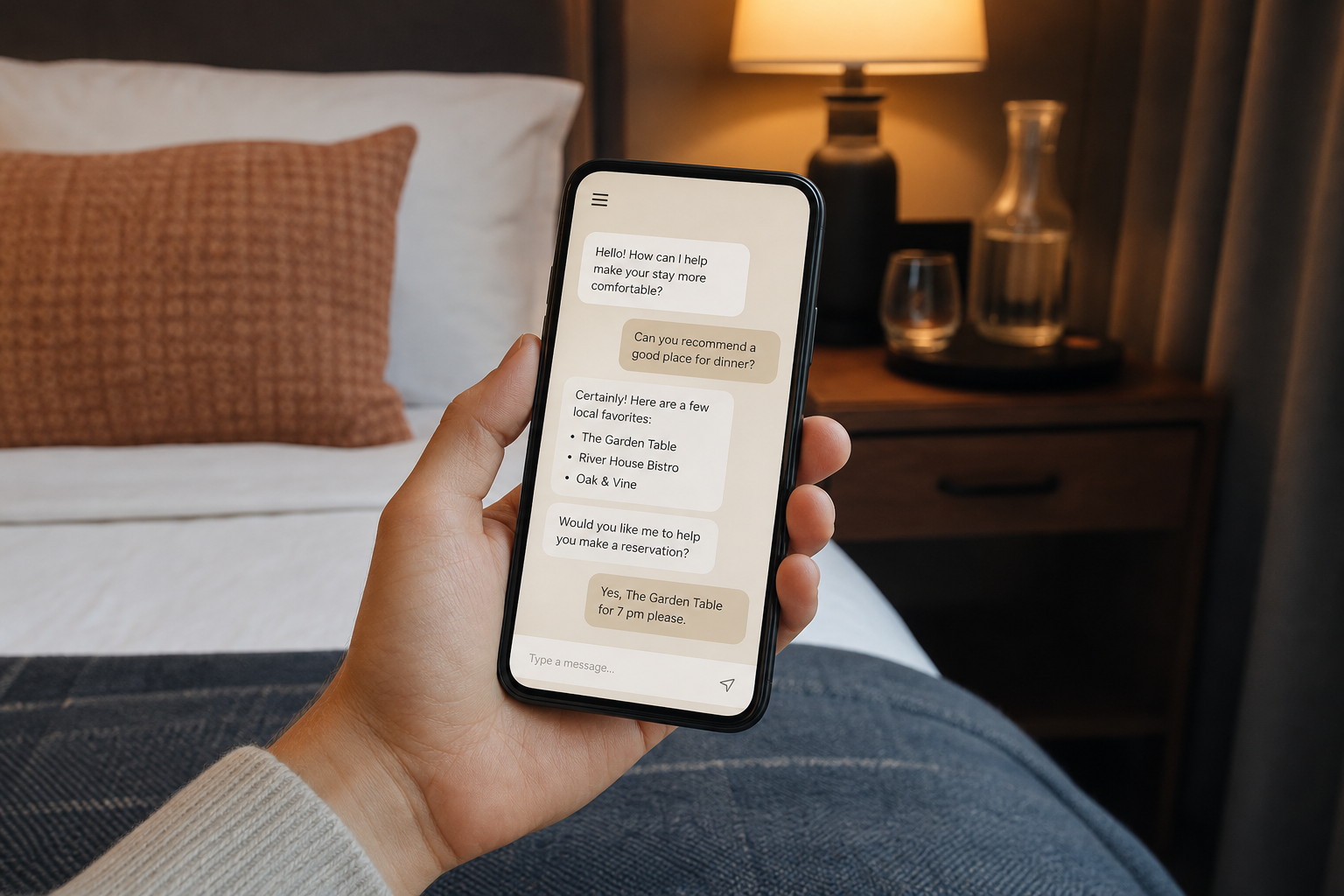
No download, no login: the guest's own phone becomes the concierge.
Allergies and Safety: Staff Stay the Final Authority
Food-allergy mentions trigger an alert that requires staff acknowledgment. This closes a common gap, where a guest mentions a shellfish allergy once and nobody can later confirm who knew. Even so, the software is a communication tool, not a food safety authority. Hotel staff preparing food are the final authority, and guests should always confirm allergy information directly with staff.
Choosing the Right Hotel Guest Experience Platform
Before committing, test a live demo rather than a sales deck. Furthermore, ask these questions during every vendor call:
- How many days does onboarding take, and who does the work?
- Do guests need an app or an account?
- Does translation work in both directions, for guests and staff?
- Does pricing punish the property for adding staff seats?
- Can the property export its data later?
- How are safety notes handled and recorded?
A platform that requires a long integration project is rarely worth it for a 40-room property that needs results this season. Ultimately, the goal is simple. A guest should get a fast, accurate answer in the guest's own language, and staff should see every request in one place. Learn more about day-to-day operations at Cortesia's website.
How to measure results
Pick a few simple signals and review them monthly. Track how many routine questions still reach the front desk. Note how long common requests stay open. Read guest reviews for mentions of language problems or slow replies. These are practical checks any manager can run without a analytics team.
Frequently Asked Questions About Hotel Guest Experience Software
What is hotel guest experience software?
Hotel guest experience software is a digital platform that lets guests ask questions, request service, and get local information without calling the front desk. Most modern versions work through a QR code scan rather than an app download. Many also translate requests between the guest's language and the staff's language in real time.
How does hotel guest experience software work for boutique hotels?
A guest scans a printed QR code in the room or at check-in, which opens a private chat loaded with the property's own information. The guest types a question in their own language. The system routes the translated request to the right staff member on a live dashboard.
Why do independent hotels need guest experience technology?
Independent hotels run lean teams that cannot staff a multilingual front desk around the clock. Technology absorbs the repetitive questions and language gaps. This frees staff to focus on the requests that need a human touch.
How much does hotel guest experience software cost?
Pricing varies by vendor. Many platforms built for independents charge a simple per-room monthly fee rather than enterprise licensing. Cortesia, for example, uses month-to-month per-room pricing with unlimited guest usage and unlimited staff seats, so cost does not climb as more staff join.
How long does it take to set up a guest experience platform?
Lightweight, no-integration platforms can go live in days. Setup typically involves loading the property knowledge base, adding rooms and staff, and printing QR materials.
What languages can hotel guest experience software support?
Coverage depends on the vendor, so ask for the exact list during a demo. Cortesia currently supports eight languages across both the guest chat and the staff dashboard.
Is a PMS integration required to use guest experience software?
Not with every platform. Some guest experience tools are designed to work independently of the property management system. That is why boutique hotels can launch them in days instead of the months a full integration project usually takes.
How is hotel guest experience software different from a hotel guest app?
A traditional guest app asks visitors to download software, create an account, and log in. Most short-stay guests never bother. QR-based guest experience software skips all three steps, so guests reach the concierge chat instantly from their own phone browser.
How does guest experience software help with food allergies and safety?
Strong platforms flag allergy or safety mentions and require a staff member to acknowledge the alert. This creates a record of who knew and when. However, hotel staff preparing food are the final authority, and guests should confirm allergy information directly with staff.
Can short-term rentals use hotel guest experience software?
Yes. Many platforms built for boutique hotels also work for short-term rental hosts and small property managers with no front desk at all. A single owner managing a home or a handful of units can use the same QR-and-dashboard model to answer guests remotely.
What should hoteliers look for before buying guest experience software?
Look for no-app guest access, multilingual support in both directions, a live staff dashboard, and pricing that does not punish a property for adding staff seats. Confirm onboarding time, data export rights, and whether a live demo is available before committing.
Final Thoughts
In the end, hotel guest experience software solves a specific, everyday problem: lean teams trying to deliver personal, multilingual service. The key takeaways are simple. Choose a no-app platform, insist on two-way translation, keep every request on one dashboard, and avoid long integration projects. As international travel keeps climbing, properties that rely only on a front desk and sticky notes will keep losing small moments to misunderstanding. However, a platform like Cortesia shows that a boutique hotel or short-term rental does not need an enterprise budget to close that gap.