
Hotel Guest Request Software: Top Picks for Boutique Hotels
Hotel guest request software is the tool boutique hotels and short-term rentals use to stop guest questions from piling up at the front desk. Instead of calling, texting or waiting in line, guests send a request from their own phone. It goes straight to the right staff member, translated into the language the team works in.
Direct answer: Hotel guest request software lets guests send service requests, questions or complaints digitally, usually by scanning a QR code. It routes each one to the right department on a shared staff dashboard. For independent hotels, the best versions need no app, no login, and no PMS integration to start working.
What Is Hotel Guest Request Software?
Hotel guest request software captures what a guest needs and sends it to staff in real time. That might be extra towels, a late checkout or a question about breakfast hours. In short, it replaces phone calls and sticky notes with one tracked, shared queue.
For independent hotels, the format matters as much as the feature list. A platform that needs an app download rarely gets used by guests staying two or three nights. Consequently, the tools gaining ground with boutique properties rely on something guests already carry: a phone camera and a QR code, a format explained on Wikipedia's overview of QR codes.
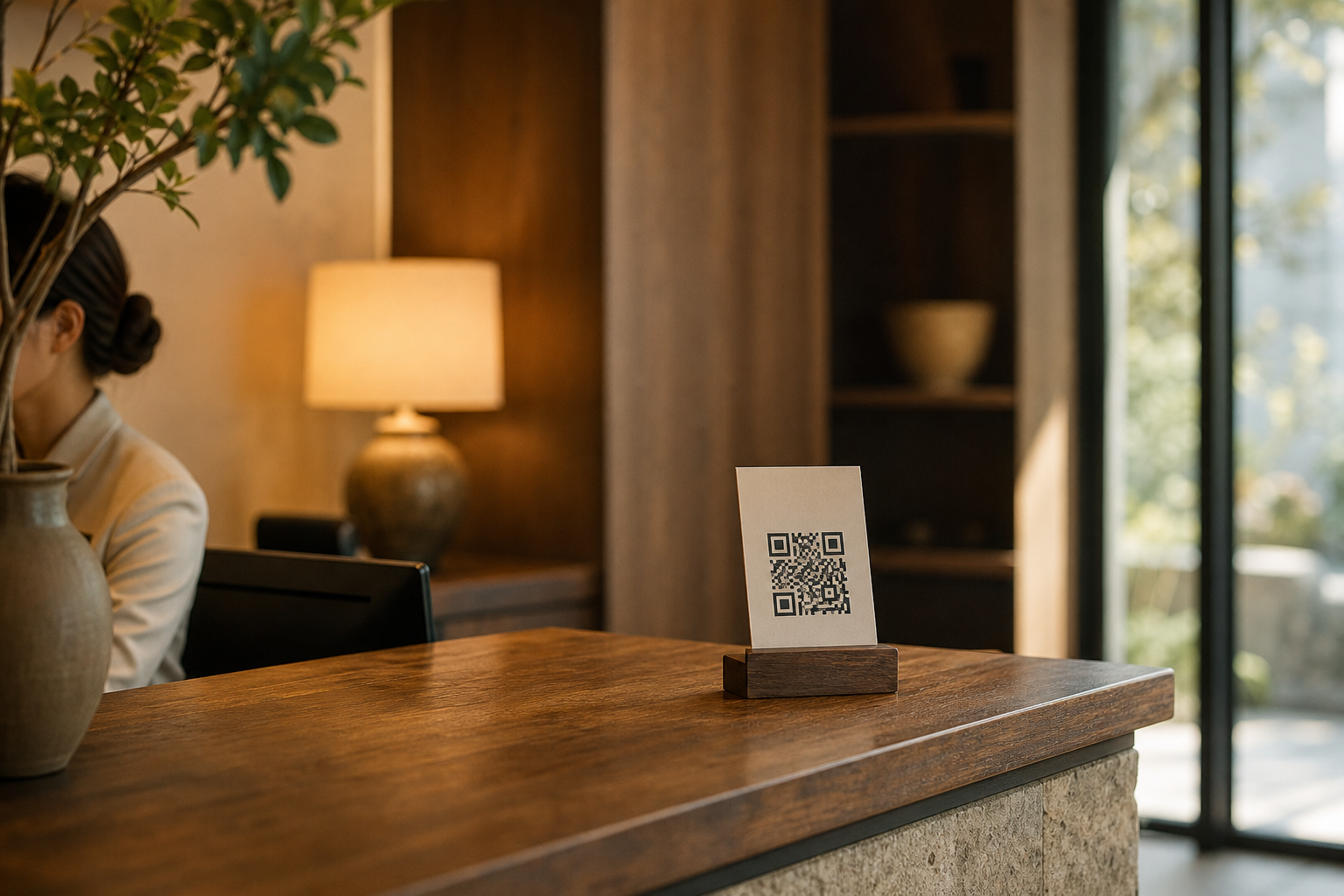
A printed QR code lets guests reach hotel guest request software instantly, without downloading anything.
What Guests Actually Ask For
Most requests are small and repetitive. That is exactly why they eat so much staff time. Here is how they usually sort by department.
- Housekeeping: extra towels, pillows, a room refresh, or a "do not disturb" preference.
- Maintenance: a broken air conditioner, a slow drain, a light that will not turn on.
- Front desk: late checkout, luggage storage, Wi-Fi details, a taxi.
- Food and beverage: breakfast hours, menu questions, a table for dinner.
- General questions: checkout time, pool hours, nearby restaurants.
A good system answers the routine questions on its own. It then sends only the real tasks to staff. For a deeper look at how requests reach the right person, see this practical guide to hotel guest request routing.
Why Boutique Hotels Need Guest Request Management Tools
Independent hotels compete on personality and attentive service. Yet most run with teams far leaner than branded chains. As a result, the same ten questions get answered over and over by whoever is standing at the desk.
Staffing pressure makes the gap wider
According to a survey by the American Hotel & Lodging Association and Hireology, 65% of hotels report staffing shortages. Housekeeping and front desk roles are among the most critical gaps. In particular, that means fewer people are free to chase down requests by hand. Guest request management software earns its keep right there.
Language adds another layer of risk
Research from CSA Research found that 76% of consumers prefer engaging in their own language. A guest who cannot explain a broken air conditioner in English is one misunderstanding away from a bad review. Serving the guest in their own language removes that risk.
How In-Stay Guest Request Tools Work: A Step-by-Step Look
Although every platform differs slightly, most follow the same rollout. Here is the typical path from signing up to going live.
- Build the property knowledge base. Staff load amenity hours, menus, Wi-Fi details, local recommendations and house policies. The system can then answer routine questions without anyone lifting a finger.
- Import rooms and staff. Add every room or rental unit. Then assign staff to departments such as front desk, housekeeping or food and beverage, so requests land with the right person.
- Print and place QR materials. A small QR code goes in each room. Guests reach the concierge through their phone's browser, not an app store.
- Train staff on the live dashboard. The team learns how translated requests appear, how allergy alerts work and how to mark tasks resolved.
- Go live and monitor response times. Once guests start scanning, managers review request volume weekly. That catches bottlenecks before they become repeat complaints.
Because none of these steps depend on a PMS integration, the process can take days rather than the months a traditional enterprise rollout needs.
Where Guest Request Software Fits in Your Hotel Tech Stack
Hotel software comes in many categories, and they do different jobs. Guest request software covers one specific moment: the stay itself. Here is how it relates to the other tools a property may run.
Property management systems and booking engines
A PMS handles reservations, billing and room status. A booking engine takes direct bookings on your website. Both work before and around the stay. In contrast, request software handles what happens once the guest is in the room.
Revenue management and guest data platforms
Revenue tools set room rates. Guest data platforms build profiles for marketing. Neither answers a guest who needs an extra pillow at 10 p.m. Therefore, they complement request software rather than replace it.
Reputation management and AI messaging
Reputation tools track reviews after guests leave. Request software gives you a chance to fix problems while guests are still on property. As a result, fewer complaints reach a public review. Messaging tools overlap most with request software, so compare them carefully using this buyer's guide to hotel guest messaging software. For the wider picture, read about hotel guest experience software for boutique hotels.
Key Features to Look for in Hotel Guest Request Software
Not every tool marketed to hotels is built for independents. Therefore, check for a specific set of features before you sign a contract.
- A live staff dashboard. It gives every department, from housekeeping to maintenance, one place to see what guests need.
- Two-way multilingual support. Guest messages should be translated into the staff's language, and staff replies back into the guest's own language. A translated menu alone is not enough.
- Routing by department. Poor routing simply recreates the same bottleneck in digital form.
- Safety alerts. Food-allergy mentions should flag staff and require someone to confirm they saw the alert.
- No app, no login. Guests on short stays will not download anything.
- Simple pricing. Per-room, month-to-month terms with unlimited staff seats suit small properties better than per-user licensing designed for 300-room chains.
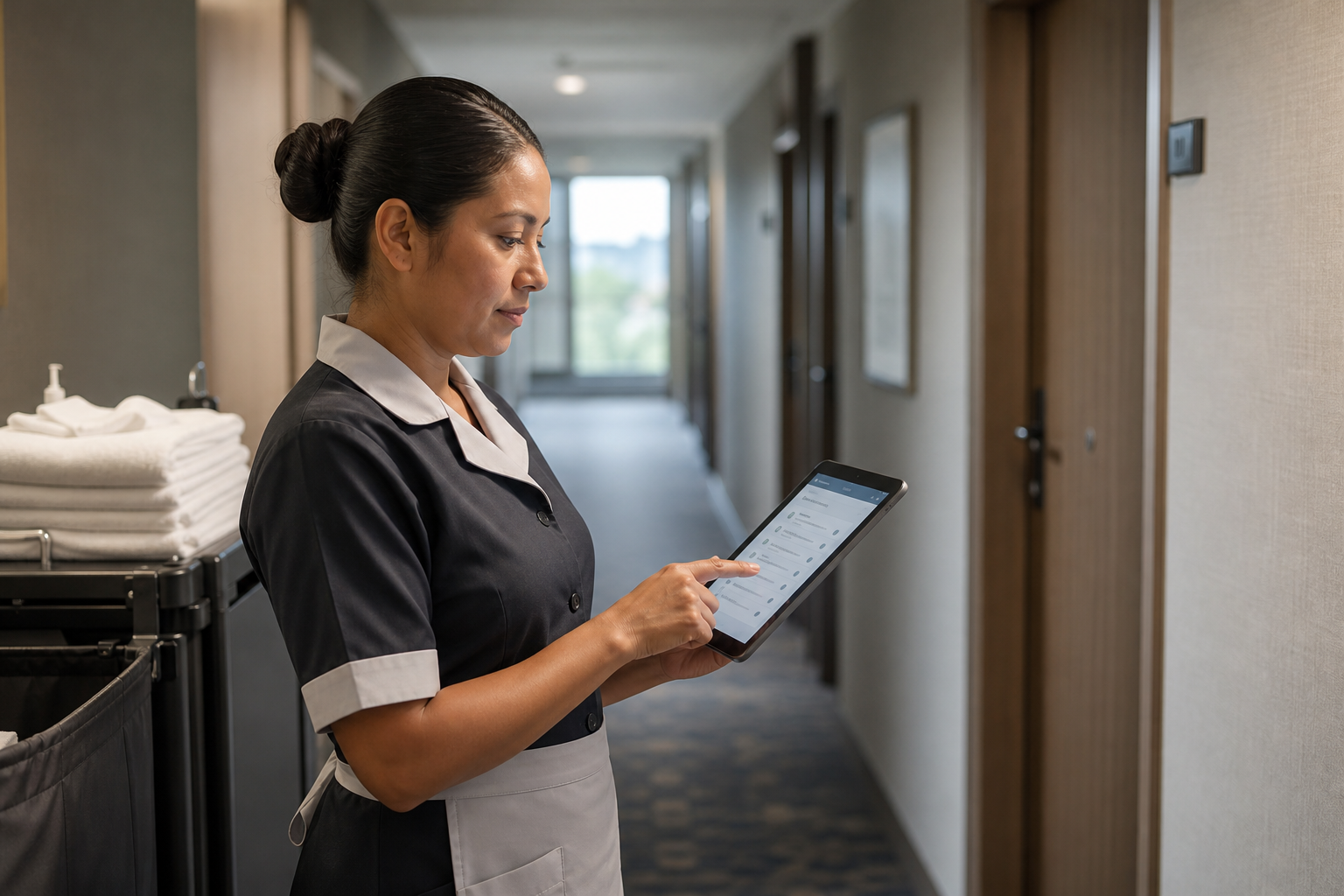
A shared dashboard keeps housekeeping, front desk, and food service aligned on every open request.
Comparing Guest Request Software to Traditional Front-Desk Methods
Many independent hotels still run on phone calls, texts and handwritten notes passed between shifts. That can work at a tiny scale. However, it breaks down once more than a handful of rooms are occupied.
Factor | Phone, Text & Radio | Guest Request Software |
|---|---|---|
Request tracking | Scattered across devices and shifts | Centralized on one dashboard |
Language support | Depends on staff language skills | Automatic translation both ways |
Allergy or safety records | Easy to lose between shifts | Logged with required staff acknowledgment |
Setup time | None, but no structure either | Often days when there is no PMS integration |
Software creates a record of who handled a request and when. That matters most for safety-related requests, where proof of acknowledgment can matter later.
Choosing the Right Guest Service Software for Your Property
Above all, the right choice depends on property size, guest mix and how much setup time the team can spare. A 12-room inn with many international travelers has different priorities than a single short-term rental managed remotely.
Questions to ask every vendor
- Is a PMS integration required before guests can use it?
- How many languages work end to end, for guests and for staff?
- Does pricing scale per room or per user?
- How does the platform route requests internally?
- What guest data is collected, and does the guest need an account?
For operations leads juggling several departments, this guide to hotel staff task management software covers routing and accountability in more depth. Meanwhile, this resource on organizing guest requests quickly helps teams still relying on scattered channels.
Short-term rentals have no front desk
Short-term rental hosts face a different problem. In that setting, a tool that forwards translated, organized requests to a single phone is a necessity. There is no team to absorb a missed message.
What to Measure After You Go Live
Software only helps if the team uses what it shows. Therefore, review a few simple numbers each week.
- Time to first response for each department.
- Open requests at shift change, which shows whether tasks are slipping.
- Repeat questions, which show gaps in the knowledge base.
- Requests by room, which can point to a recurring maintenance issue.
Guest Data, Privacy and Allergy Safety
Guests share personal details when they ask for help, so ask any vendor how that data is handled. With Cortesia, guests never create an account. The app runs no analytics or advertising trackers, and allergy information is used only for guest safety.
Allergies need extra care. Software can flag a mention and make sure a staff member sees it. However, hotel staff who prepare the food are the final authority, and guests should always confirm allergy information directly with them.
How Cortesia Supports Guest Request Management for Independent Hotels
Cortesia is built for boutique and independent hotels and short-term rentals, not large chains. Guests scan a printed QR code in their room and reach a private, branded AI concierge. It is no app, no login, and no guest account.
Every request lands on one live staff dashboard, translated for the team. The guest gets replies in their own language, across eight languages. Furthermore, food-allergy mentions trigger staff alerts that require acknowledgment, which closes a common gap in manual systems.
Setup covers the property knowledge base, room and staff import, and print-ready QR materials, so properties can be live in days. Pricing is per room and month-to-month, with unlimited guest usage and unlimited staff seats. You can explore a live example on the Cortesia website, including the 42-room Mesquite demo property and the single-unit Henderson House short-term rental demo. For related guest touches, see these guest welcome note templates and this guide to handling room upgrade requests.

Guests reach hotel guest request software by scanning a code already printed in the room.
Frequently Asked Questions About Hotel Guest Request Software
What is hotel guest request software?
Hotel guest request software is a digital system that lets guests send service requests, questions and feedback to hotel staff, usually through a QR code. Requests are organized by department and tracked until resolved.
Does hotel guest request software work without a PMS integration?
Yes. Some tools, including Cortesia, run as a standalone layer. Staff set up rooms, departments and property information once, and the software runs on its own from day one.
Why do boutique hotels need guest request management tools?
Boutique hotels run with small teams, so every missed call has an outsized effect on the guest experience. These tools centralize communication so a lean staff can respond quickly.
How much does hotel guest request software cost?
Pricing varies widely. Enterprise platforms often bill per room or per user on long contracts. Simpler tools for independents use per-room, month-to-month terms. Always confirm whether unlimited staff seats and guest usage are included.
How long does it take to set up hotel guest request software?
Tools that skip PMS integration and native app development can often go live in days. Setup involves loading property information, importing rooms and staff, and printing QR materials.
What is the difference between guest request software and a hotel app?
A hotel app requires guests to download it and log in, which most travelers skip on a short stay. A QR-based tool opens instantly in the phone browser. There is no app, no login and nothing to install.
Can hotel guest request software support multiple languages?
Yes. Better platforms translate guest messages into the staff's language and replies back into the guest's own language. Cortesia supports eight languages. CSA Research found 76% of consumers prefer engaging in their own language.
How does hotel guest request software handle food allergy alerts?
It can flag allergy mentions and require a staff member to acknowledge the alert. This shows the information reached the team. However, staff preparing food are the final authority, and guests should confirm allergy details directly with them.
Is hotel guest request software suitable for short-term rentals?
Yes. Remote hosts without a front desk benefit from a system that routes guest questions to a phone, even for a single unit. It replaces scattered texts and calls with one organized inbox.
What mistakes do hotels make when choosing guest request software?
The most common is choosing a platform built for large chains that assumes a PMS integration and months of setup. Another is picking a tool guests must download, since few guests install an app for a short stay.
How does hotel guest request software improve staff efficiency?
Routing requests to the right department means less time relaying messages by radio or sticky note. Housekeeping can see exactly when a guest wants service instead of knocking blind.
What is the best way to roll out guest request software to staff?
Start with a short training session on how requests appear and who owns each department's queue. Then run a brief pilot before printing final QR materials for every room.
Conclusion: Match Service to the Team You Actually Have
In summary, hotel guest request software lets boutique hotels and short-term rentals deliver the personal service they are known for with the lean teams they actually run. It centralizes requests, translates languages in the guest's own language, and flags safety items like allergies for staff. Weigh setup time, language coverage, privacy and pricing carefully. The best hotel guest request software fits your property's size and guest mix, with no app, no login and a go-live measured in days.